

Stock Market Today: Futures Fall as Iran Tensions Lift Oil Above $100.
Trading Leveraged products is Risky
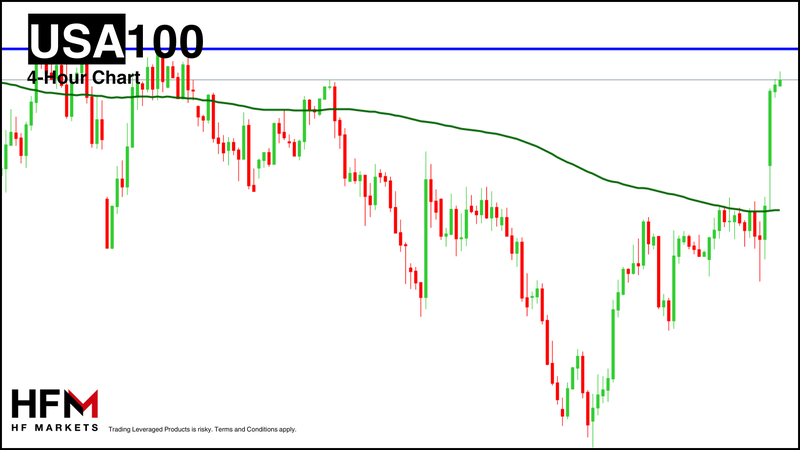
Global markets turned cautious on Thursday, with US equity futures moving lower as uncertainty surrounding the ongoing conflict between the US and Iran persists. Comments from Donald Trump indicated that military operations are not yet complete, reducing expectations for a near-term resolution and keeping investors on the defensive.
At the time of writing, S&P 500 futures are down approximately 1.3%, while Nasdaq 100 futures are underperforming with losses near 1.6%. Dow Jones futures are also trading lower, reflecting a broader pullback in risk appetite as the week draws to a close.
Energy Markets Remain the Key Driver
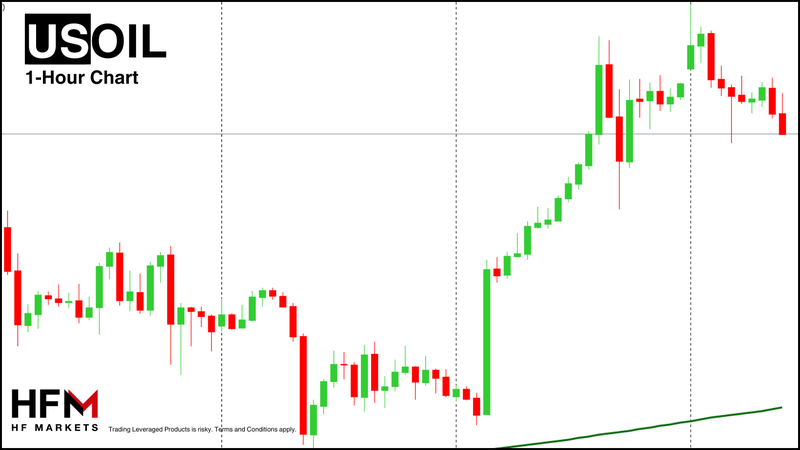
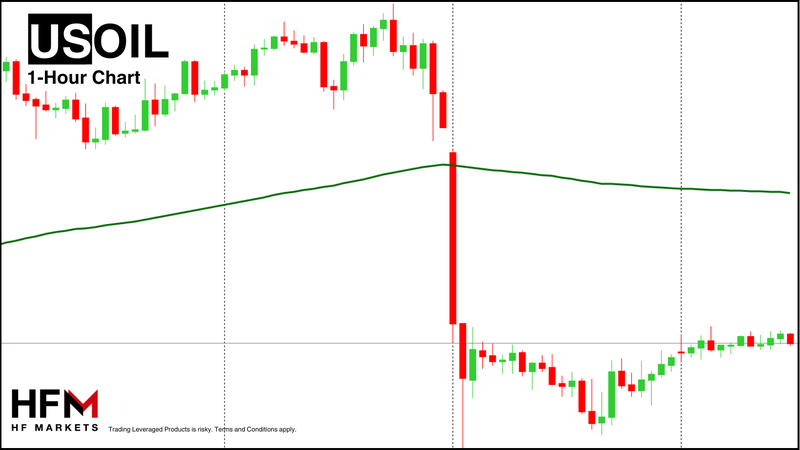
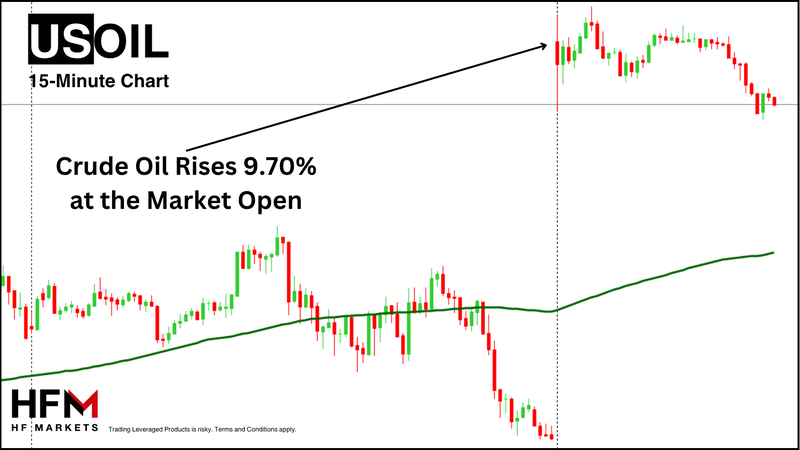
Oil continues to play a central role in shaping market direction. Both Brent Crude Oil and West Texas Intermediate have moved back above the $100 level, reversing earlier declines as supply concerns resurface.
Since the escalation of the conflict in late February, oil prices have risen significantly, with volatility driven largely by uncertainty around supply routes. In particular, the Strait of Hormuz remains a critical focal point for traders, given its importance in global energy transportation. Any disruption or confirmation of reopening, could lead to sharp price reactions across energy markets and beyond.
From Oil Shock to Energy Shock
The current environment is increasingly being viewed as a broader energy shock rather than a traditional oil-driven event, according to Bank of America. This reflects the evolving structure of the global economy, which is now more sensitive to disruptions across the wider energy complex.
Rather than focusing solely on crude, markets are reacting to pressures across natural gas, supply chains, and industrial inputs. This has important implications for inflation and growth expectations, which are now moving in opposite directions.
* US growth is projected to slow to 2.3% in 2026
* Inflation is expected to rise to 3.6%
* Global growth forecasts have been revised lower
* Inflation projections have been revised higher
This combination points to a mild stagflationary backdrop, which typically creates a more challenging environment for equities and risk assets.
Global Market Reaction: Signs of Rotation
Equity markets are beginning to show early signs of rotation, particularly within the technology sector. High-growth names, including AI leaders such as Nvidia, are losing momentum after an extended period of strong performance.
This shift is largely driven by macro factors. As inflation expectations remain elevated, bond yields tend to stay higher, which in turn puts pressure on growth valuations. As a result, investors are gradually adjusting their positioning, with some rotation towards more defensive sectors becoming evident.
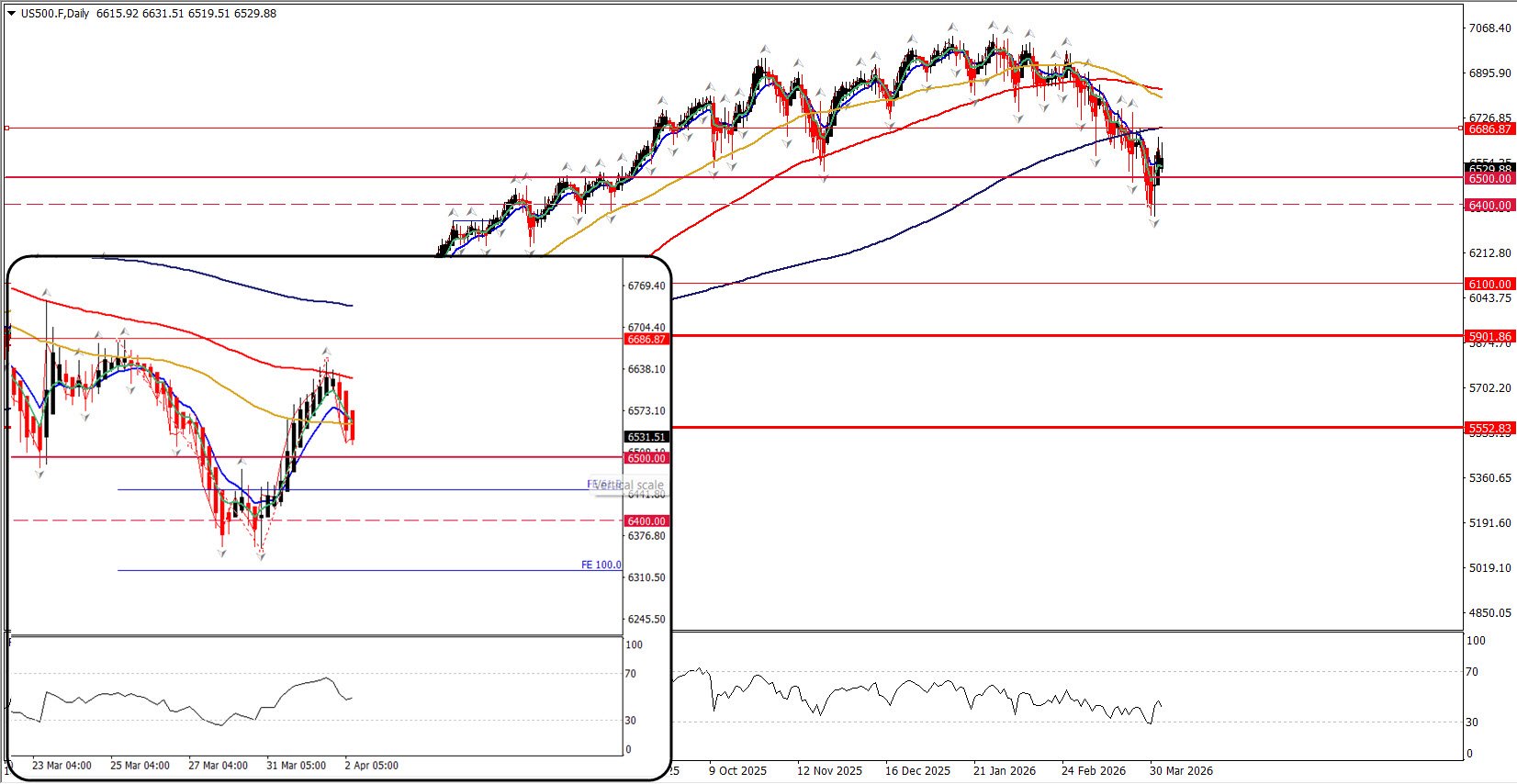
While this does not necessarily signal a long-term trend reversal, it highlights a change in short-term market leadership that traders should monitor closely.
The more cautious tone is reflected across global markets. Asian equities have moved lower, with some indices posting notable declines following the latest geopolitical developments. At the same time, energy prices have resumed their upward trajectory, while European natural gas prices have also edged higher.
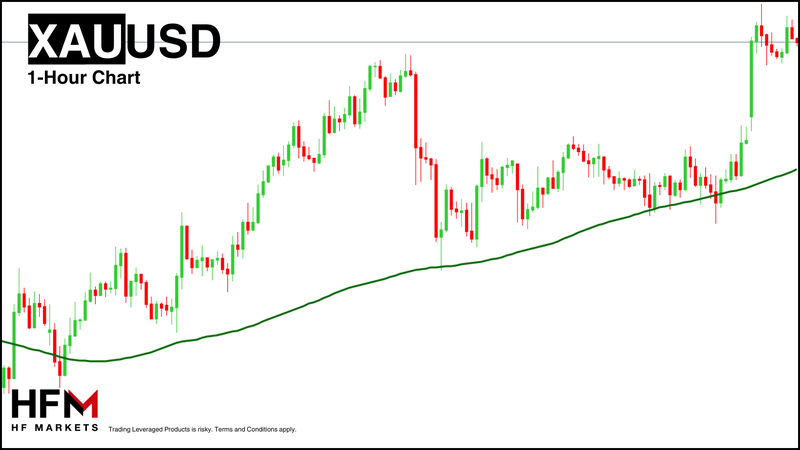
Interestingly, gold prices have declined despite ongoing geopolitical tensions. This suggests that recent moves may be driven more by positioning adjustments and profit-taking rather than a traditional flight to safety.
Key Events Ahead
With markets heading into the Good Friday closure, focus now shifts to upcoming US economic data, which could provide further direction.
Key releases to monitor include:
* Weekly jobless claims
* The Non-Farm Payrolls (NFP) report
These indicators will be closely watched for signals on the strength of the labour market and the broader economic outlook, particularly in the context of rising energy prices.
Conclusion
Markets remain highly sensitive to geopolitical developments, with energy prices acting as the primary transmission channel into broader asset classes. The lack of clarity around the Iran conflict continues to limit risk appetite and reinforce a more cautious trading environment.
In the near term, traders should expect:
* Continued headline-driven volatility
* Strong correlation between oil and equity markets
* Ongoing pressure on risk sentiment if tensions persist
Maintaining flexibility and disciplined risk management remains essential as markets navigate this complex backdrop.
Always trade with strict risk management. Your capital is the single most important aspect of your trading business.
Please note that times displayed based on local time zone and are from time of writing this report.
Click [url='https://www.hfm.com/hf/en/trading-tools/economic-calendar.html']HERE[/url] to access the full HFM Economic calendar.
Want to learn to trade and analyse the markets? Join our webinars and get analysis and trading ideas combined with better understanding of how markets work. Click [url='https://www.hfm.com/en/trading-tools/trading-webinars.html']HERE[/url] to register for FREE!
[url='https://analysis.hfm.com/']Click HERE to READ more Market news.[/url]
Andria Pichidi
HFMarkets
Disclaimer: This material is provided as a general marketing communication for information purposes only and does not constitute an independent investment research. Nothing in this communication contains, or should be considered as containing, an investment advice or an investment recommendation or a solicitation for the purpose of buying or selling of any financial instrument. All information provided is gathered from reputable sources and any information containing an indication of past performance is not a guarantee or reliable indicator of future performance. Users acknowledge that any investment in Leveraged Products is characterized by a certain degree of uncertainty and that any investment of this nature involves a high level of risk for which the users are solely responsible and liable. We assume no liability for any loss arising from any investment made based on the information provided in this communication. This communication must not be reproduced or further distributed without our prior written permission.