

Oil, the Dollar and Geopolitical Shockwaves: What Markets Are Really Pricing.
Trading Leveraged products is Risky
The escalation in the Middle East following U.S. and Israeli strikes on Iranian targets has reignited volatility across global markets. At first glance, the rebound in the U.S. dollar appears to signal the return of a classic “flight-to-safety” dynamic. However, the underlying drivers tell a more complex story, one rooted less in panic and more in energy economics.
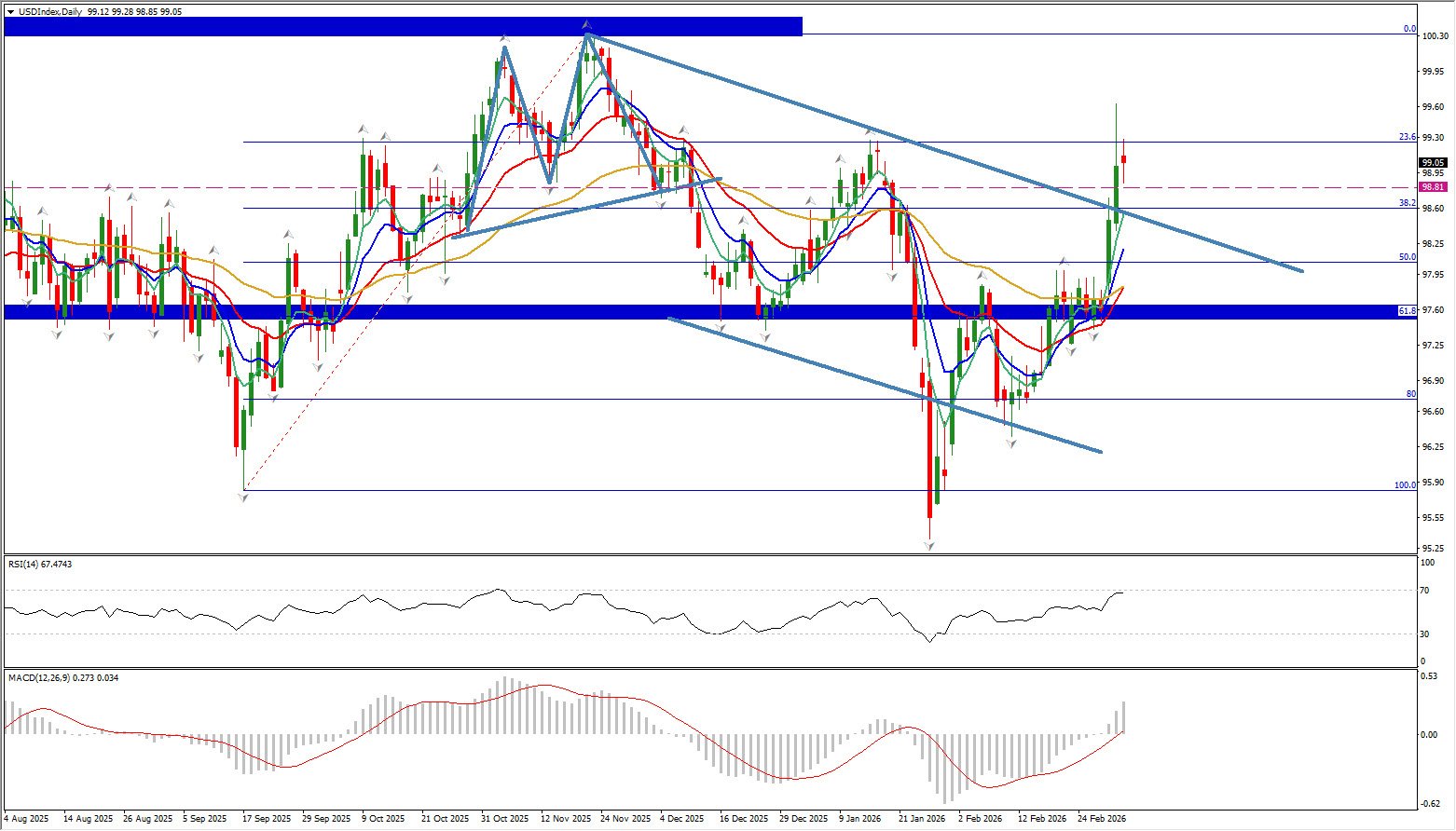
Since President Donald Trump returned to office, the dollar has often struggled to reclaim its traditional haven status during periods of geopolitical uncertainty. Policy unpredictability and domestic political friction had dampened foreign appetite for aggressive dollar accumulation. Yet this time, the greenback strengthened broadly after the weekend’s military escalation.
The reason appears to be structural rather than emotional.
Energy Is the Real Catalyst
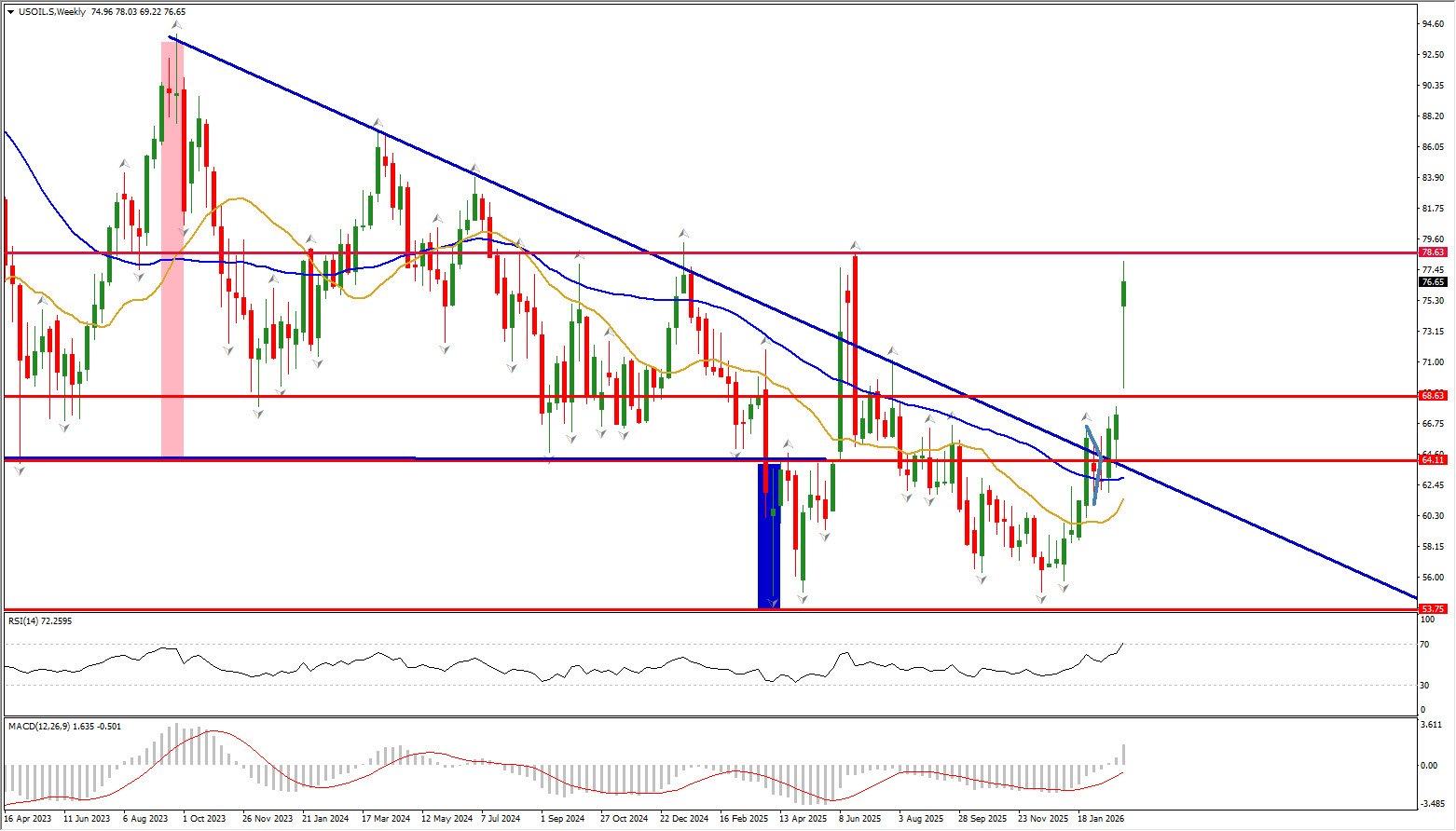
Oil markets reacted immediately. Brent crude initially surged nearly 10% before stabilising around $77–78 per barrel, still roughly $5 higher than prior levels. While that move is notable, it does not yet constitute a full-scale energy shock.
Economists at Barclays estimate that every sustained $10 increase in crude prices trims approximately 0.2 percentage points from global growth. By that measure, the current rise remains manageable. However, forecasts of oil moving toward or above $100 per barrel would significantly alter the macroeconomic outlook.
The critical variable is duration. If disruptions to the Strait of Hormuz, through which roughly 30% of global crude and 20% of LNG flows, persist for weeks rather than days, markets will begin pricing a more prolonged inflationary and growth shock.
Why the Dollar Strengthened, But Not as a Haven
Unlike past geopolitical crises, this dollar rally is less about capital fleeing into safety and more about relative economic positioning.
The United States is now a net exporter of petroleum products. In contrast, major economies across Europe and Asia remain heavily dependent on imported energy. When oil prices rise, the relative economic damage falls more heavily on importers.
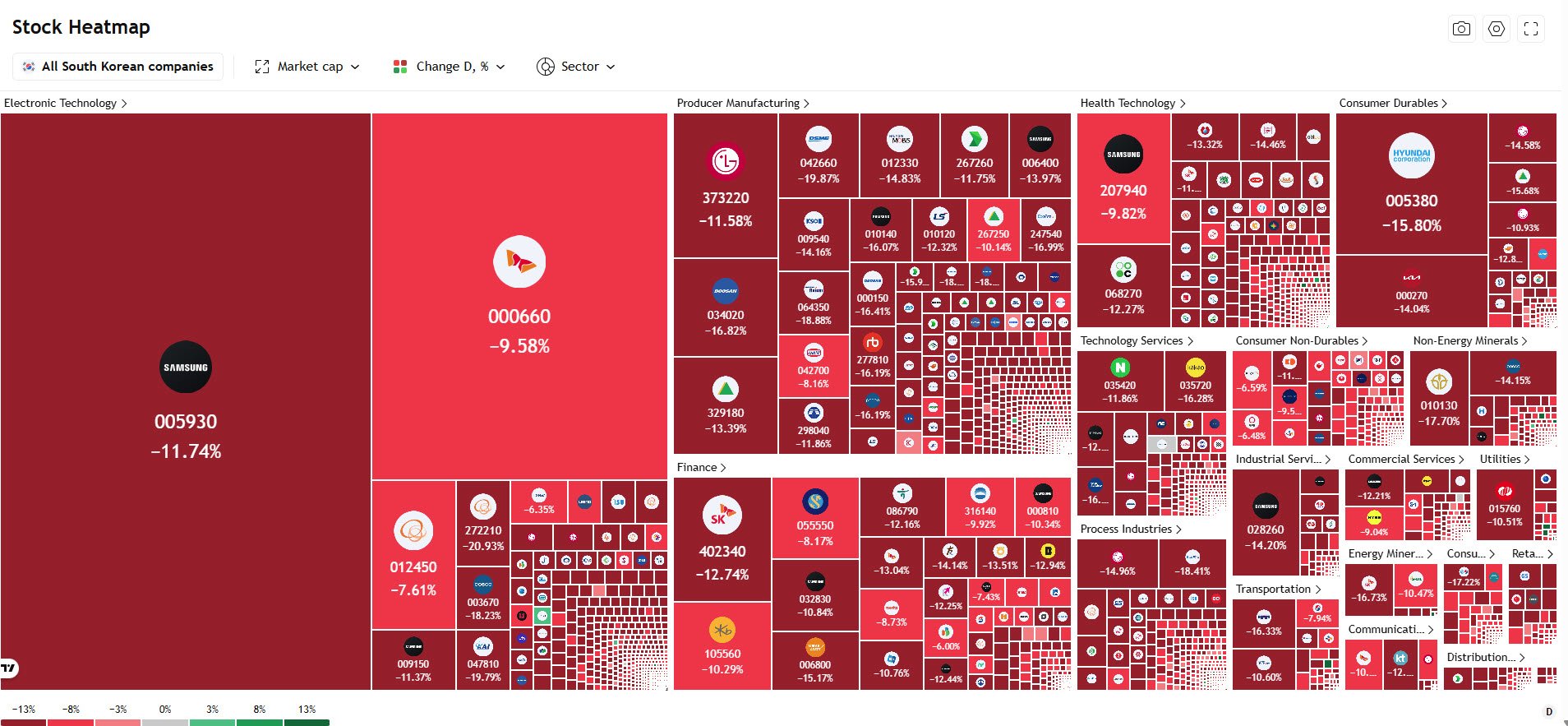
Japan, for example, relies significantly on Middle Eastern crude, with a substantial portion passing through Hormuz. The Nikkei 225 fell more than 2% as investors priced in energy vulnerability. Meanwhile, the yen weakened rather than strengthened, a clear departure from traditional safe-haven behaviour.
China also faces exposure to disrupted oil flows, contributing to weakness in the yuan. In Europe, benchmark gas prices surged intraday by nearly 50% before settling about 35% higher, the highest level in more than a year. The euro fell to a one-month low as traders assessed the growth risks tied to energy supply pressures.
The takeaway is clear: this is not a conventional “risk-off” event. It is an energy-driven repricing of relative economic exposure.
Equity Markets Show Resilience
Despite early volatility, U.S. equity markets demonstrated surprising stability. The S&P 500 briefly declined by over 1% before recovering to close nearly flat.
Energy and defence sectors outperformed. Shares of Exxon Mobil advanced alongside crude prices, while defence contractor Northrop Grumman rallied strongly. Even growth stocks such as Nvidia contributed positively, highlighting that investors are not yet pricing a systemic risk event.
Historically, Middle East conflicts have only produced sustained equity declines when oil prices spike sharply and remain elevated. Strategists suggest that crude would likely need to push well above $100 per barrel to materially threaten the broader U.S. market outlook.
Inflation vs Growth: The Policy Question
Another dimension shaping currency moves is inflation. With U.S. core inflation still running above 3%, higher oil prices could complicate the Federal Reserve’s policy path. Rather than acting as a recessionary shock, energy strength may reinforce expectations that U.S. interest rates remain elevated for longer.
That combination, energy exporter status and higher-for-longer rate expectations, provides structural support for the dollar.
However, a feedback loop risk exists. As oil prices rise in dollar terms, the dollar itself tends to appreciate. A stronger dollar then makes energy even more expensive for overseas buyers, intensifying economic strain abroad and reinforcing dollar strength further. This self-reinforcing dynamic is not a scenario policymakers would welcome.
US–China Diplomacy Adds a Counterbalance
Amid the geopolitical tensions, trade diplomacy remains active. U.S. and Chinese officials are scheduled to meet ahead of a potential summit between President Donald Trump and President Xi Jinping.
Constructive discussions around aircraft purchases, agricultural trade, or tariff adjustments could help stabilise risk sentiment. While separate from the Middle East conflict, progress on trade could offset some of the broader uncertainty currently weighing on global markets.
Key Scenarios for Traders
Scenario 1: Conflict Short & Contained
* Oil stabilises near $75–80
* Dollar strength moderates
* Equities remain supported
Scenario 2: Prolonged Supply Disruption
* Oil moves toward $90–100+
* Stronger dollar via energy loop
* Pressure on EUR, JPY, Asian currencies
* Inflation expectations rise
Scenario 3: Diplomatic De-escalation + Trade Progress
* Energy premium fades
* Gold retraces
* Risk appetite returns
The Bigger Picture: The Energy-Dollar Feedback Loop
One of the most important dynamics to monitor is the potential self-reinforcing loop:
* Oil rises
* Dollar strengthens
* Energy becomes more expensive globally (priced in USD)
* Overseas economies weaken
* The dollar strengthens further
This is not a scenario policymakers would welcome — particularly as part of the Trump administration’s longer-term goal has been reducing dollar overvaluation.
What Traders Should Watch Now
At this stage, markets are not pricing catastrophe. They are pricing energy risk with contained spillover.
The most important variables remain:
* The duration of military escalation
* The stability of shipping through the Strait of Hormuz
* Whether Brent crude approaches $90–100
* Shifts in inflation expectations
* Tone and progress in US–China trade discussions
If the conflict proves short-lived and energy flows remain largely intact, volatility may gradually subside. If supply disruptions extend for weeks, the dollar’s strength could intensify as energy-importing economies face deeper growth pressures.
For now, oil remains the leading indicator. Currencies, equities, and bonds are reacting to it, not the other way around.
Always trade with strict risk management. Your capital is the single most important aspect of your trading business.
Please note that times displayed based on local time zone and are from time of writing this report.
Click [url='https://www.hfm.com/hf/en/trading-tools/economic-calendar.html']HERE[/url] to access the full HFM Economic calendar.
Want to learn to trade and analyse the markets? Join our webinars and get analysis and trading ideas combined with better understanding of how markets work. Click [url='https://www.hfm.com/en/trading-tools/trading-webinars.html']HERE[/url] to register for FREE!
[url='https://analysis.hfm.com/']Click HERE to READ more Market news.[/url]
Andria Pichidi
HFMarkets
Disclaimer: This material is provided as a general marketing communication for information purposes only and does not constitute an independent investment research. Nothing in this communication contains, or should be considered as containing, an investment advice or an investment recommendation or a solicitation for the purpose of buying or selling of any financial instrument. All information provided is gathered from reputable sources and any information containing an indication of past performance is not a guarantee or reliable indicator of future performance. Users acknowledge that any investment in Leveraged Products is characterized by a certain degree of uncertainty and that any investment of this nature involves a high level of risk for which the users are solely responsible and liable. We assume no liability for any loss arising from any investment made based on the information provided in this communication. This communication must not be reproduced or further distributed without our prior written permission.