
Instaforex Analysis

Forex broker related topics and discussions

Re: Instaforex Analysis

Postby IFX Bella » Tue Feb 24, 2026 3:30 am

Forex Analysis & Reviews: Trading Recommendations and Analysis of EUR/USD for February 24. The Market Did Not React to New Tariffs

Analysis of EUR/USD 5M

Image

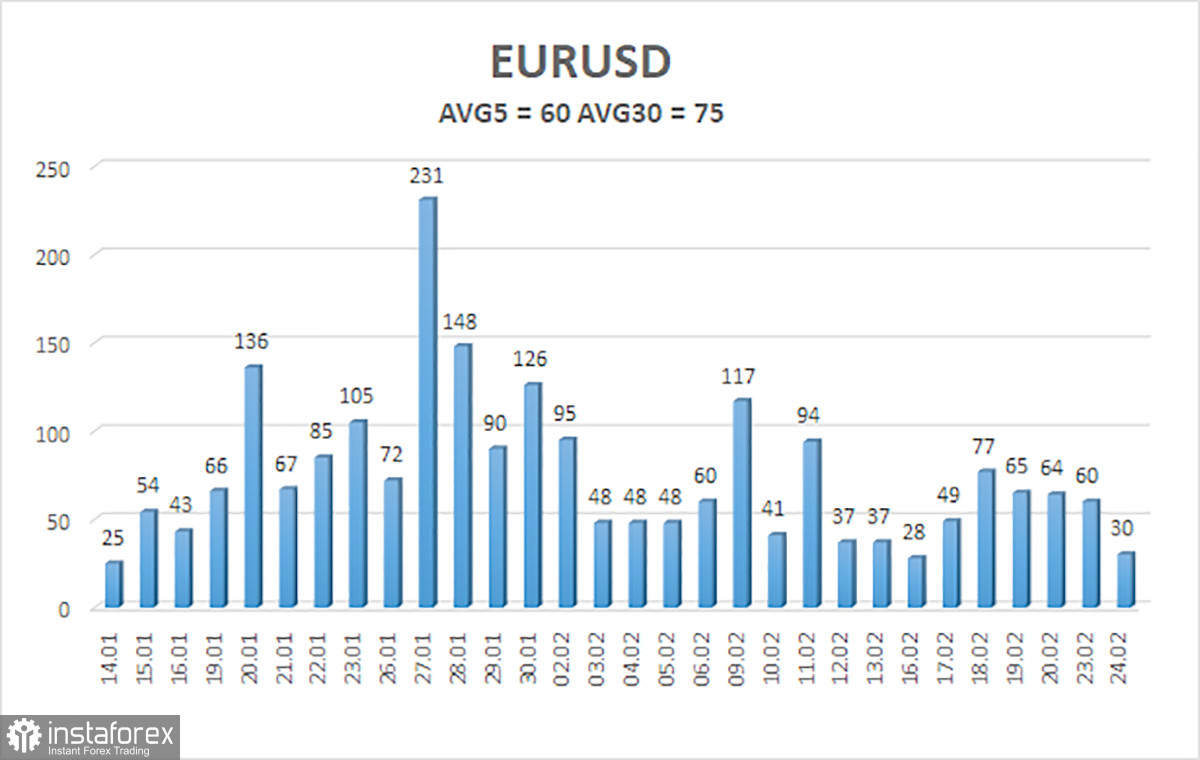
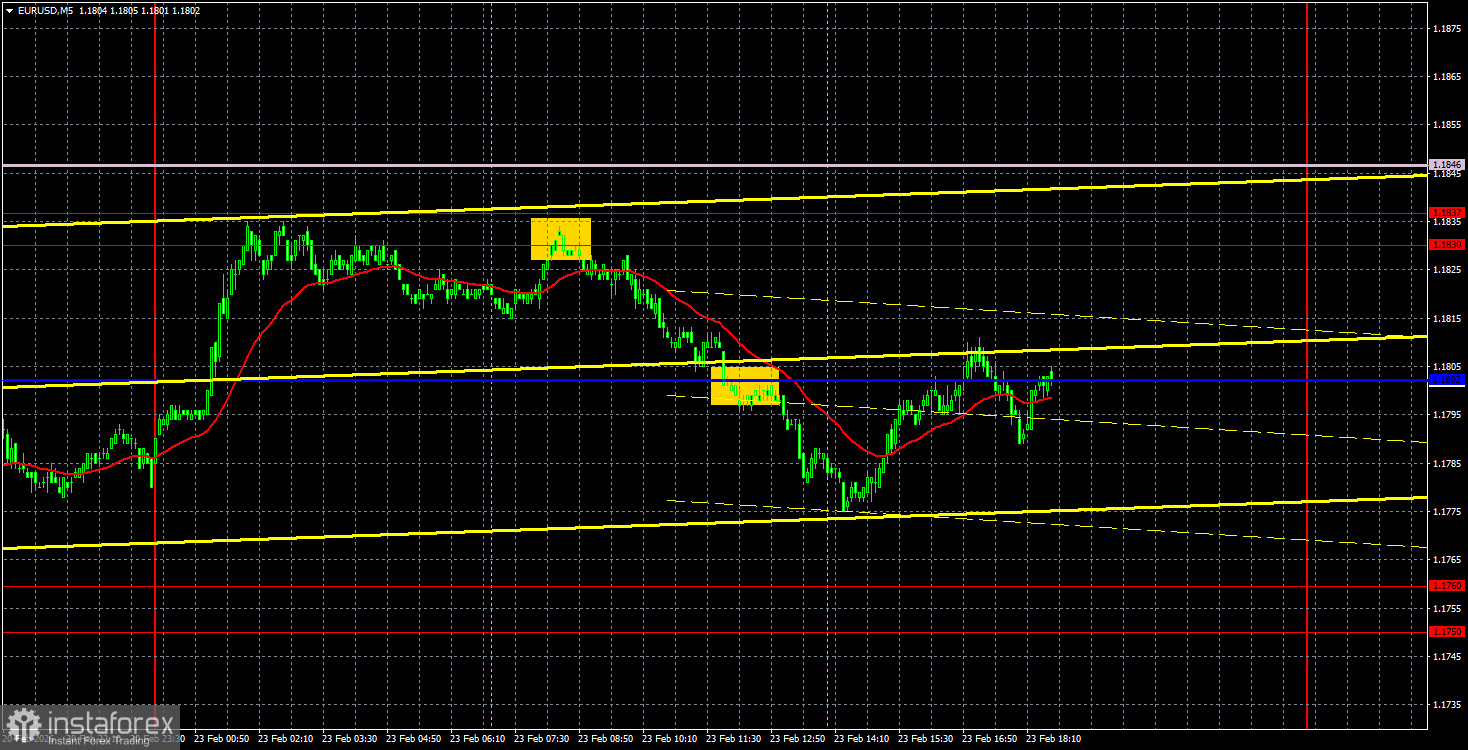
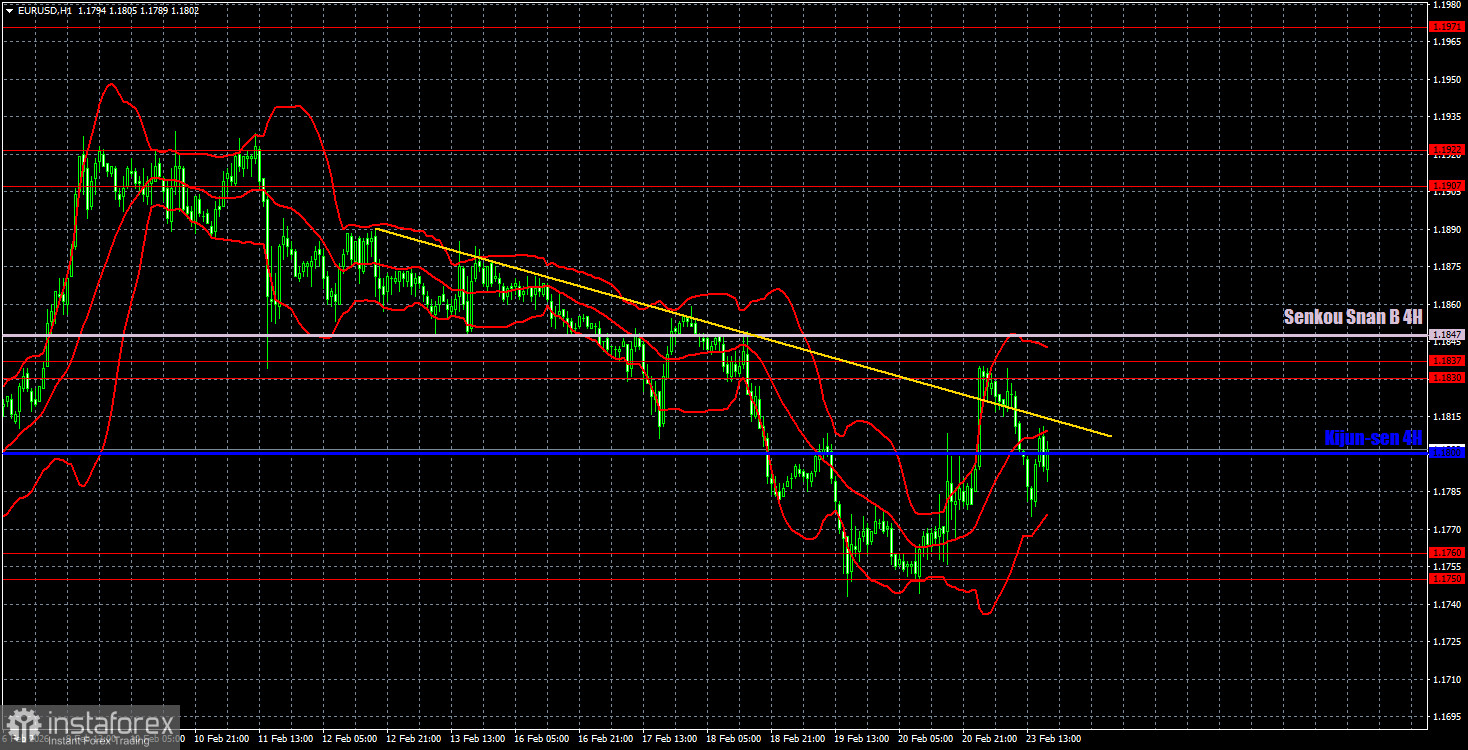
The EUR/USD currency pair traded quite actively on Monday, yet the overall volatility remained moderately low. Thus, we can immediately acknowledge the obvious: the market does not seem overly concerned about the continuation of the trade war or the new tariffs imposed by Donald Trump. The first trading day of the week started, as usual, with a decline in the dollar. However, throughout the day, the American currency fully recovered, so, in essence, the dollar did not experience any negative consequences. Once again, we find ourselves in a situation where a negative fundamental background has no impact on the dollar's exchange rate. Over the past two weeks, one could even get used to this. However, we have gotten accustomed to calling things by their names. Currently, market movements are illogical. The market continues to react extremely selectively to fundamentals and macroeconomics; therefore, it is now best to make trading decisions based on technical analysis. On the hourly timeframe, the pair broke through the trendline yesterday but failed to overcome the resistance area at 1.1830-1.1837. It also could not hold above the Senkou Span B line. Thus, the downward trend remains, despite the breach of the trend line. In this case, the pair may resume its decline, aiming for 1.1750-1.1760. On the 5-minute timeframe, two decent trading signals were generated on Monday. Initially, the price bounced off the 1.1830-1.1837 area, then breached the Kijun-sen line. However, the pair was unable to reach the target area of 1.1750-1.1760 and returned to the critical line by the end of the day. Therefore, traders could have achieved a profit of about 20 pips from the short position.

COT Report
Image

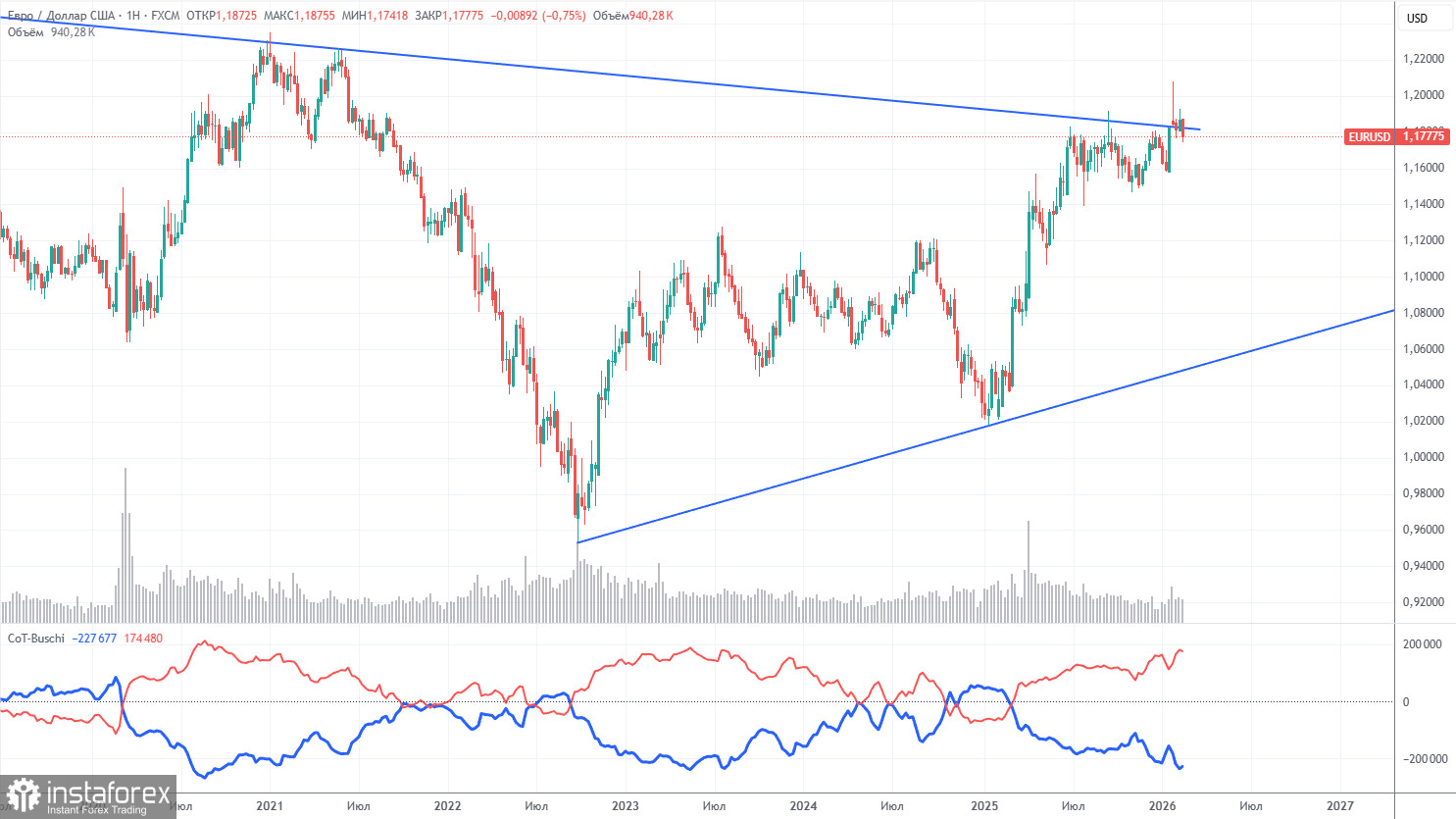
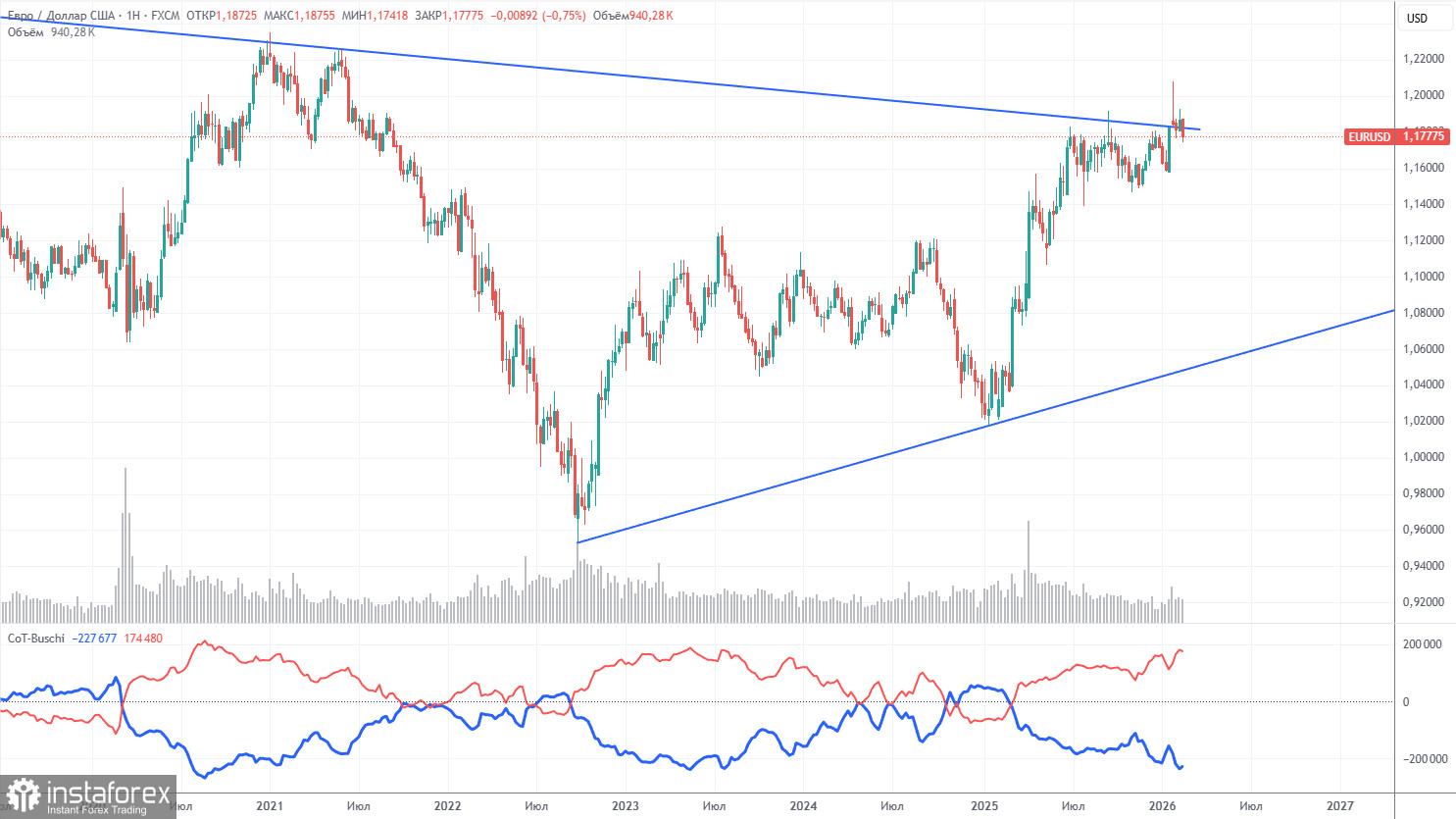
The latest COT report is dated February 17. As seen in the weekly timeframe illustration, the net position of non-commercial traders remains "bullish." Since Trump took office as President of the United States for the second time, the dollar has only been falling. We cannot say with 100% certainty that the decline of the American currency will continue, but the current developments in the world suggest this outcome. We still do not see any fundamental factors that would strengthen the euro; however, there are plenty of factors that would weaken the dollar. The global downward trend persists, but what does it matter where the price has moved over the last 18 years? In the last three years, a new upward trend has been forming, and the breach of the global descending trend line has occurred. Thus, the path further upward is open. The positioning of the red and blue lines of the indicator continues to indicate the preservation of a "bullish" trend. During the last reporting week, the number of longs for the "Non-commercial" group decreased by 7,100, and the number of shorts decreased by 1,300. Consequently, the net position decreased by 5,800 contracts over the week.

Analysis of EUR/USD 1H
Image

On the hourly timeframe, the EUR/USD pair remains below the Ichimoku indicator lines, hindering its ability to move upward. The pair exited the sideways channel of 1.1400-1.1830 at the beginning of the year, in which it had spent seven months, so the global upward trend has officially resumed. To technically restore the upward trend on the hourly timeframe, the price needs to consolidate above the Senkou Span B line and above the trend line. For February 24, we identify the following trading levels: 1.1362, 1.1426, 1.1542, 1.1604-1.1615, 1.1657-1.1666, 1.1750-1.1760, 1.1830-1.1837, 1.1907-1.1922, 1.1971-1.1988, 1.2051, 1.2095, as well as the Senkou Span B line (1.1847) and Kijun-sen (1.1800). The lines of the Ichimoku indicator can move during the day, which should be taken into account when determining trading signals. Do not forget to set a Stop Loss order to break even if the price moves in the correct direction by 15 pips. This will protect against potential losses if the signal turns out to be false. On Tuesday, the U.S. weekly ADP report on the labor market is scheduled for publication. We consider this report secondary and do not expect any market reaction. It is unlikely that the trend will change upward today. Trading Recommendations: On Tuesday, traders may consider selling with a target of 1.1750-1.1760 in case of another bounce from the 1.1830-1.1837 area. Long positions might be considered with a target of 1.1830-1.1837 if the price bounces from the 1.1750-1.1760 area.

Analysis are provided by InstaForex.

Read more: https://ifxpr.com/4aNEnMW
IFX Bella
 
Posts: 609
Joined: Sat Dec 08, 2012 12:39 am

Re: Instaforex Analysis

Postby IFX Bella » Wed Feb 25, 2026 3:10 am

Forex Analysis & Reviews: Overview of the EUR/USD Pair. February 25. Is There Anyone in the Market?

Image

The EUR/USD currency pair has again traded as if there has been absolutely no news in recent days. To recap (though there may be no particular need), the U.S. Supreme Court annulled all of Trump's global tariffs, to which Trump responded by imposing new tariffs of 10% on "everyone," threatening to raise them to 15% soon. Looking at the charts and volatility diagram, one gets the impression that there have been no significant updates for the past two weeks. During this time, the dollar has slowly climbed. This growth is not strong enough to be taken seriously or respected; meanwhile, it is a rise in the dollar when its decline would make much more sense. So, we can begin to speculate why the market is refusing to sell the American currency. The first thought that comes to mind is a potential U.S. invasion of Iran. Rumor has it that the next round of largely formal negotiations between Tehran and Washington is scheduled for this week, and if there is no breakthrough, Trump will be ready to give the order to commence military operations. We call the negotiations "formal" because no one has managed to reach an agreement with Iran over the last 50 years. For the past 50 years, the country has lived like a powder keg. Military actions flare up with renewed vigor and then quiet down. The country is effectively on the verge of economic collapse, with the value of the Iranian rial plummeting to zero. Yet none of this has persuaded Tehran to abandon its nuclear program. Thus, we believe that the likelihood of reaching an agreement with Trump is zero. There will be military conflict; the only question is how significant it will be. At the same time, one of the few reasons for the U.S. dollar's growth in recent weeks is, in fact, the market's expectation of this very conflict. Accordingly, this factor has likely already been priced in or is close to being so. However, there are no supporting factors for the dollar. There are, on the other hand, plenty of factors weighing down on it that the market has been rigorously ignoring lately, starting from the disappointing GDP report, the quite contradictory Non-Farm Payrolls (NFP), falling inflation, and ending with Trump's actual refusal to comply with the Supreme Court's ruling and a new escalation of the trade war, which has already led to a freeze in the ratification of agreements with India and the European Union. We do not believe the market is obligated to reverse at times we deem necessary, or at any specific period. However, we believe the dollar's decline in 2026 is inevitable. The higher the dollar rises now, the more it will fall later. The lower the EUR/USD pair descends, the greater the likelihood that this movement will end very soon. However, as the market has largely ignored the vast majority of macroeconomic and fundamental events over the last two weeks, we advise traders not to overlook the technical picture. Expecting a new rise in the pair is best done after breaking the trends on the hourly and four-hour timeframes.

Image


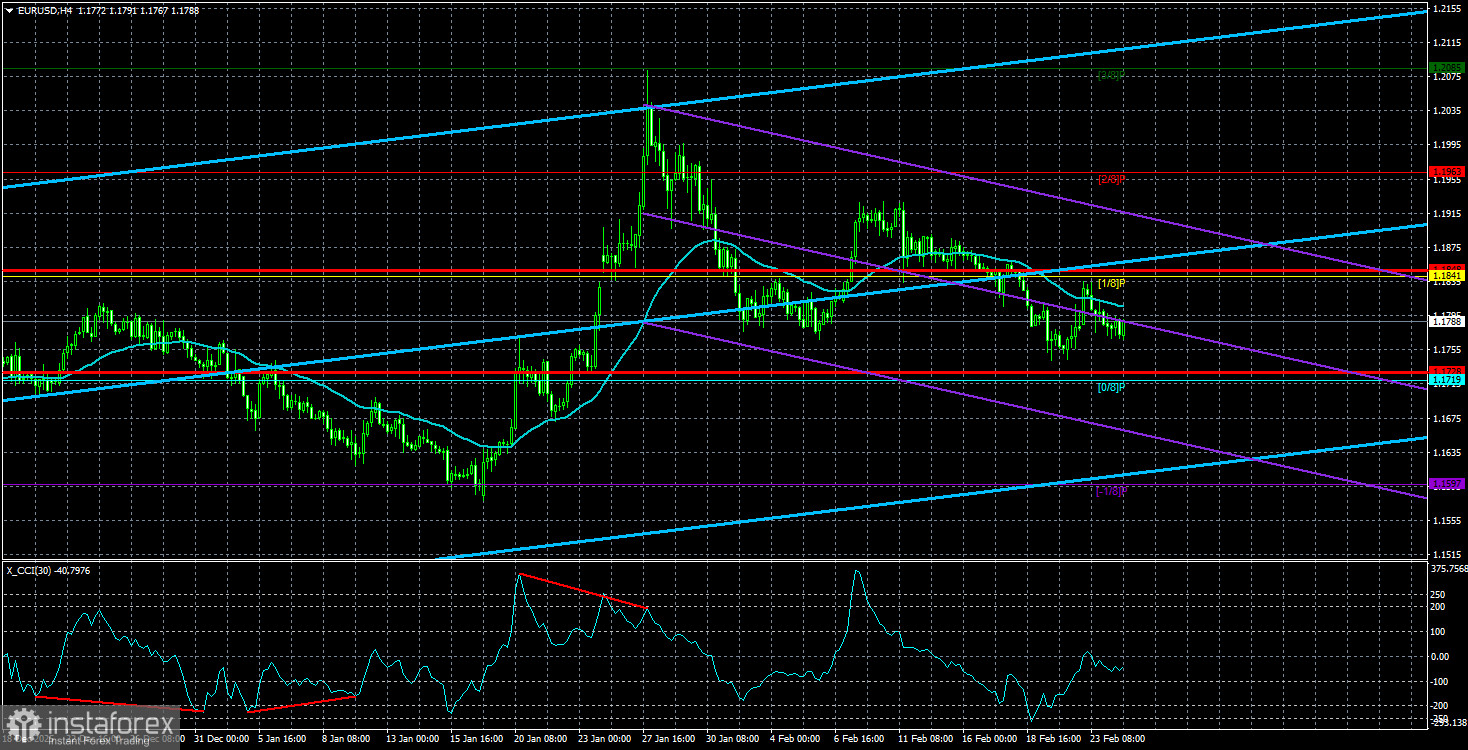
The average volatility of the EUR/USD currency pair over the last 5 trading days as of February 25 is 60 pips, which is considered "average." We expect the pair to trade between 1.1728 and 1.1848 on Wednesday. The upper channel of the linear regression points upward, indicating further growth for the euro. The CCI indicator has entered oversold territory, signaling a potential resumption of the upward trend. Nearest Support Levels: S1 – 1.1719 S2 – 1.1597 S3 – 1.1475 Nearest Resistance Levels: R1 – 1.1841 R2 – 1.1963 R3 – 1.2085 Trading Recommendations: The EUR/USD pair continues to correct within the upward trend. The global fundamental background remains extremely negative for the dollar. The pair has spent seven months in a sideways channel, and it is likely time to resume the global trend of 2025. The dollar has no fundamental basis for long-term growth. Therefore, all the dollar can hope for is a sideways move or corrections. When the price is positioned below the moving average, one may consider small shorts with targets at 1.1728 and 1.1719 on purely technical grounds. Above the moving average line, long positions remain relevant with targets at 1.1963 and 1.2085.

Analysis are provided by InstaForex.


Read more: https://ifxpr.com/4qUpkH2
IFX Bella
 
Posts: 609
Joined: Sat Dec 08, 2012 12:39 am

Re: Instaforex Analysis

Postby IFX Bella » Thu Feb 26, 2026 2:59 am

Forex Analysis & Reviews: Trading Recommendations and Analysis of EUR/USD for February 26. The Euro Has Broken the Trend Three Times

Analysis of EUR/USD 5M


Image

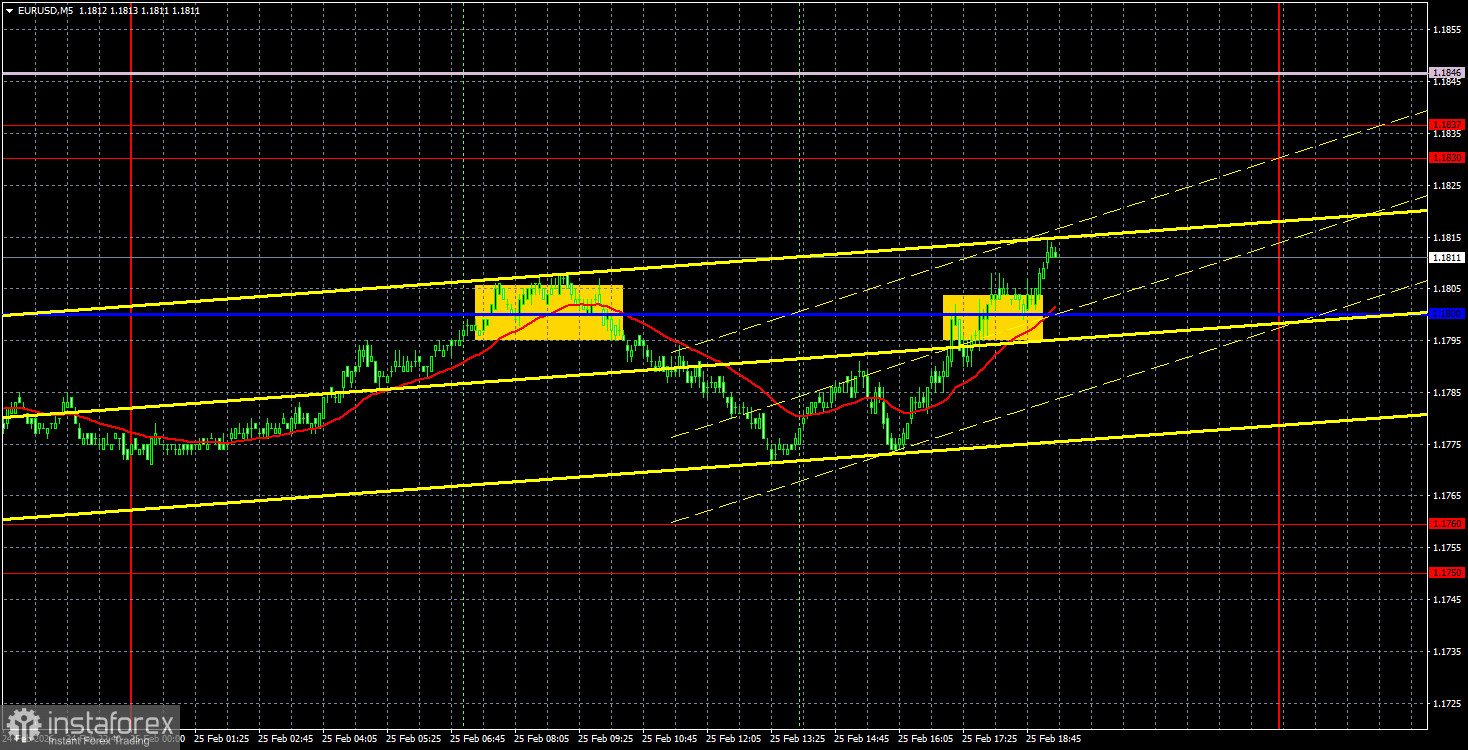
The EUR/USD currency pair once again showed an intention to rise a bit after two weeks of decline. However, the result was poor again, despite the dollar having almost no other supporting factors besides the Iranian situation, which the market seems to have been pricing in for two weeks. Nevertheless, the price broke the descending trend line for the third time. Will this be enough to change the trend to upward? In our view, given current realities, the price could reach the Senkou Span B line, but the trend's future will depend on the strongest line of the Ichimoku indicator. The macroeconomic background on Wednesday was absent. Yes, Germany released a report on GDP for the fourth quarter in its third estimate, and the Eurozone released the inflation report for January in its second estimate. However, these estimates were no different from the previous ones or forecasts. Therefore, traders had nothing to react to throughout the day. In the U.S., the calendar of events was empty, and the latest news from across the ocean did not interest traders. Thus, hope now rests solely on the technical picture, which suggests growth for the pair. On the 5-minute timeframe, two very imprecise trading signals were generated yesterday. During the European trading session, the price bounced off the Kijun-sen line and then dropped about 20 pips. Following that, there was a breakthrough of the critical line, which occurred practically at the end of the entire movement, considering the low volatility. Of course, the price could continue to rise on Thursday, but the signal has not improved. However, none of them caused a loss.

COT Report

Image

The latest COT report is dated February 17. The weekly timeframe illustration shows that the net position of non-commercial traders remains "bullish." Since Trump assumed the presidency of the United States for the second time, only the dollar has been falling. We cannot say with 100% certainty that the decline of the American currency will continue, but current developments around the world suggest this is a possibility. We still do not see any fundamental factors that would strengthen the euro; however, there are enough factors indicating a decline in the American currency. The global downward trend is still in place, but what does it matter where the price moved in the last 18 years? A new upward trend has been forming over the last three years, and the global downward trend line has been broken. Thus, the path further north is open. The positioning of the red and blue lines of the indicator continues to indicate the maintenance of a "bullish" trend. Over the last reporting week, the number of longs for the "Non-commercial" group decreased by 7,100, while the number of shorts decreased by 1,300. Consequently, the net position decreased by 5,800 contracts over the week.

Analysis of EUR/USD 1H

Image

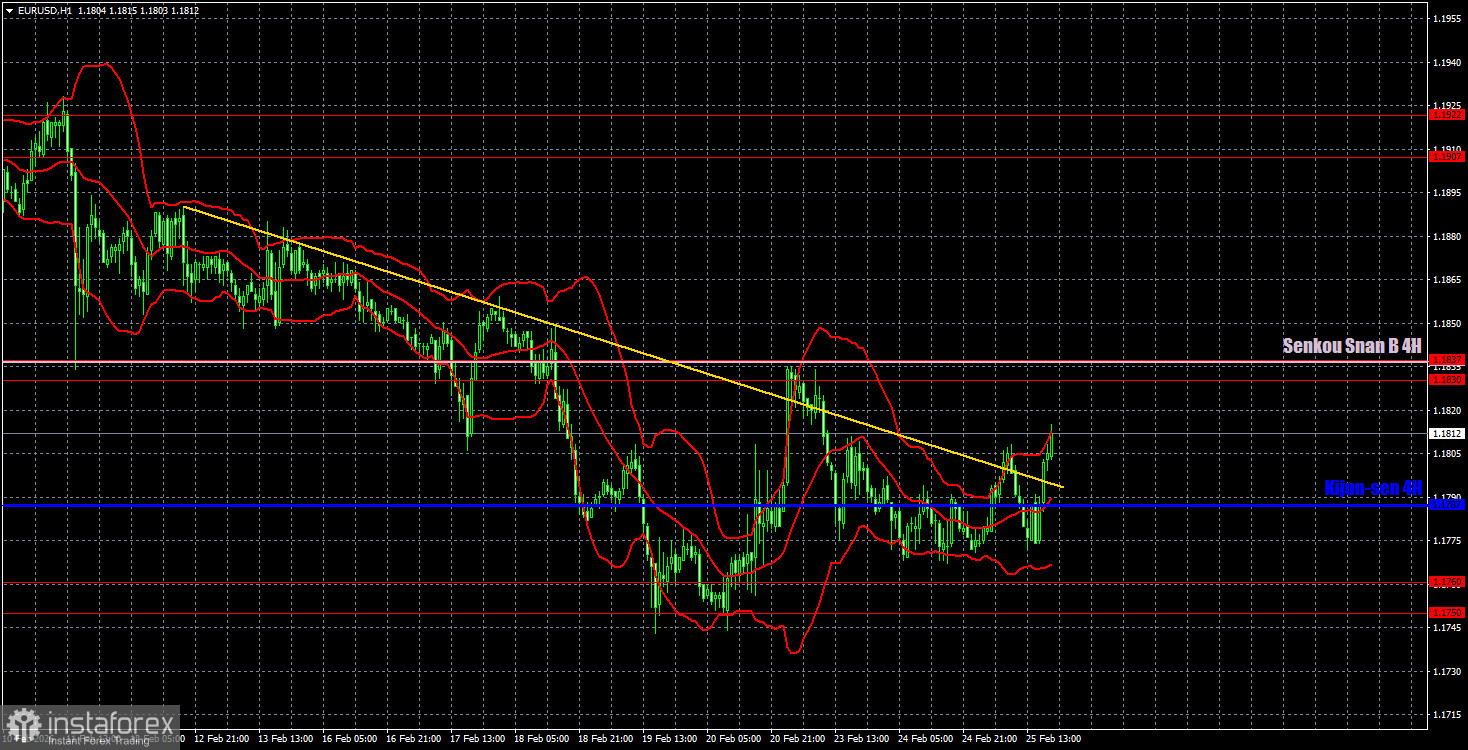
On the hourly timeframe, the EUR/USD pair has potential to rise, but it needs to consolidate above the Senkou Span B line. The pair left the sideways channel of 1.1400-1.1830 at the beginning of the year, where it spent seven months, so the global upward trend has officially resumed. However, in the last two weeks, we have seen another surprising rise in the U.S. dollar. Now we need the trend to change to an upward movement on the hourly timeframe. For February 26, we highlight the following levels for trading: 1.1362, 1.1426, 1.1542, 1.1604-1.1615, 1.1657-1.1666, 1.1750-1.1760, 1.1830-1.1837, 1.1907-1.1922, 1.1971-1.1988, 1.2051, and 1.2095, as well as the Senkou Span B line (1.1837) and Kijun-sen (1.1787). The lines of the Ichimoku indicator may shift during the day, which should be taken into account when determining trading signals. Don't forget to set a Stop Loss order to break even if the price has moved in the right direction by 15 pips. This will protect against potential losses if the signal turns out to be false. On Thursday, a report on jobless claims is scheduled for release in the U.S., and Christine Lagarde will be speaking in the Eurozone. Theoretically, Lagarde may provide the market with important information, but expectations are quite low. The ECB's current monetary policy raises no questions. Trading Recommendations: On Thursday, traders may consider selling with targets of 1.1750-1.1760 in the event of another bounce from the 1.1830-1.1837 area. Long positions may be considered with a target of 1.1907-1.1922 if the Senkou Span B line is overcome. Explanations for Illustrations: Support and resistance price levels are thick red lines around which the movement may end. They are not sources of trading signals. Kijun-sen and Senkou Span B lines are lines from the Ichimoku indicator transferred to the hourly timeframe from the 4-hour timeframe. They are strong lines. Extremum levels are thin red lines from which the price previously bounced. They are sources of trading signals. Yellow lines are trend lines, trend channels, and any other technical patterns. Indicator 1 on the COT charts represents the size of the net position of each category of traders.

Analysis are provided by InstaForex.

Read more: https://ifxpr.com/46Ndac7
IFX Bella
 
Posts: 609
Joined: Sat Dec 08, 2012 12:39 am

Re: Instaforex Analysis

Postby IFX Bella » Fri Feb 27, 2026 3:05 am

Forex Analysis & Reviews: How to Trade the EUR/USD Currency Pair on February 27? Simple Tips and Trade Analysis for Beginners

Trade Analysis of Thursday: 1H Chart of the EUR/USD Pair


Image

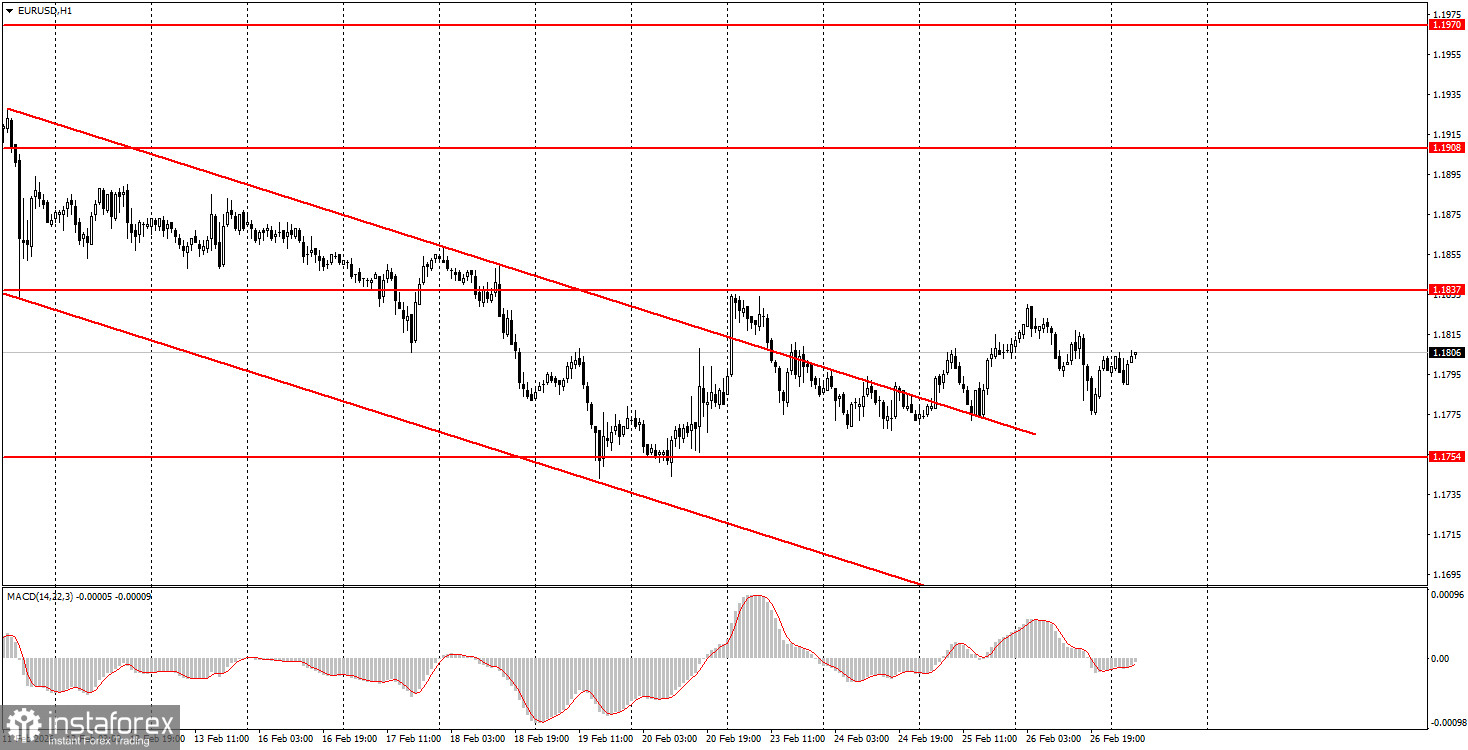
The EUR/USD currency pair exhibited unexpected movement on Thursday. The macroeconomic background was absent that day, and the fundamental one as well, but at the same time, the price broke through the descending channel at least twice, allowing the pair to grow. However, as has often been the case lately, the market found another reason to buy dollars. By Thursday evening, it became known that yet another round of negotiations between Iran and the US ended without results. Tehran rejected Washington's nuclear deal, which increased the likelihood of a US military intervention to nearly 100%. Amid rising geopolitical tensions, the dollar appreciated once again. Additionally, yesterday, Pakistan began military actions against Afghanistan, further increasing the demand for safe-haven assets, of which the dollar can still be considered, albeit with significant reservations. As we can see, only geopolitics supports the American currency, although even this factor has its own expiration date.

5M Chart of the EUR/USD Pair

Image

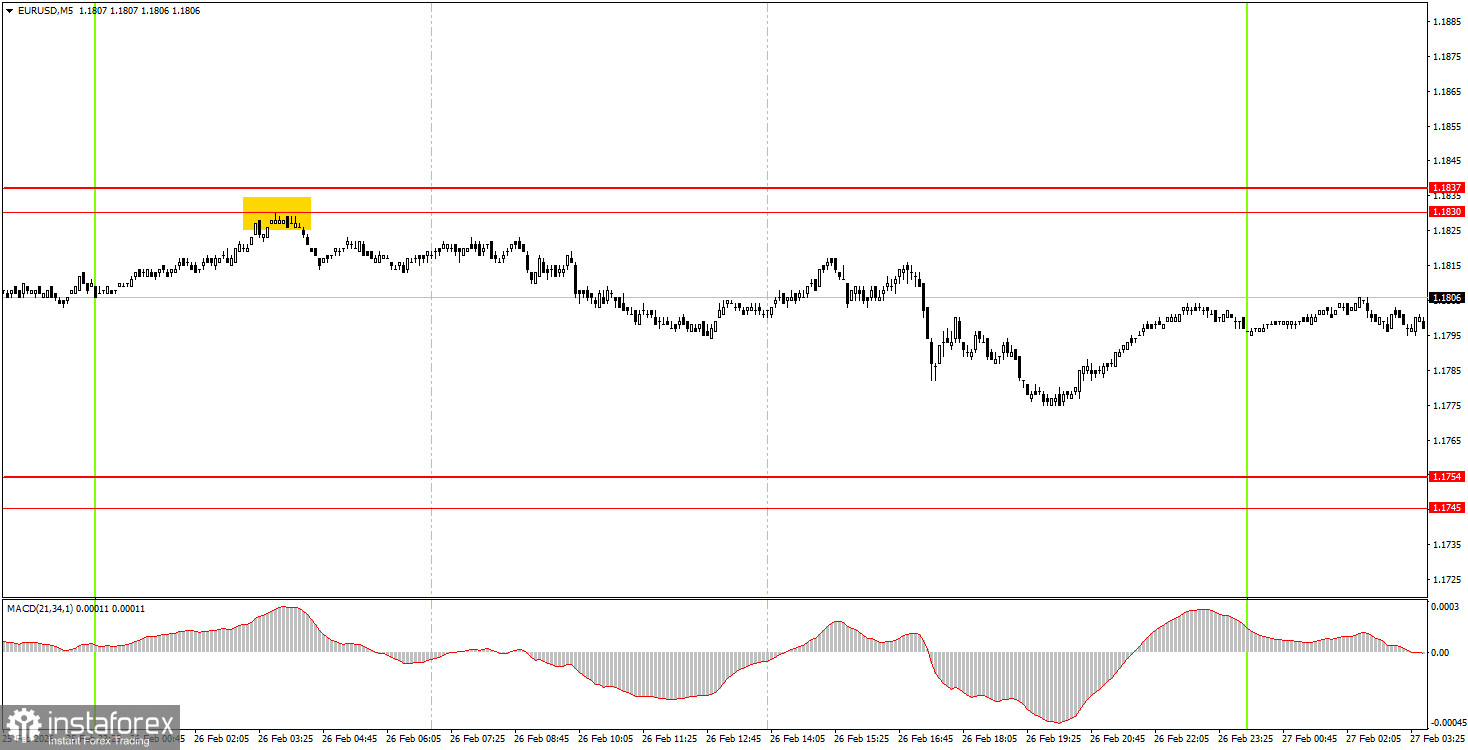
On the 5-minute timeframe on Thursday, one trading signal was formed that novice traders could have acted upon. Early in the Asian trading session, the price bounced off the area of 1.1830-1.1837, but at the opening of the European session, the price had hardly moved away from the point where the signal was formed. Thus, a short position could have been opened. The nearest target area, 1.1745-1.1754, was not reached, but traders could close their positions manually in profit by evening. How to Trade on Friday: On the hourly timeframe, the downward trend has been canceled as the price has settled above the descending channel. At the beginning of 2026, the long-term upward trend has resumed, so we expect a new medium-term rise of the euro. The overall fundamental background remains very challenging for the US currency, so we fully support further movement to the north. On Friday, novice traders can consider short positions in the event of a bounce from the 1.1830-1.1837 area, targeting 1.1745-1.1754. A price consolidation above the 1.1830-1.1837 area will allow opening long positions with a target of 1.1899-1.1908. On the 5-minute timeframe, levels to consider include 1.1455-1.1474, 1.1527-1.1531, 1.1550, 1.1584-1.1591, 1.1655-1.1666, 1.1745-1.1754, 1.1830-1.1837, 1.1899-1.1908, 1.1970-1.1988, 1.2044-1.2056, and 1.2092-1.2104. On Friday, Germany will publish inflation reports, unemployment figures, and jobless claims. In the US, the Producer Price Index will be released. We do not expect a strong market reaction to these reports, as geopolitics currently takes priority for the market. Main Rules of the Trading System: The strength of the signal is determined by the time it takes to form (rebound or breaking through the level). The shorter the time, the stronger the signal. If two or more trades were opened around a particular level based on false signals, all subsequent signals from that level should be ignored. In a flat market, any pair can generate numerous false signals or no signals at all. In any case, it is best to stop trading at the first signs of a flat. Trades are opened during the time period between the start of the European session and until the middle of the American session, after which all trades should be manually closed. On the hourly timeframe, signals from the MACD indicator should ideally be traded only when there is good volatility and a trend confirmed by a trend line or channel. If two levels are too close to each other (ranging from 5 to 20 pips), they should be considered as a support or resistance area. After moving 15 pips in the correct direction, it is advisable to set the Stop Loss to break-even. What's on the Charts: Support and resistance levels are targets for opening buy or sell trades. Take Profit levels can be placed around them. Red lines indicate channels or trend lines that reflect the current trend and indicate the preferred direction for trading now. The MACD indicator (14,22,3) – the histogram and signal line – serves as a supplementary indicator that can also be used as a source of signals. Important speeches and reports (always found in the news calendar) can significantly influence the movement of the currency pair. Therefore, during their release, trading should be conducted with maximum caution, or it is advised to exit the market to avoid a sharp price reversal against the preceding movement. Beginners trading in the Forex market should remember that not every trade can be profitable. Developing a clear strategy and practicing sound money management are the keys to long-term trading success.

Analysis are provided by InstaForex.

Read more: https://ifxpr.com/4aDeDE6
IFX Bella
 
Posts: 609
Joined: Sat Dec 08, 2012 12:39 am

Re: Instaforex Analysis

Postby IFX Bella » Mon Mar 02, 2026 2:52 am

Forex Analysis & Reviews: EUR/USD Overview. March 2. Geopolitics Back in Focus

Image

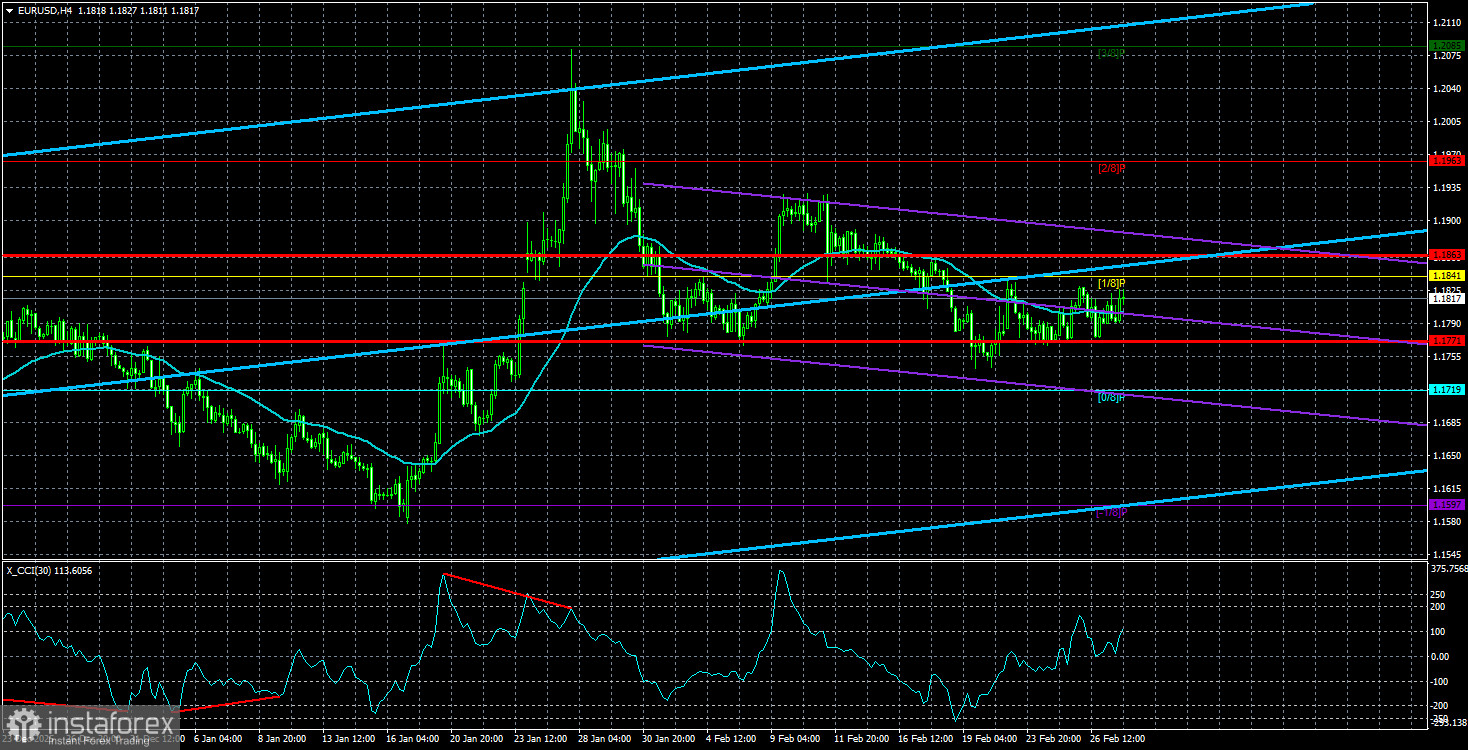
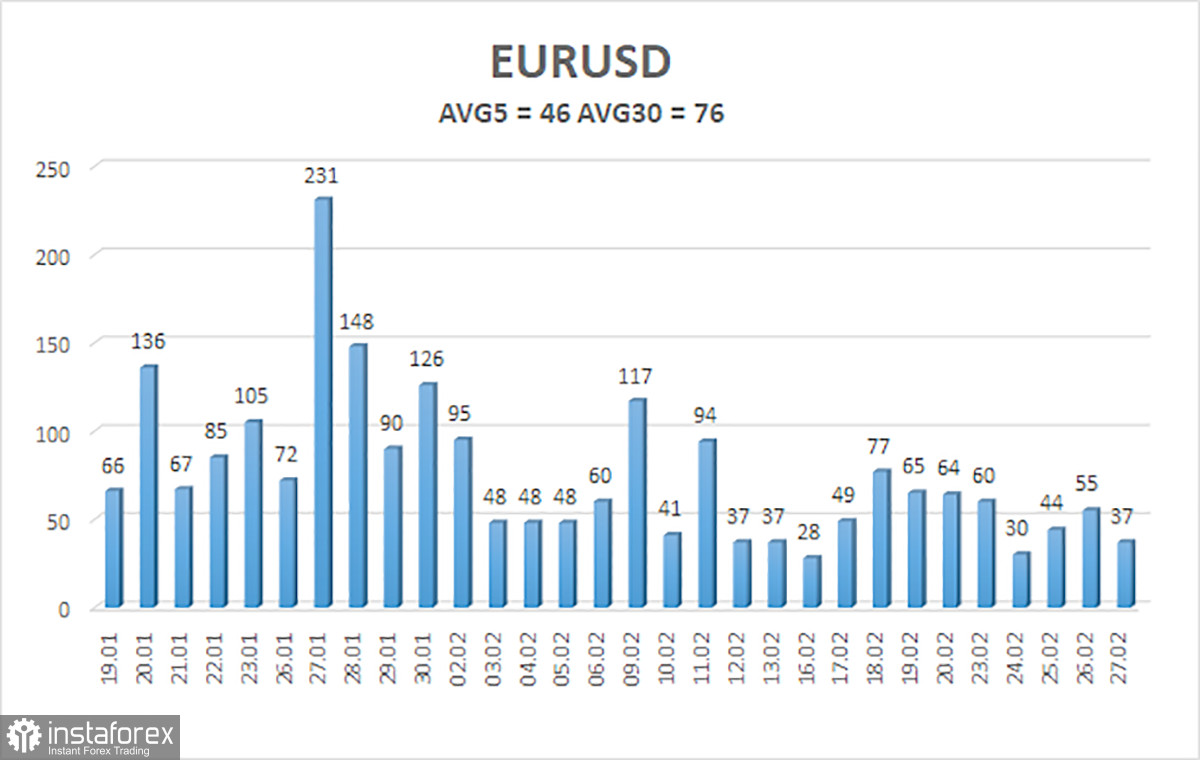
The EUR/USD currency pair exhibited no interesting movements on Friday. In fact, throughout the previous week and the entirety of February, volatility was very low, preventing traders from opening trades on timeframes longer than 5 minutes. What will the new week bring us? The new week may start with a new "storm" in the currency market. On Saturday, Donald Trump ordered a military operation in Iran, which involved large-scale missile attacks on government, military, and nuclear facilities across the country. During the first day of the operation, the supreme leader of Iran, Ali Khamenei, was killed. Several high-ranking officials, including military leaders, were also eliminated. Essentially, the operation in Iran could conclude quite quickly, though not all experts believe this. It is important to note that Trump aims to achieve a change of power in Iran. If Ali Khamenei is killed, but a leader who also refuses to pursue nuclear disarmament takes his place, then the military operation "Epic Fury" would be pointless. What difference does it make who will continue to develop the nuclear industry and create missiles capable of striking Europe or the US? Thus, Trump's objective is to carry out a coup, allowing opposition forces and revolutionaries to come to power; ideally, it would be someone from his own camp. Regardless, the conflict may drag on for a long time or may conclude in just a few days, as Trump mentioned on Saturday evening. Therefore, traders can only await Monday and the subsequent decisions from the US president. From our perspective, the dollar has appreciated in recent weeks, not least due to the escalating situation surrounding Iran. Now that military actions have begun, market reactions may be "emotional" and volatile—likely in the short term. On the one hand, the market has factored in the prospect of war in Iran for several weeks, so there is no reason for further dollar purchases. On the other hand, there is a difference between anticipating war and witnessing it unfold and seeing its scale. Until the last moment, no one understood how extensive the strikes on Iran would be. Additionally, what kind of retaliatory actions Tehran might take remains uncertain. It's also worth noting that, despite the dollar's recent strengthening, the US currency has again failed to show strong growth. Even on the 4-hour timeframe, all movement since January 28 is clearly a correction, which is much weaker and slower than the preceding growth. Thus, we maintain our view that the upward trend will continue, regardless of the fundamental and macroeconomic backdrop, which often provides little real support for the dollar. This week in the Eurozone, several important indicators will be published, including inflation and the final fourth-quarter GDP estimate. However, it is unclear whether the market will even notice this data, as recent volatility suggests a very weak desire among traders to trade.

Image


The average volatility of the EUR/USD currency pair over the last 5 trading days as of March 2 is 46 pips, which is considered "average." We expect the pair to trade between 1.1771 and 1.1863 on Monday. The upper channel of the linear regression is directed upwards, indicating further growth of the euro. The CCI indicator has entered oversold territory, suggesting a resumption of the upward trend. Nearest Support Levels: S1 – 1.1719 S2 – 1.1597 S3 – 1.1475 Nearest Resistance Levels: R1 – 1.1841 R2 – 1.1963 R3 – 1.2085 Trading Recommendations: The EUR/USD pair continues to correct within an upward trend. The global fundamental backdrop remains extremely negative for the dollar. The pair spent seven months in a sideways channel; it is likely that now is the time to resume the global trend of 2025. The dollar has no fundamental basis for long-term growth. Therefore, all the dollar can expect is a flat or corrective movement. When the price is below the moving average, small, short positions can be considered with a target of 1.1719 based purely on technical grounds. Above the moving average line, long positions remain relevant with targets of 1.1963 and 1.2085. Explanations for Illustrations: Linear regression channels help determine the current trend. If both are directed in the same way, it indicates that the trend is strong. The moving average line (settings 20,0, smoothed) determines the short-term trend and the direction in which trading should currently take place. Murray levels are target levels for movements and corrections. Volatility levels (red lines) indicate a probable price channel in which the pair will spend the next day, based on current volatility indicators. The CCI indicator entering the oversold area (below -250) or the overbought area (above +250) indicates that a trend reversal is approaching in the opposite direction.

Analysis are provided by InstaForex.

Read more: https://ifxpr.com/4cn1FLT
IFX Bella
 
Posts: 609
Joined: Sat Dec 08, 2012 12:39 am

Re: Instaforex Analysis

Postby IFX Bella » Tue Mar 03, 2026 2:51 am

Forex Analysis & Reviews: EUR/USD Overview. March 2. Iran – The Dollar's Main Ally

Image

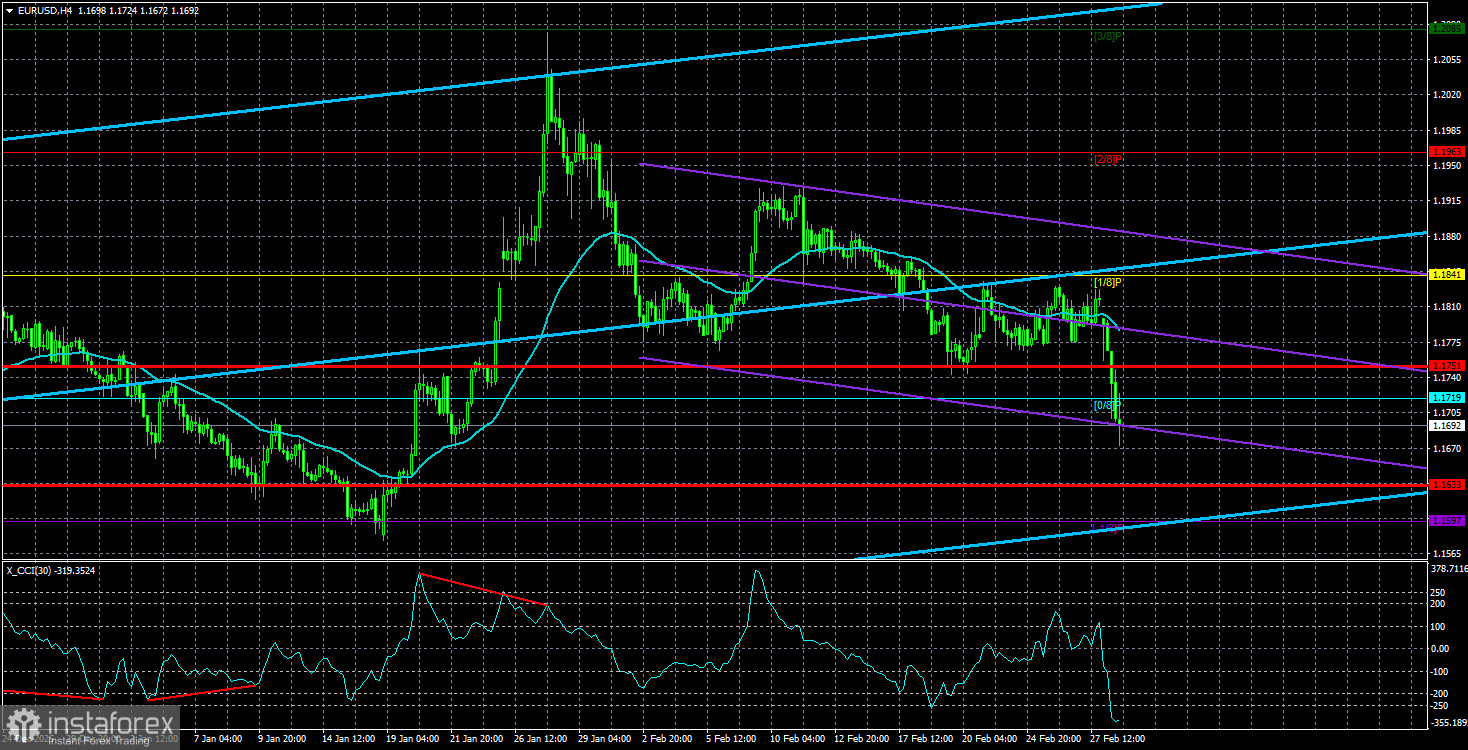
The EUR/USD currency pair declined sharply on Monday. Thus, our most pessimistic forecasts came true. The market is once again treating the dollar as a safe haven, finding no alternatives among other currencies. The euro and the pound are both struggling, which naturally benefits the Eurozone and the UK. However, no one seems to care who benefits from a strong dollar. In principle, there is little to say about the wars in the Middle East. What distinguishes one war from another? Nothing. Destruction of infrastructure, strikes on military bases, and civilian casualties. The US and Israel delivered the first strike on Iran on Saturday. Since then, Tehran has retaliated with missile strikes on more than a dozen countries where American military bases are located or which are considered allies of the US and Israel. Negotiations between Tehran and Washington have practically collapsed. Donald Trump will only call for a ceasefire if Tehran accepts Washington's conditions. But let's be honest: Tehran could have accepted Washington's terms many times over the past decades. The question is: how legitimate is Trump's latest ultimatum, presented as a "condition" or "business proposal"? In essence, Trump demands capitulation and a change of political course and regime in Iran. In simpler terms, Trump wants to see compliant leaders in charge of Iran, ready to carry out orders from the White House. There is nothing new in Trump's policies, as we can see. He imposed various tariffs and sanctions on the world, and there's nothing left to impose on Iran. The country has been living under global sanctions for about 50 years. Thus, instead of a "trade bludgeon," military force has had to be employed. The markets are reacting to the situation just as they would to any other escalation in the Middle East. Oil and gas prices have already soared, and markets are hedging against a prolonged war with Iran that may involve the entire Middle East to varying degrees. As for the currency market, as we mentioned, it's simple. The dollar is rising simply because it is a safe asset, a "safe haven." In reality, throughout 2025, the dollar actively squandered its status as a "safe currency." However, when a new full-scale war began, the market quickly returned to the dollar, as no other alternatives were found. The American currency, which had the potential to drop below the 20 level against the euro during the first two months of this "cheerful" year, is now reliably rising, ignoring macroeconomic factors. How long this rise will continue is simply impossible to say. Everything will depend on how long the war in the Middle East lasts and how long the Strait of Hormuz remains blockaded. By the way, experts have stated that Iran cannot block the Strait of Hormuz for an extended period. Similarly, Trump cannot overthrow the current regime and force Tehran to abandon its nuclear weapons without a ground operation. Meanwhile, Iran has indicated that it is prepared to continue responding to attacks. Thus, there is no talk of capitulation, despite the elimination of many high-ranking officials.

Image


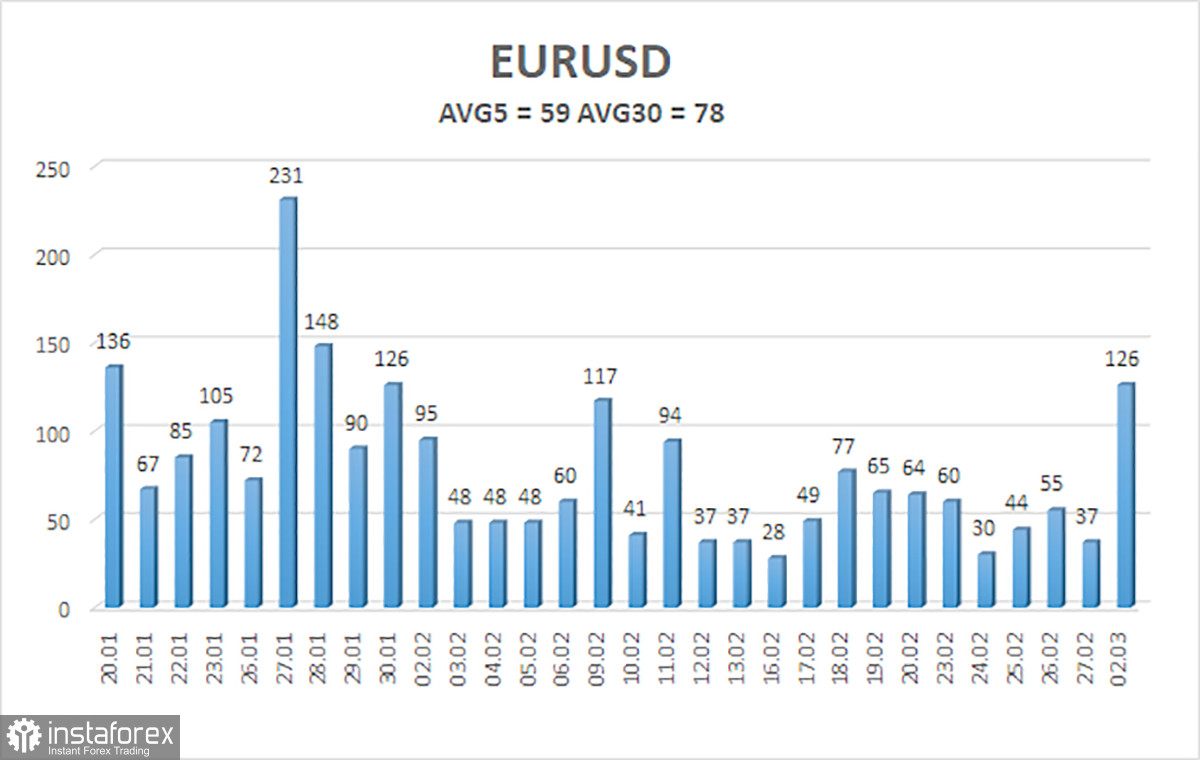
The average volatility of the EUR/USD currency pair over the last 5 trading days as of March 3 is 59 pips, which is considered "average." We expect the pair to trade between 1.1633 and 1.1751 on Tuesday. The upper channel of the linear regression points upward, indicating the continuation of the upward trend. The CCI indicator has once again entered oversold territory, signaling a possible resumption of the upward trend. Nearest Support Levels: S1 – 1.1597 S2 – 1.1475 Nearest Resistance Levels: R1 – 1.1719 R2 – 1.1841 R3 – 1.1963 Trading Recommendations: The EUR/USD pair continues to correct within an upward trend. The global fundamental backdrop remains crucial to the market and remains extremely negative for the dollar. The pair spent seven months in a sideways channel; it seems now is the time to resume the global trend of 2025. The dollar has no fundamental basis for long-term growth. We are currently observing another global correction. When the price is below the moving average, small short positions can be considered, with targets of 1.1633 and 1.1594, based on technical factors and the complex geopolitical situation. Above the moving average line, long positions remain relevant with targets of 1.1963 and 1.2085. Explanations for Illustrations: Linear regression channels help determine the current trend. If both are directed the same way, it indicates a strong trend. The moving average line (settings 20,0, smoothed) defines the short-term trend and trading direction. Murray levels are target levels for movements and corrections. Volatility levels (red lines) indicate a probable price channel in which the pair will spend the next day, based on current volatility indicators. CCI indicator – entering the oversold area (below -250) or the overbought area (above +250) indicates an approaching trend reversal in the opposite direction.

Analysis are provided by InstaForex.


Read more: https://ifxpr.com/402hErv
IFX Bella
 
Posts: 609
Joined: Sat Dec 08, 2012 12:39 am

Re: Instaforex Analysis

Postby IFX Bella » Wed Mar 04, 2026 4:09 am

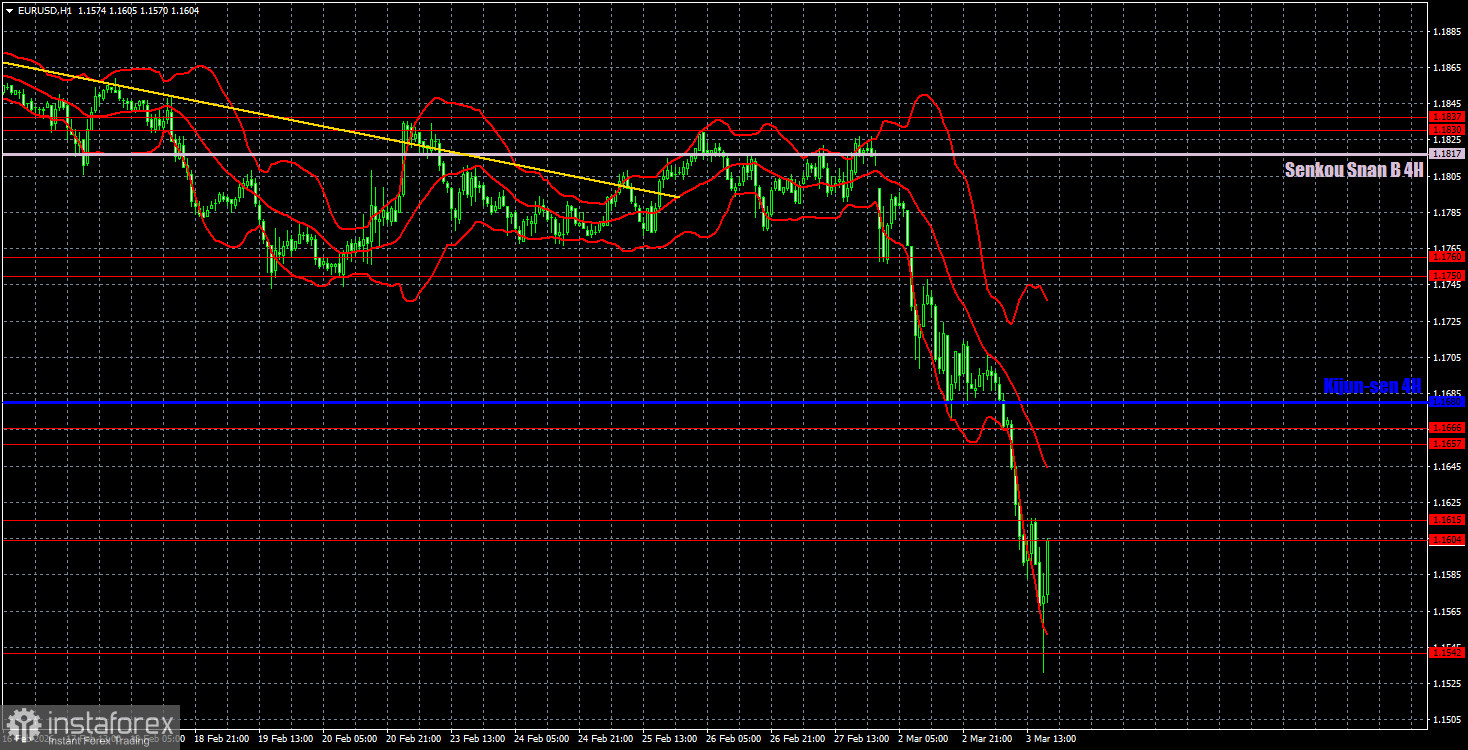
Forex Analysis & Reviews: Trading Recommendations and Analysis for EUR/USD on March 4. The Decline Continues, but It Will End Soon

Analysis of EUR/USD 5M


Image

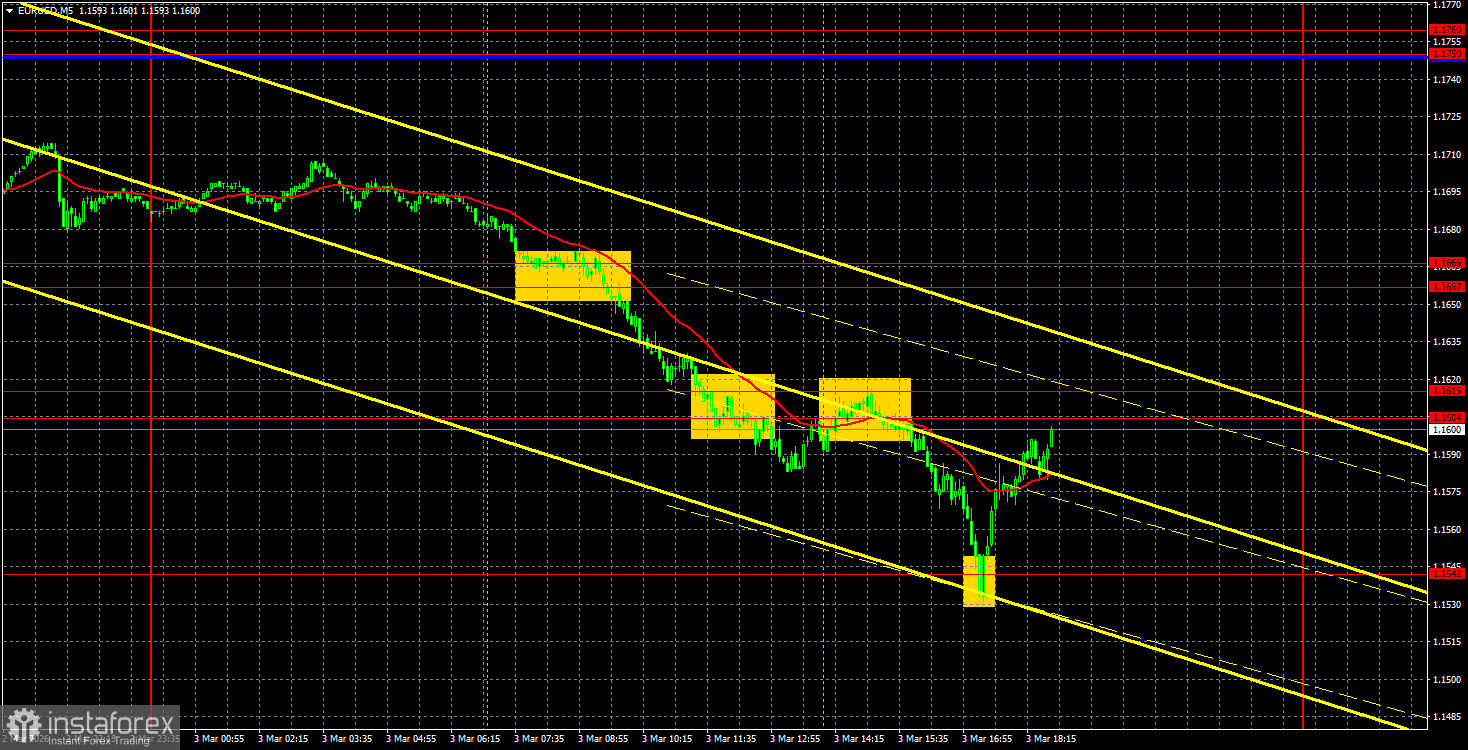
The EUR/USD currency pair has continued its sharp decline, but now the US dollar's new powerful growth is working against it. Recall that the only reason for the rise of the American currency this week and in recent weeks has been geopolitics. Namely, the full-scale war in the Middle East involving at least 10 countries. Additionally, there are reports that Iran has launched missile strikes on American bases located in Turkey and Cyprus. Thus, the geography of the conflict is expanding rapidly. The energy markets are soaring, the cryptocurrency market is stagnant, and the currency market is plunging (with the dollar rising). However, we still do not believe that the dollar will continue its victorious march. Now, of course, the pair will need time to recover from the blow and return to the year's highs. But again: what reasons are there for the dollar to rise, apart from geopolitical factors? The conflict in Iran involving the US has obviously been brewing in recent weeks, but how long will the market continue to buy dollars based solely on this factor? Recall that this week, US labor and unemployment data will be released, and macroeconomic data from across the ocean remain quite contradictory. Donald Trump's policies have not changed, the trade war continues, and by the end of the year, the US president could well face impeachment. In our view, there are no compelling reasons for the dollar to rise. On the 5-minute timeframe, four excellent signals were formed on Tuesday. First, the pair consolidated below the 1.1657-1.1666 area, then broke through the 1.1604-1.1615 area, and subsequently bounced off the 1.1542 level. Thus, traders could initially open short positions, which yielded at least 80-90 pips in profit, and then open long positions, which also closed profitably as the nearest target was reached.

COT Report

Image


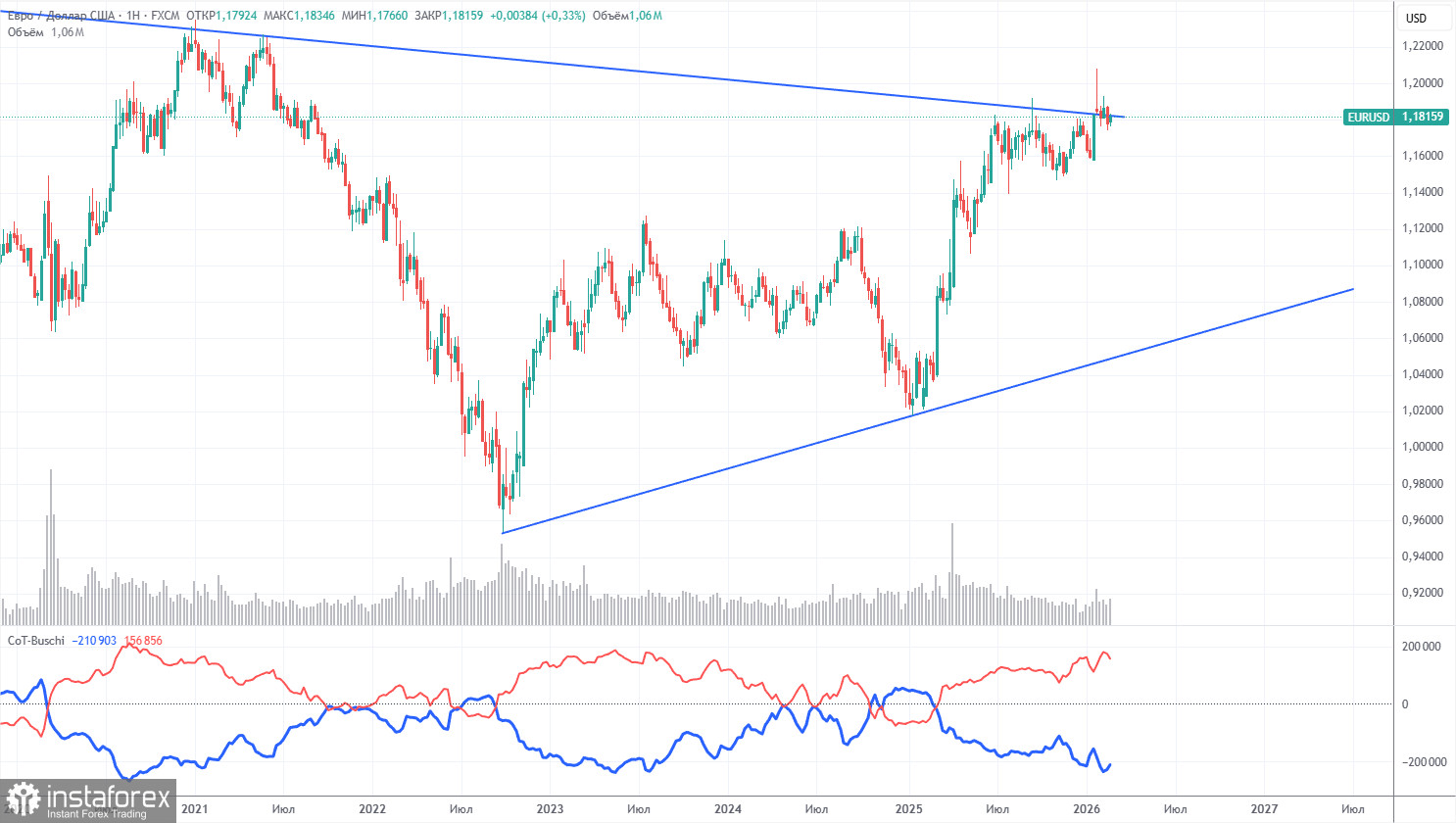
The latest COT report is dated February 24. The weekly timeframe illustration clearly shows that the net position of non-commercial traders remains "bullish," and since Trump took office as US President for the second time, the dollar has only been falling. We cannot say that the decline of the American currency will continue with 100% probability, but current developments around the world suggest this is a possibility. We still do not see any fundamental factors that would strengthen the European currency, while there remain sufficient factors for the decline of the American one. The global downward trend is still in place, but what significance does it have now regarding where the price has moved over the last 18 years? A new upward trend has formed since September 2022, breaking the global downward trend line. Thus, the path further north is open. The indicator's red and blue lines still indicate a "bullish" trend. During the last reporting week, the number of longs for the "Non-commercial" group decreased by 16,700, while the number of shorts increased by 900. Consequently, the net position decreased by 15,800 contracts over the week.

Analysis of EUR/USD 1H

Image

On the hourly timeframe, the EUR/USD pair continues a strong downward movement amid geopolitical events in the Middle East. It remains unclear how long the dollar's rise driven by this single factor will persist, as it will depend on the intensity and duration of the war, losses on both sides, and the US's ability to achieve its set objectives. However, we are once again seeing a downward trend. For March 4, we identify the following trading levels: 1.1362, 1.1426, 1.1542, 1.1604-1.1615, 1.1657-1.1666, 1.1750-1.1760, 1.1830-1.1837, 1.1907-1.1922, 1.1971-1.1988, as well as the Senkou Span B line (1.1817) and Kijun-sen (1.1680). The Ichimoku indicator lines may shift during the day, which should be taken into account when determining trading signals. We do not forget to set a stop-loss order at break-even if the price moves in the correct direction by 15 pips. This will protect against potential losses if the signal turns out to be false. On Wednesday, only secondary reports are scheduled in the European Union, such as the second estimates of business activity indices in the service sectors for February or the unemployment rate. In the US, a significant ISM report for the services sector and a less significant ADP report for the US labor market will be released. Today will show whether the market will continue to react solely to the geopolitical factor.

Analysis are provided by InstaForex.

Read more: https://ifxpr.com/4u83Nxq
IFX Bella
 
Posts: 609
Joined: Sat Dec 08, 2012 12:39 am

Re: Instaforex Analysis

Postby IFX Bella » Thu Mar 05, 2026 3:38 am

Forex Analysis & Reviews: EUR/USD Overview on March 5. Is the Dollar's Fairy Tale Over?

Image

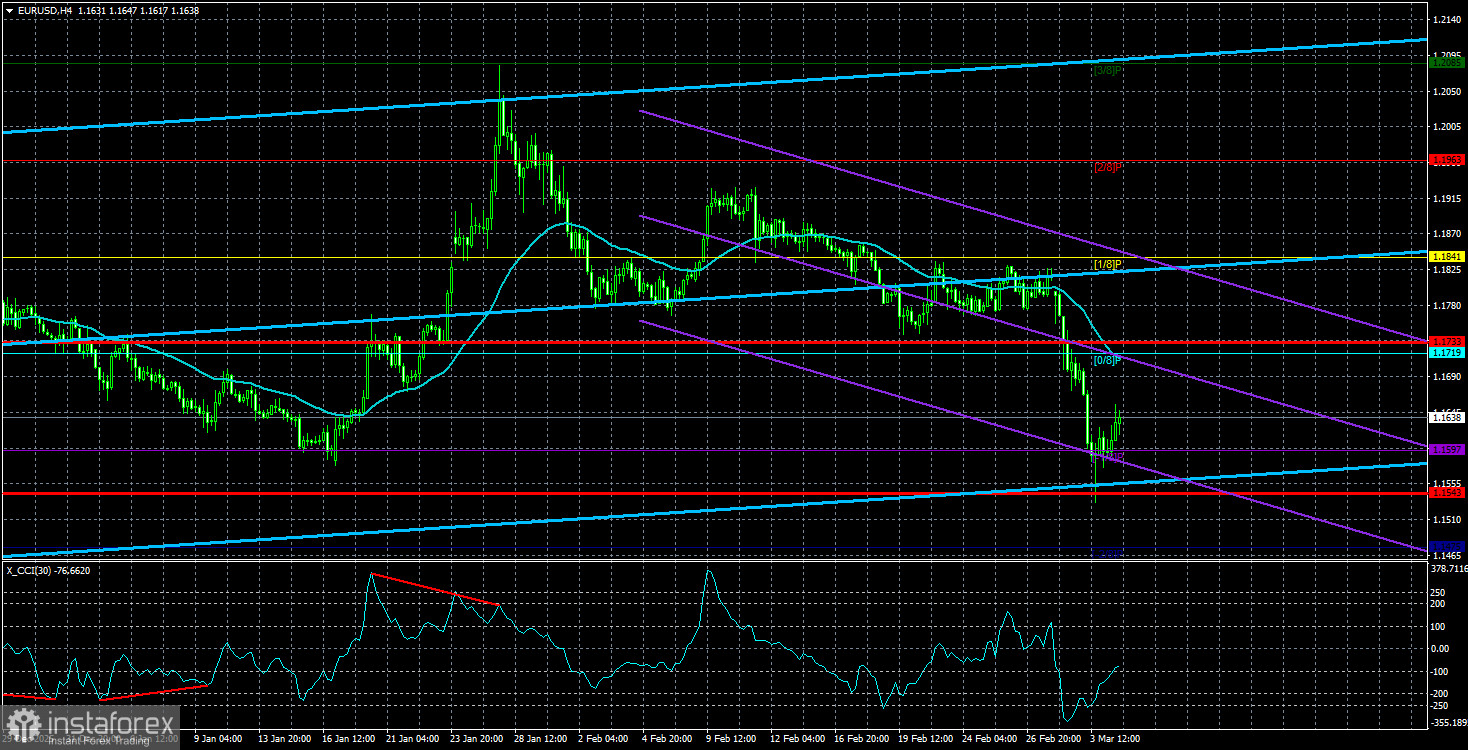
The EUR/USD currency pair halted its freefall and even posted a slight correction on Wednesday. However, it is still too early to conclude that the "dollar trend" has ended, as it is entirely dependent on the situation in the Middle East. Yet, we want to point out a simple logical chain expressed in the question, "What if the war in Iran lasts a month or even a year?" Will the dollar appreciate throughout this period? Unlikely. We believe that the market reacts strongly and emotionally to such events only at first, and then tends to forget about them. For instance, the war between Ukraine and Russia has been going on for its fifth year now, yet the dollar hasn't appreciated amidst the ongoing geopolitical conflict in Eastern Europe! The same fate awaits the conflict in the Middle East. Perhaps the dollar will continue to trend upward for a week or even two. The fact is that Iran has begun launching attacks not only on American military vessels in the Persian Gulf or on Israel but also on all US bases that its missiles can reach, including Turkey and even Cyprus. It is unlikely that Greece or Turkey would welcome such circumstances, even if the strikes were directed solely at American military bases. Therefore, Iran may soon face severe bombardment not only from Israel and the US but also from America's closest allies in the region, and even from Turkey, which is a NATO member. Of course, a new escalation of the conflict in the Middle East may further increase investors' demand for safe-haven assets like the dollar. However, we still believe the initial shock has passed, and if the dollar appreciates further, it will do so at a slower pace than on Monday and Tuesday. The market will gradually shift its focus to economic events, and the dollar has reasons to be cautious in this regard. Recall that the US economy showed signs of slowing down in the fourth quarter. Overall, it is growing more slowly than during Joe Biden's tenure. Thus, the "golden age" of Trump has yet to reflect in real macroeconomic indicators. Inflation has slowed to 2.4%, allowing the Fed to transition to easing monetary policy in the near future. The energy crisis primarily affects Europe, but not the US. America has enough shale oil, and the main issue for Americans is Trump, not rising gasoline and gas prices. Thus, we currently do not see enough grounds for the continued strength of the US currency. Admittedly, we did not expect the dollar to show such strong growth in February and March, but no one could predict the scale of the war in the Middle East in advance. Everyone thought it would be a military operation to eliminate key Iranian leaders and a second attempt to destroy the country's nuclear facilities. As often happens, reality turned out to be different.

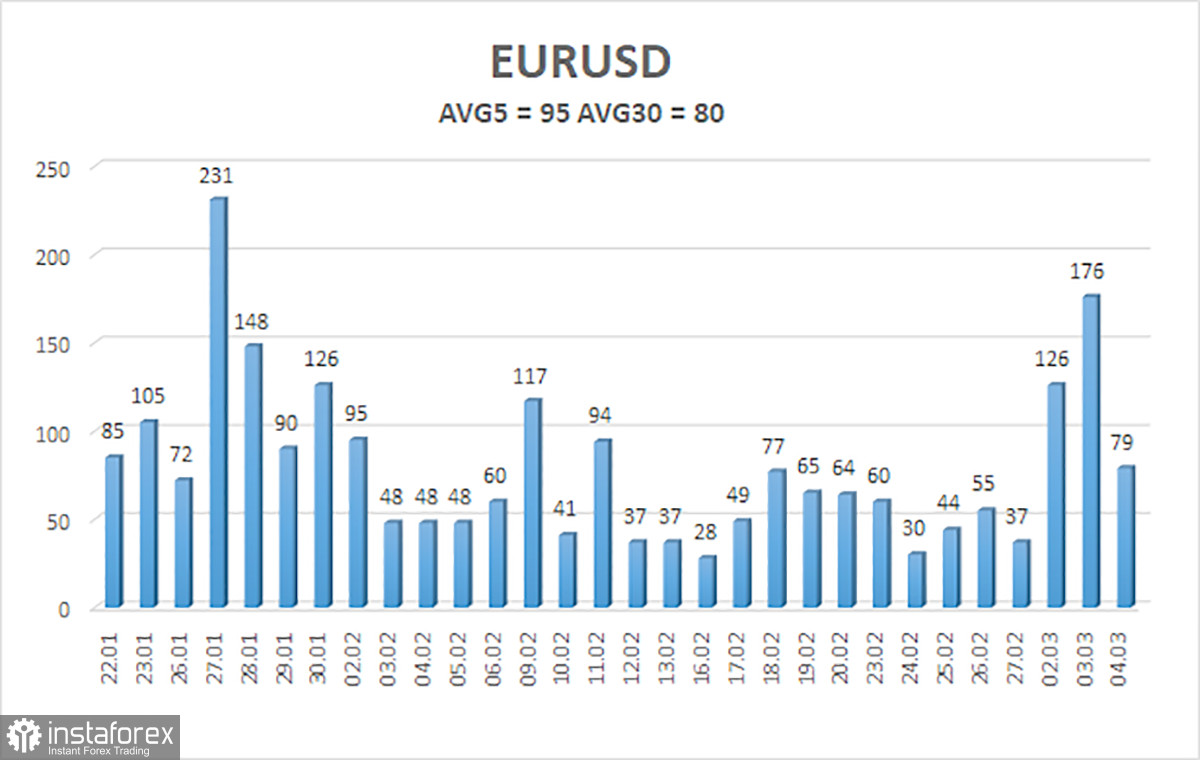
Image

The average volatility of the EUR/USD currency pair over the last five trading days as of March 5 is 95 pips, which is considered "average." We expect the pair to range between levels 1.1543 and 1.1733 on Thursday. The upper channel of the linear regression is directed upward, indicating the preservation of the upward trend. The CCI indicator has once again entered the oversold area, further signaling a potential resumption of the upward trend. Nearest Support Levels: S1 – 1.1597 S2 – 1.1475 Nearest Resistance Levels: R1 – 1.1719 R2 – 1.1841 R3 – 1.1963 Trading Recommendations: The EUR/USD pair continues its correction within the upward trend. The global fundamental backdrop remains highly negative for the dollar. The pair has spent seven months in a sideways channel; it is likely we are now at a point to resume the global trend of 2025. The dollar currently lacks a fundamental basis for long-term growth. We are witnessing another global correction at this time. If the price is below the moving average, traders can consider small short positions targeting 1.1597 and 1.1543 based on technical (correctional) grounds and the complex geopolitical situation. Above the moving average, long positions remain relevant with targets at 1.1963 and 1.2085. Explanations for Illustrations: Linear regression channels help determine the current trend. If both are directed the same way, the trend is strong. The moving average line (settings 20,0, smoothed) indicates the short-term trend and direction for trading. Murray levels are target levels for movements and corrections. Volatility levels (red lines) indicate the probable price channel in which the pair will move over the next day, based on current volatility metrics. The CCI indicator entering the oversold area (below -250) or the overbought area (above +250) indicates an impending reversal of the trend in the opposite direction.

Analysis are provided by InstaForex.


Read more: https://ifxpr.com/4r88TqZ
IFX Bella
 
Posts: 609
Joined: Sat Dec 08, 2012 12:39 am

Re: Instaforex Analysis

Postby IFX Bella » Fri Mar 06, 2026 2:27 am

Forex Analysis & Reviews: GBP/USD Overview on March 6. Can We Forget About Easing Monetary Policy?

Image

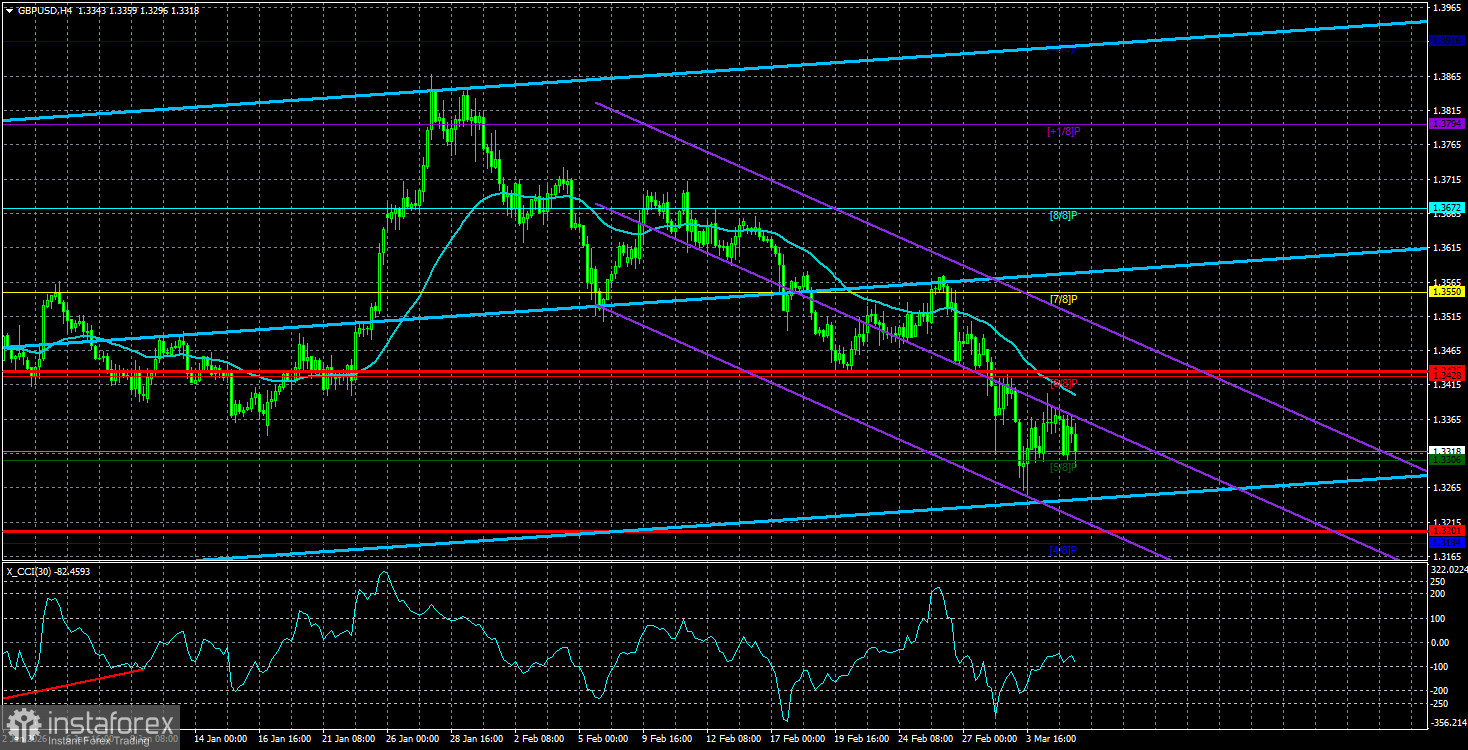
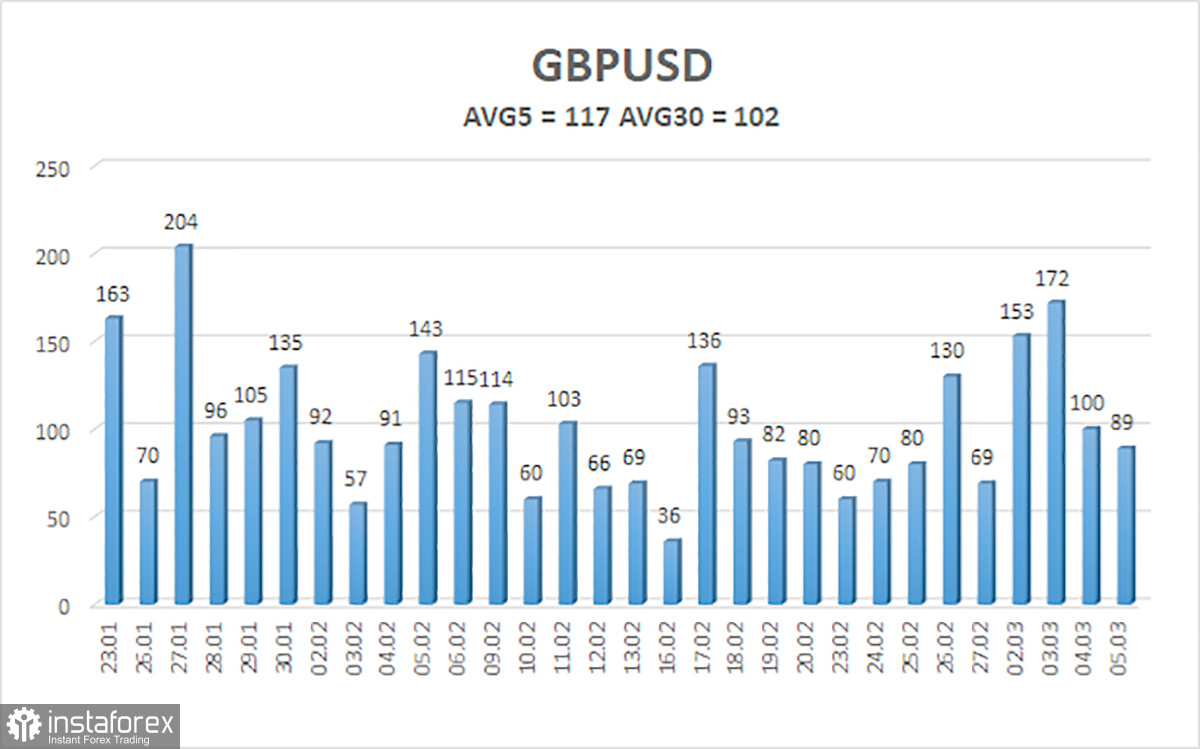
The GBP/USD currency pair continues to maintain a downward trend on the 4-hour timeframe, and on Thursday, it held on for most of the day, trying not to drop further. Overall, the initial market shock has subsided, so we no longer see grounds for further declines driven solely by geopolitical factors. There are no other reasons for the dollar to grow. Instead, a new challenge is emerging—the energy crisis. For the UK, this crisis has a fairly indirect connection, as British industry and consumers are, for the most part, adequately supplied with gas and oil. The much greater danger lies for the Eurozone. However, it should be understood that even if the British do not start freezing in winter due to a lack of gas for heating, and gasoline does not start costing £5 per liter, this does not mean that the rest of the world will not face energy problems, and prices worldwide will not rise due to increasing oil and gas costs. Prices in Europe will rise, and the UK will see the same. Inflation in the UK has just dropped to 3%, giving hope last week of a reduction in the key rate. However, Donald Trump decided to start a war, so currently, the chances of a rate cut from the Fed and the Bank of England are zero. It's simple: both central banks expect inflation to start spiraling again due to the significant rise in fuel, gas, and oil prices. If this is the case, further easing of monetary policy is not only impractical but also dangerous. Both central banks currently maintain their key rates at 3.75%. Thus, in this regard, the pound and the dollar are on equal footing. However, in our view, the British pound still has more promising prospects for 2026. Firstly, the daily and weekly timeframes show a preserved upward trend. Secondly, the dollar has been rising for the past month and a half for no apparent reason. Thirdly, today, information about the state of the labor market and unemployment will come from across the ocean. Of course, the UK could also become involved in the war against Iran to avoid upsetting Trump. Events in the Middle East may provoke more than one escape from risk assets by investors. Therefore, one cannot be certain that the dollar will not continue to rise. However, we do not believe the market will react exclusively to geopolitical factors throughout 2026. On the daily timeframe, the price has encountered the Senkou Span B line at 1.3286 and has struggled to stay below it for three consecutive days. Of course, if we see 200,000 Nonfarm Payrolls today and a third consecutive decline in the unemployment rate, a wave of euphoria will sweep over dollar enthusiasts, and tomorrow every expert will declare that there is no better "safe haven" than the dollar, and there never has been.

Image

The average volatility of the GBP/USD pair over the last 5 trading days is 117 pips, which is considered "high." On Friday, March 6, we expect the pair to trade within a range bounded by 1.3201 and 1.3435. The upper channel of the linear regression is directed upward, indicating a trend recovery. The CCI indicator has once again entered oversold territory, signaling a potential end to the correction. Nearest Support Levels: S1 – 1.3306 S2 – 1.3184 S3 – 1.3062 Nearest Resistance Levels: R1 – 1.3428 R2 – 1.3550 R3 – 1.3672 Trading Recommendations: The GBP/USD pair has been in correction for a whole month now, but its long-term prospects have not changed. Trump's policies will continue to exert pressure on the US economy, so we do not expect the US currency to grow in 2026. Even its status as a "reserve currency" no longer plays a key role for traders. Thus, long positions targeting 1.3916 and higher remain relevant as long as the price is above the moving average. If the price is below the moving average, small short positions can be considered with a target of 1.3201 based on technical (correctional) grounds. In recent weeks, nearly all news and events have turned against the British pound, prolonging the correction.

Analysis are provided by InstaForex.

Read more: https://ifxpr.com/3PkR9ev
IFX Bella
 
Posts: 609
Joined: Sat Dec 08, 2012 12:39 am

Previous

Return to Forex Brokers