
Instaforex Analysis

Forex broker related topics and discussions

Re: Instaforex Analysis

Postby IFX Bella » Tue Feb 10, 2026 2:55 am

Forex Analysis & Reviews: EUR/USD Review. February 10. Euro Aims for Levels 21-22

Image

The EUR/USD currency pair unexpectedly began to rise on Monday. Although, upon closer inspection, nothing was surprising about this growth. Many traders frequently make the same mistake. They believe that market movements occur only under the influence of specific events, such as macroeconomic or fundamental factors. However, this is not the case at all. The market operates in much more complex ways. For instance, last week we saw practically no movement. Before that, there was a weekly rise in the dollar, which had little basis. However, technically, we first saw a 500-pip rise, followed by a reasonable correction, a brief pause, and then the resumption of the primary trend, which is clearly visible on the daily timeframe. Therefore, from our perspective, the European currency is once again aiming for the 21 level. Are there grounds for this? A million. The ongoing and constantly escalating trade war, Trump's military and geopolitical ambitions, the scandal related to the "Epstein case," the persistent pressure from Trump on Jerome Powell, Lisa Cook, and the entire Federal Reserve, and the weakness of the labor market all contribute to this. The market simply cannot find reasons to buy the dollar. It has even ceased to trust macroeconomic data. Traders are no longer impressed by economic growth rates of 4.4% or strong readings in business activity indices. Trump has turned half the world against him, including many foreign investors. Protests against the president are occurring in America with alarming regularity, and his political rating has plummeted to its lowest levels. Many political experts predict that the Republican Party will lose one or both chambers of Congress by November. Naturally, the strengthening of the European currency is not related to Christine Lagarde's morning speech or the European Central Bank's policies in general. Lagarde stated just last week that the central bank does not intend to change interest rates based on inflation at 1.7%, but warned that, due to the high euro exchange rate, the consumer price index may slow further. If this happens, in which direction will the ECB be considering? Obviously, towards a "dovish" stance. Therefore, if we are destined to see a change in ECB rates in 2026, it will clearly be downward. Thus, one could say that "dovish" market expectations are slowly rising, but this is not reflected in the euro's exchange rate at all. The reason, as we have already mentioned, is one: Donald Trump and his brilliant policies. Many traders may wonder why the EUR/USD pair did not rise between August and January. However, we have answered this question many times. The market was flat for 7 months—a necessary part of any trend. We also stated that market makers would eventually finish forming their positions, that the trend would resume, and that the positions were clearly not short.
Image

Analysis are provided by InstaForex.


Read more: hhttps://ifxpr.com/4quFwPk
IFX Bella
 
Posts: 590
Joined: Sat Dec 08, 2012 12:39 am

Re: Instaforex Analysis

Postby IFX Bella » Wed Feb 11, 2026 3:46 am

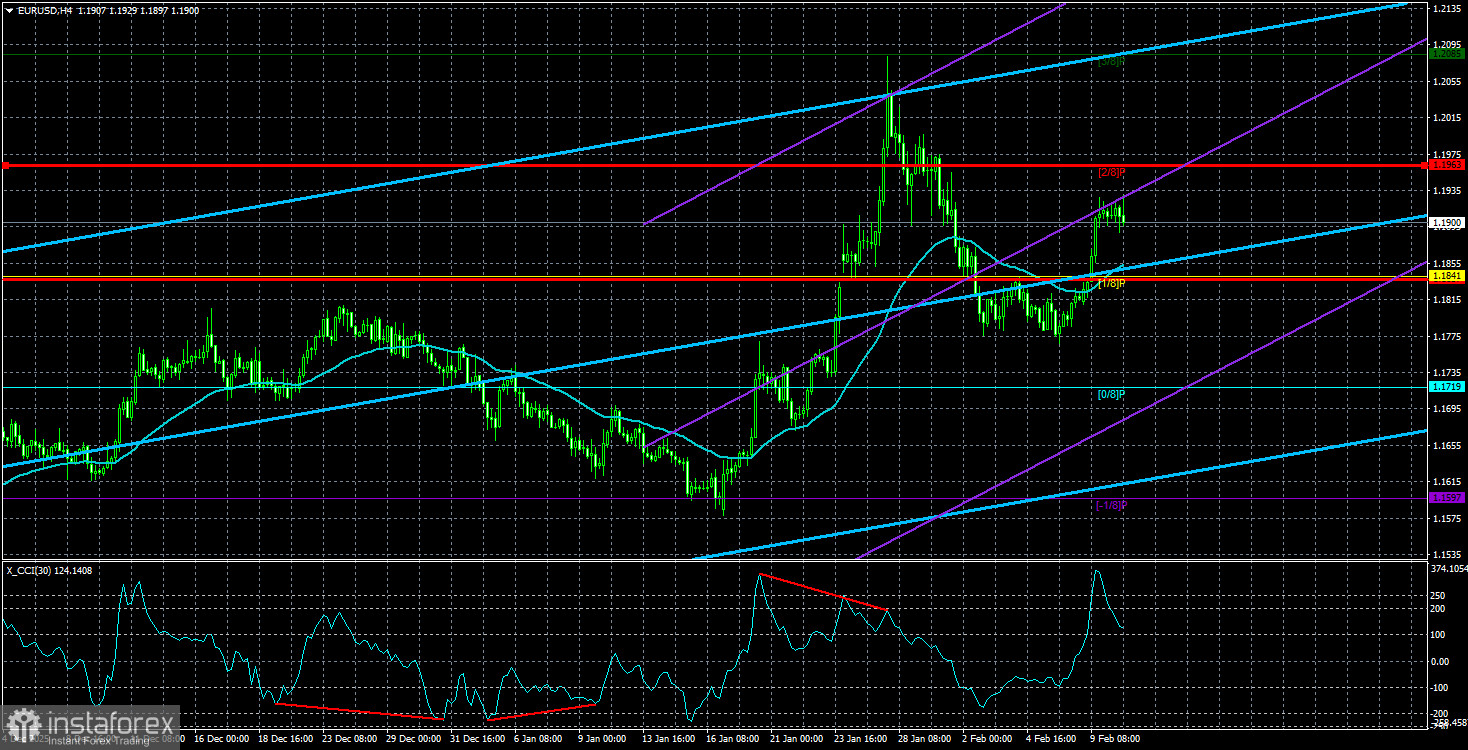
Forex Analysis & Reviews: EUR/USD Review. February 11. One Battle After Another

Image

The EUR/USD currency pair traded calmly on Tuesday. The new year has just begun, yet it has already brought the markets so many events that it would be enough for several months ahead. However, the flow of news shows no signs of drying up. Just the day before, it became known that the Chinese government had prohibited its banks from purchasing US Treasury bonds. As the saying goes, "an eye for an eye, a tooth for a tooth." We have long stated that China is one of the few players on the world stage prepared to respond to Washington and Trump with equal force. You raise tariffs on our products? We will respond by restricting exports of rare earth metals or cease purchasing your Treasuries. China can hardly retaliate against the US in terms of trade. However, it can counter in other areas. Metaphorically speaking, both the US and China hold strong cards, but they are of different suits. As a result, the dollar failed to recover from the weekend and immediately fell by 100 pips. On Tuesday, it managed to avoid another collapse, but such a drop seems inevitable. Reports on Non-Farm Payrolls and unemployment will be published in the US today, and inflation data will follow on Friday. What would you bet on in the current circumstances? A strong labor market or another failure? Of course, individual reports could provide support for the dollar. We have mentioned many times that the irony is that the market assesses not the actual state of the labor market but the relationship of the actual report values to the forecast. In other words, the labor market doesn't need strong metrics for the dollar to rise; it just needs to show a value above the forecast. Thus, for the dollar to show growth today, Non-Farm Payrolls must exceed 70,000, and the unemployment rate must not exceed 4.4%. If these conditions are met, the American currency will strengthen. However, it is unlikely to be strong or long-lasting. While the market enjoys playing out the "expectation/reality" scenario, it still understands that even 80,000 new jobs is woefully insufficient for a country like the US. Furthermore, we should not forget that each Non-Farm Payroll report revises the estimates for previous months, and, as a rule, downwards. Therefore, the value for January may be relatively high, while the values for November and December may be revised downwards. On the daily timeframe, the technical picture remains clear. There are no signs of the completion of the global upward trend that began back in 2022 and intensified in 2025. Last week, the EUR/USD pair corrected lower after a sharp 500-pip rise. Now, we may be entering a new phase of the trend. The only concern is that the CCI indicator has entered the overbought zone, warning of a potential downward correction. But this week's movements will depend on macroeconomic data rather than the CCI indicator. For now, the dollar is losing one battle after another.

Image

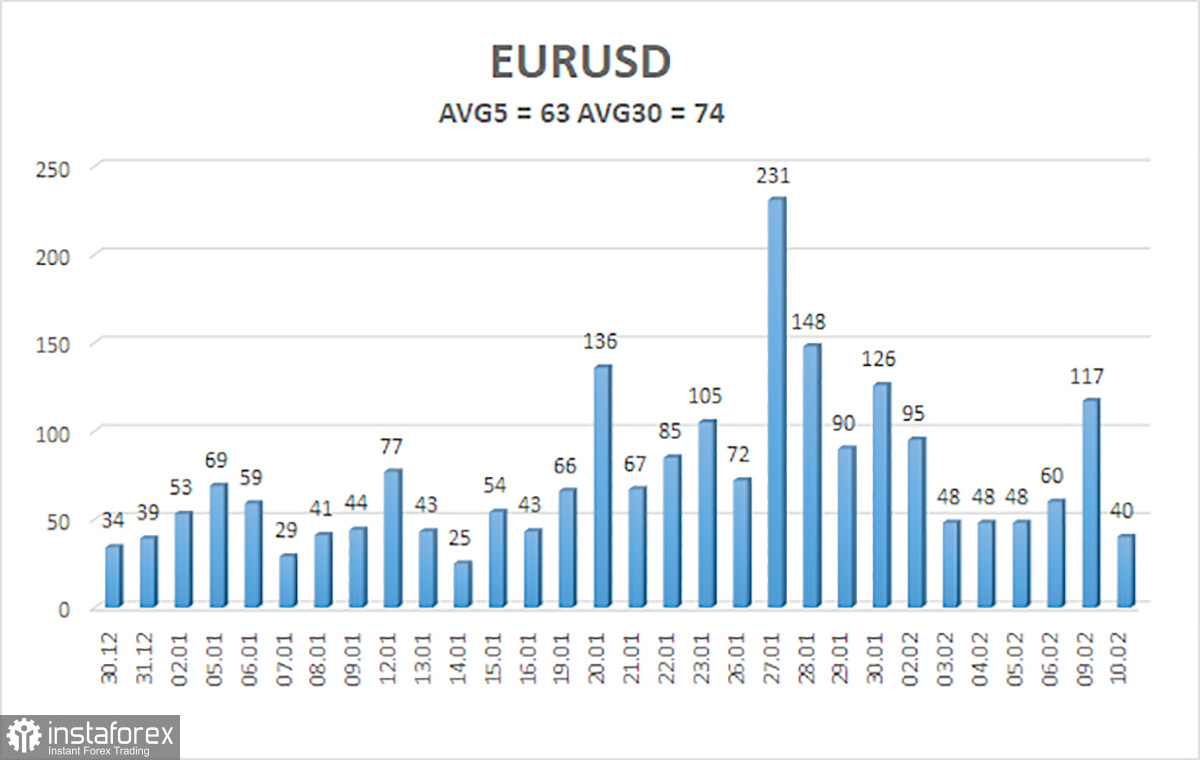
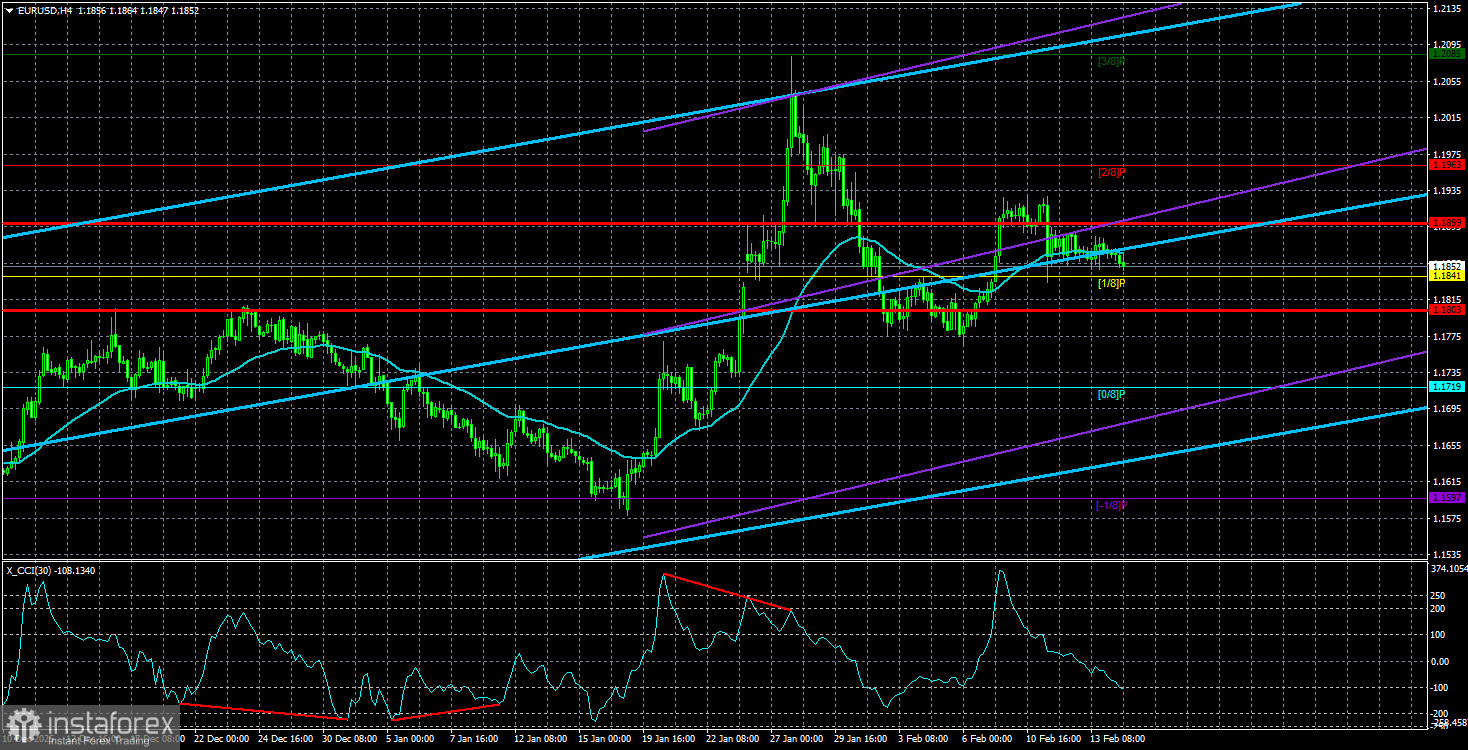
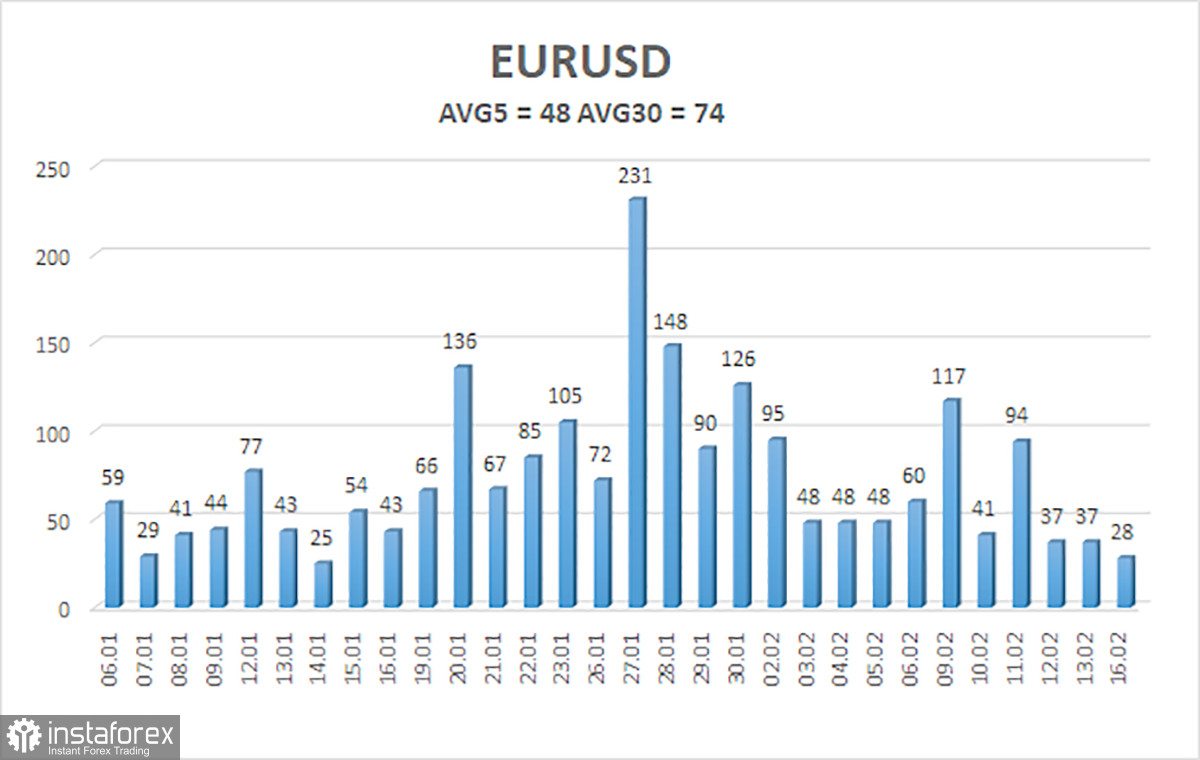
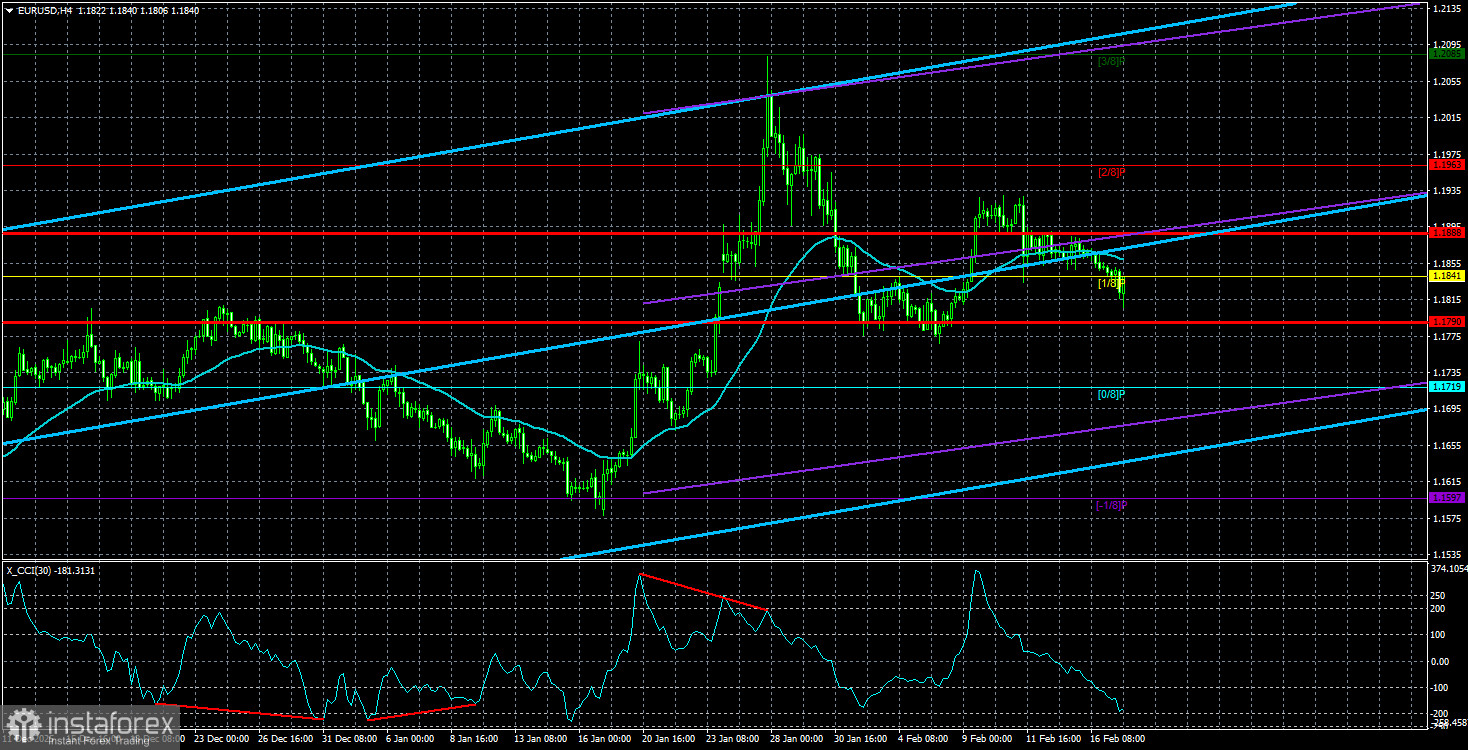
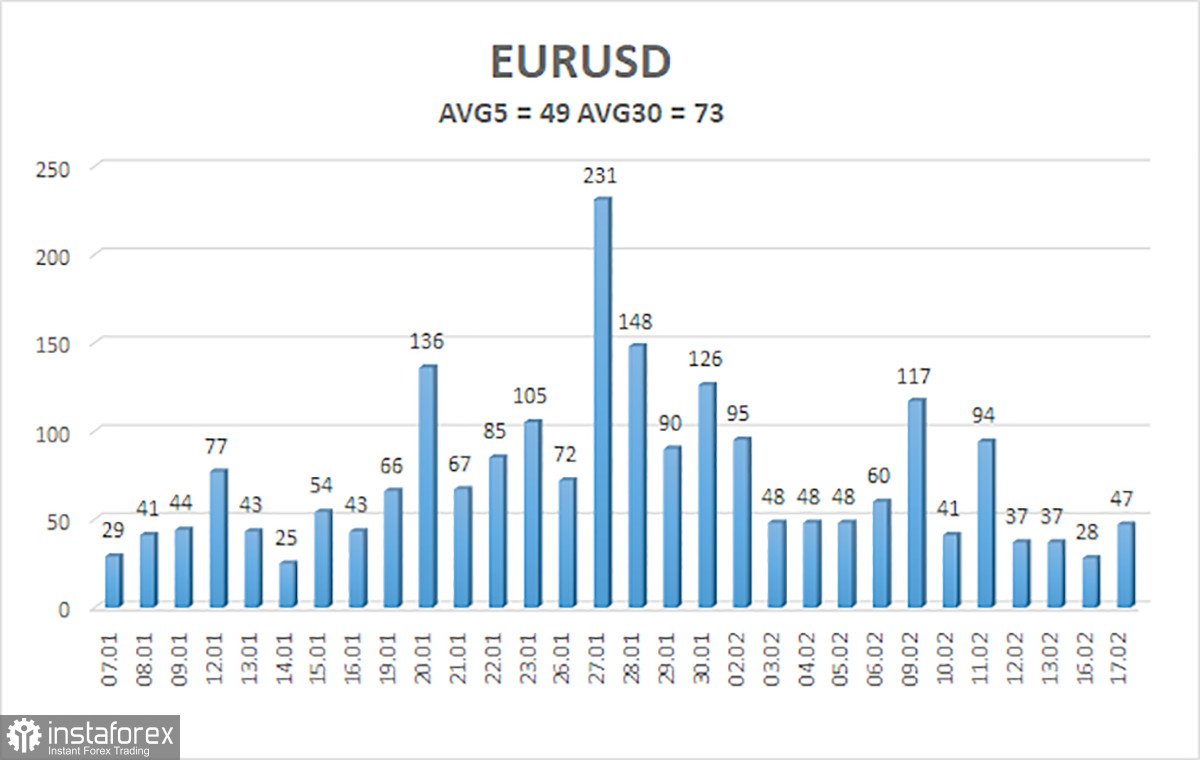
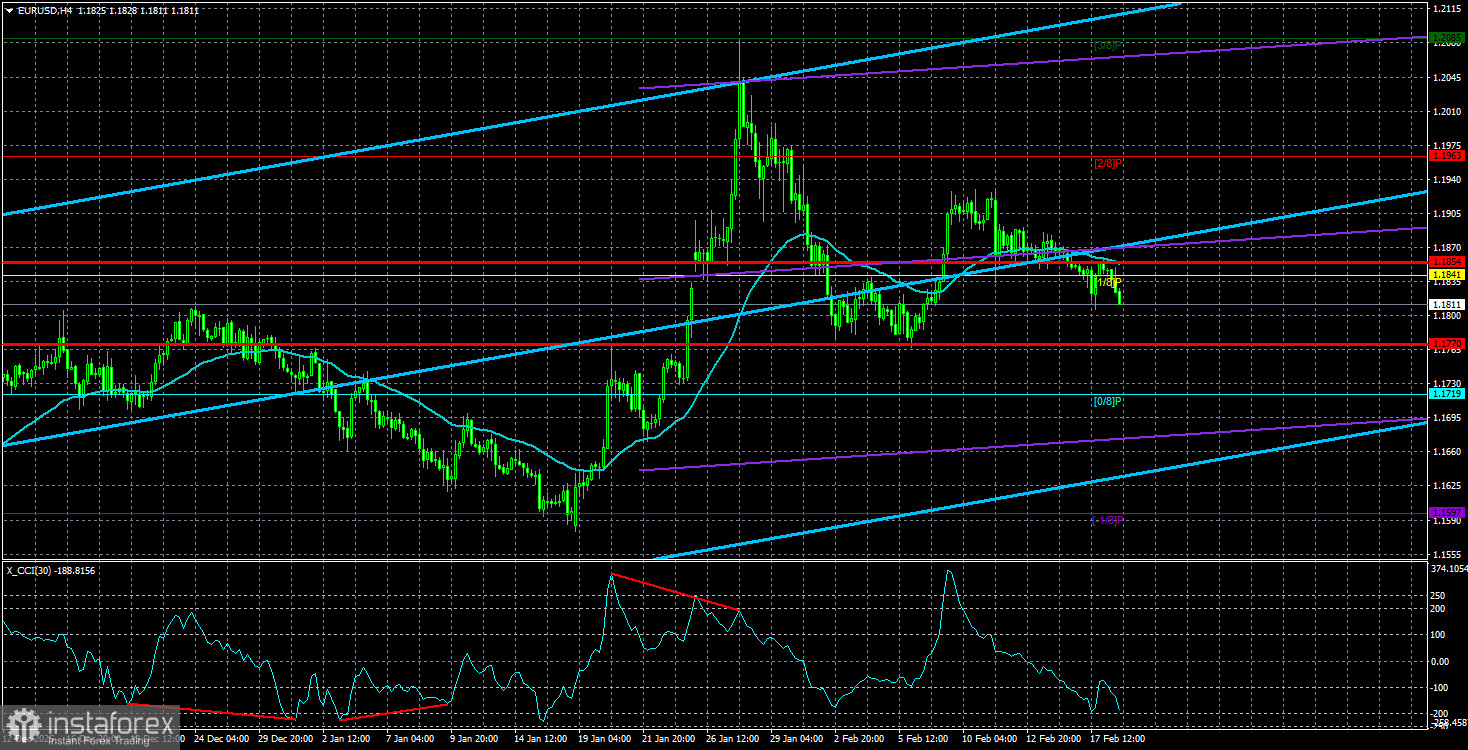
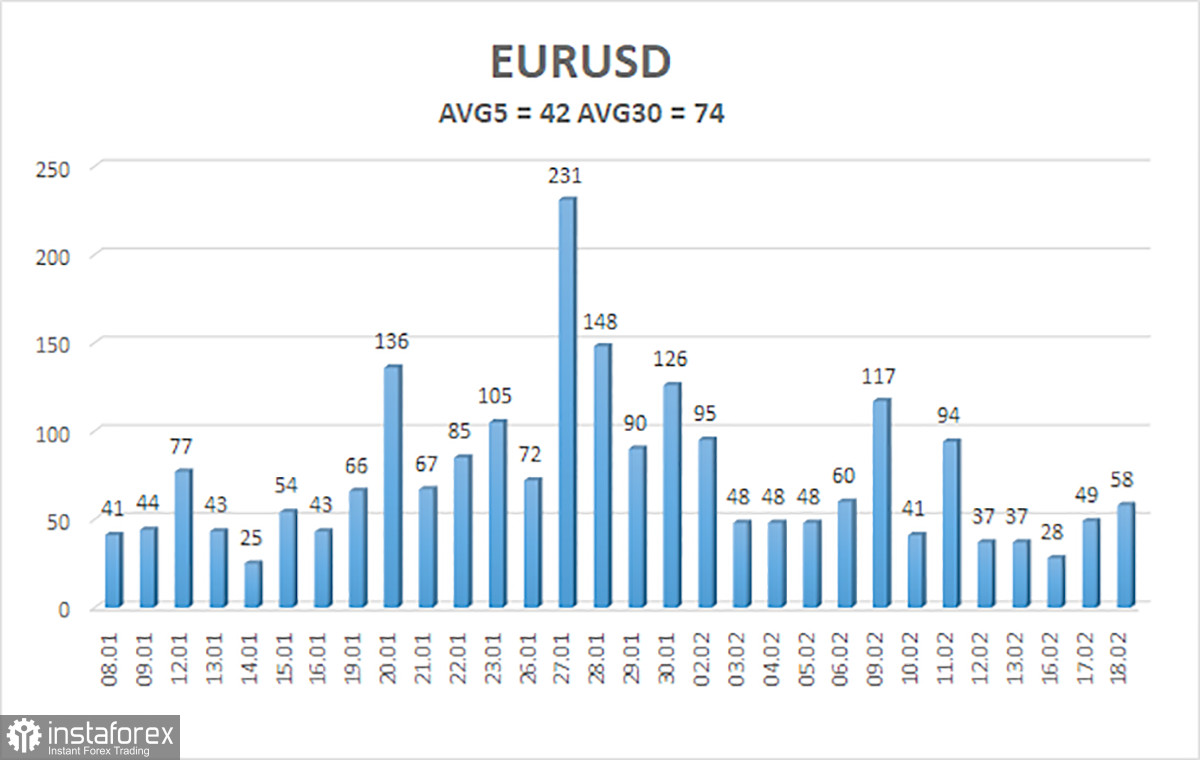
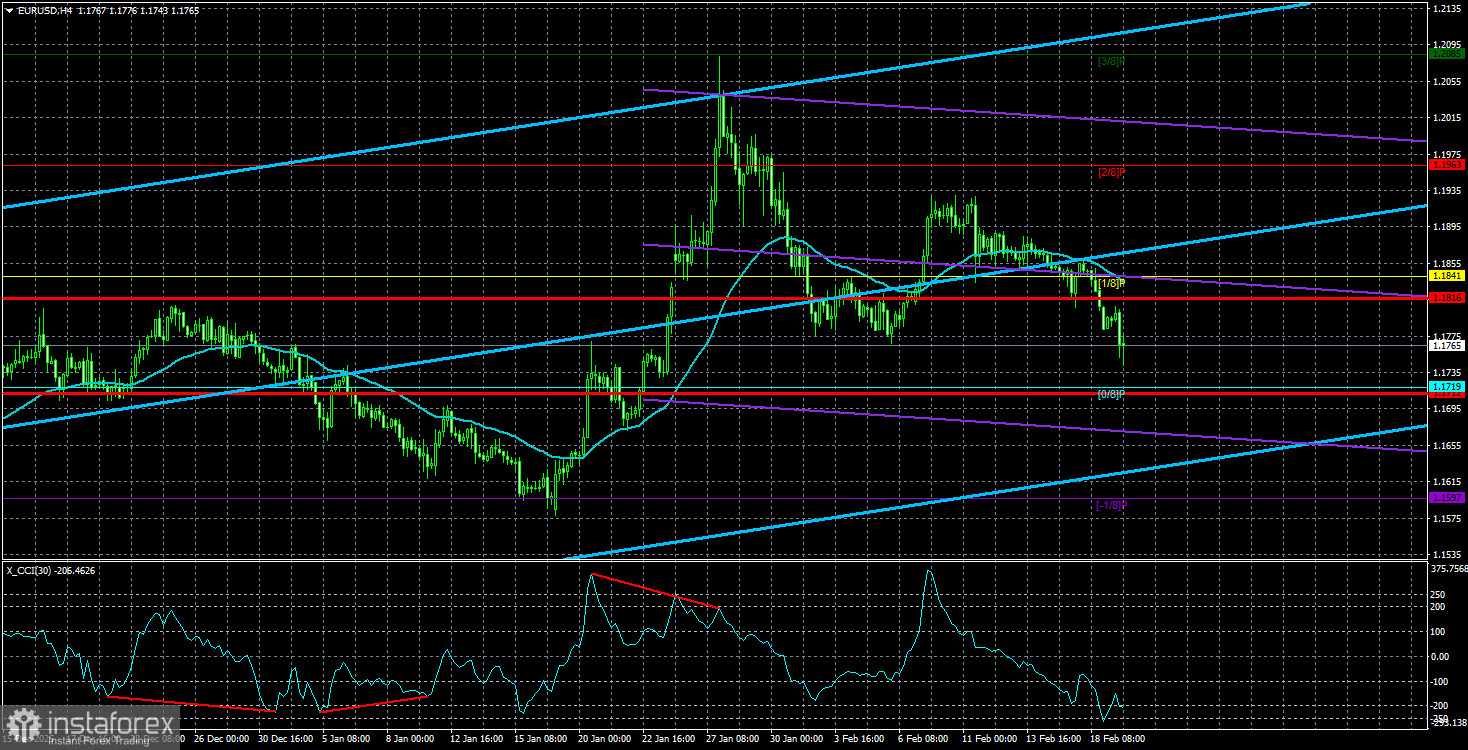
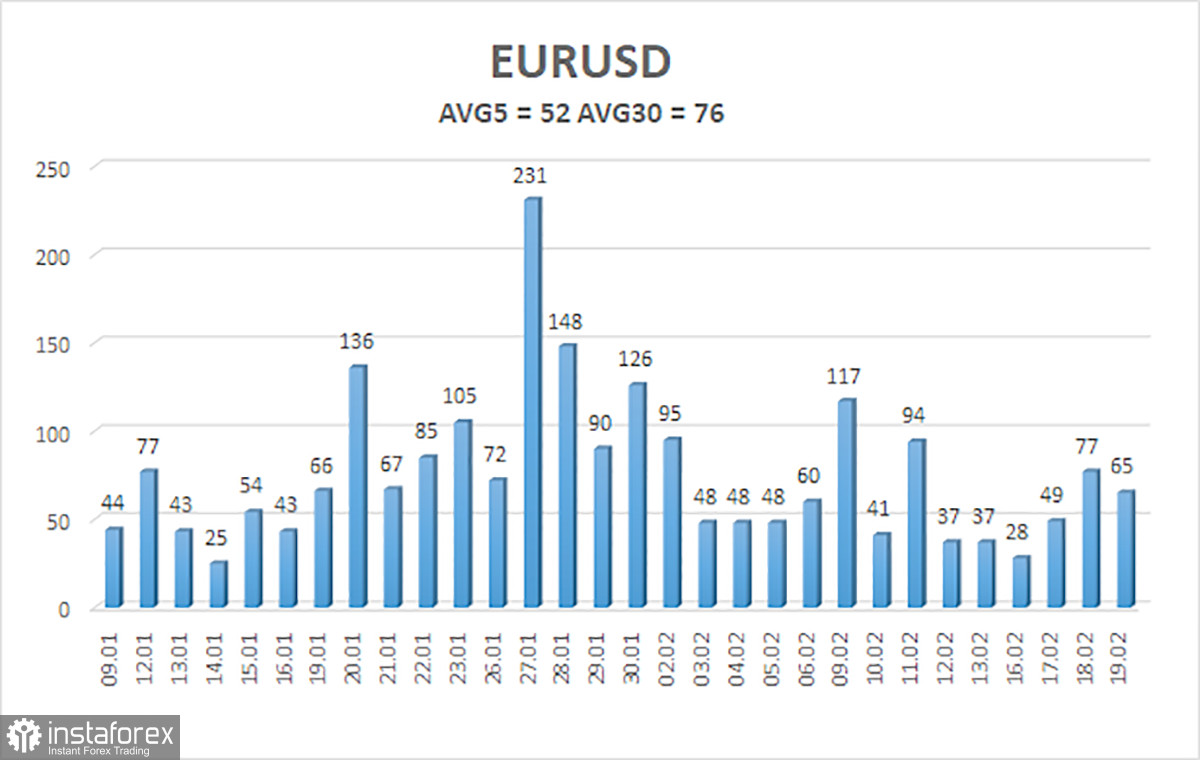
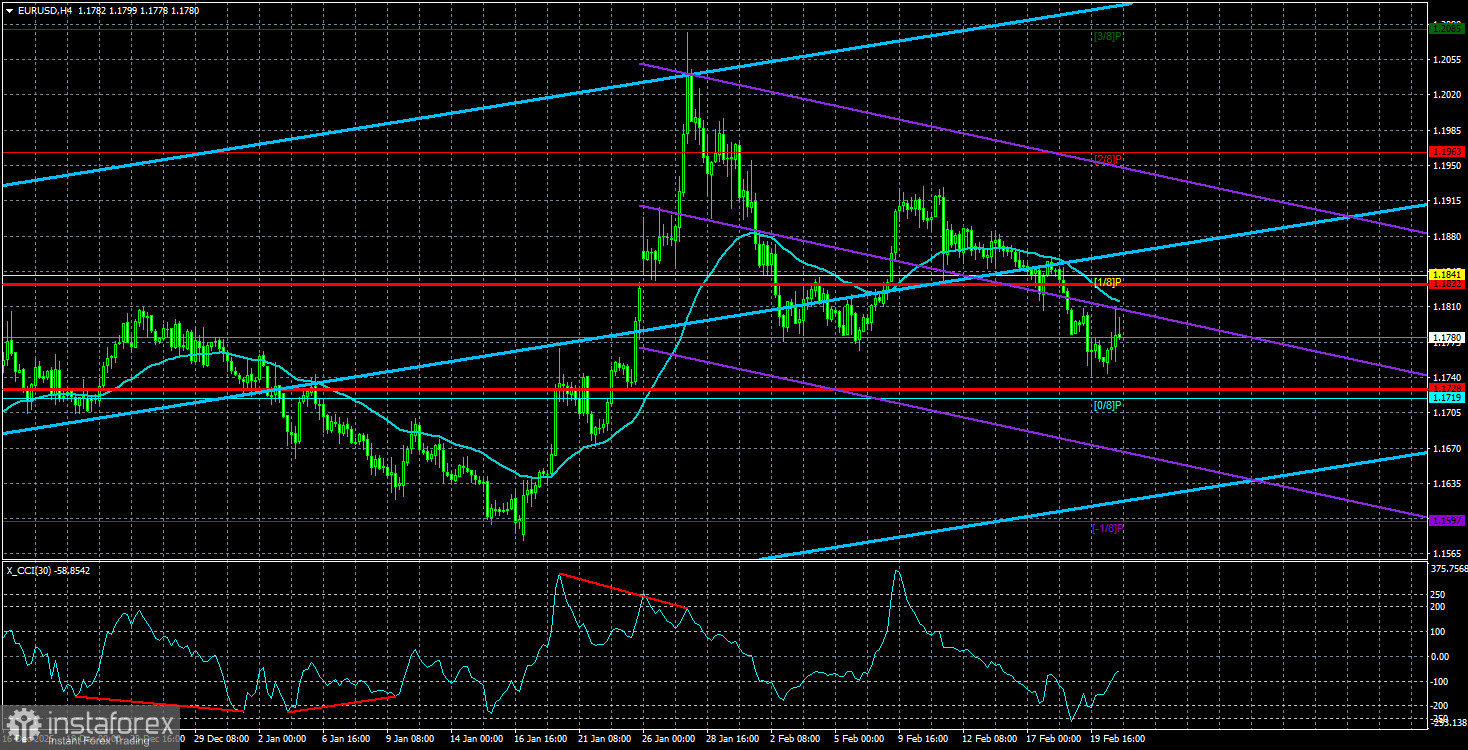
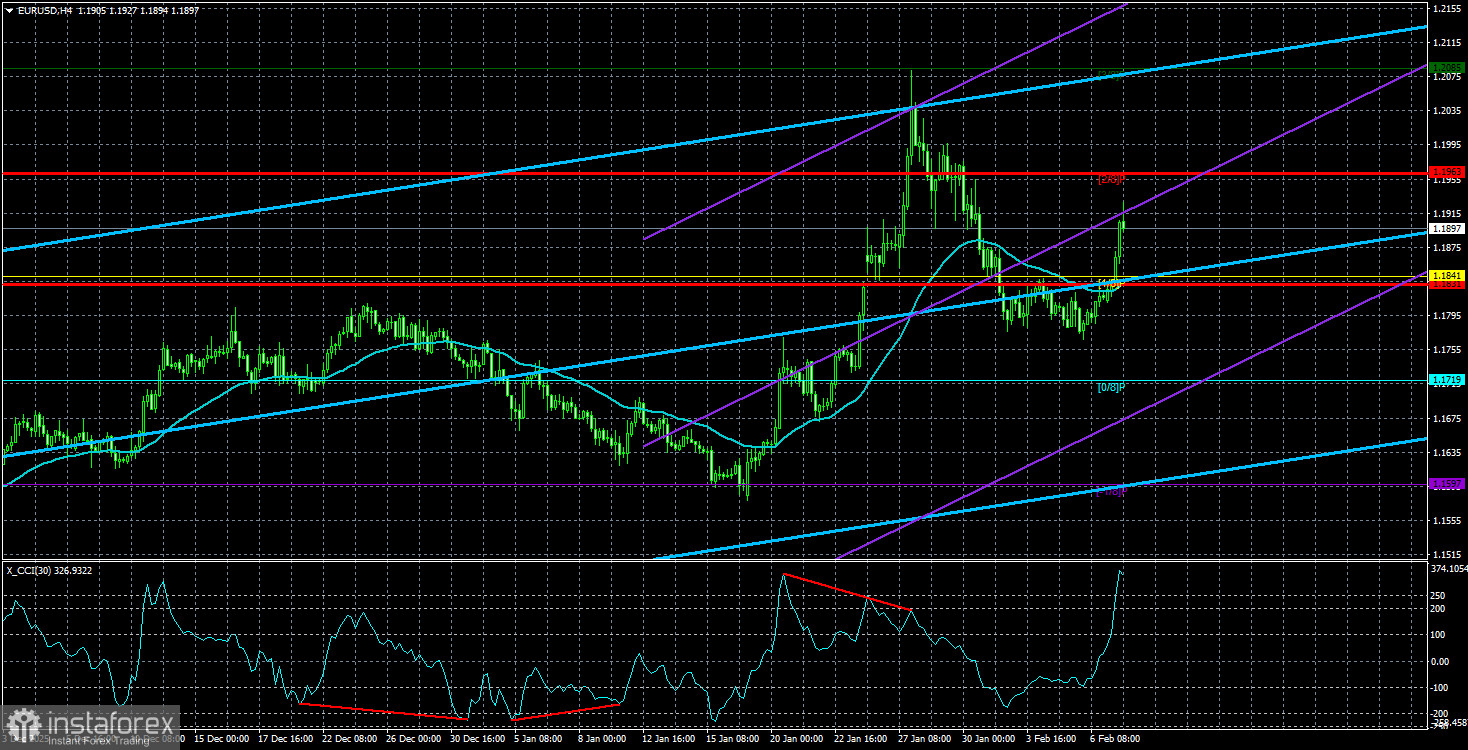
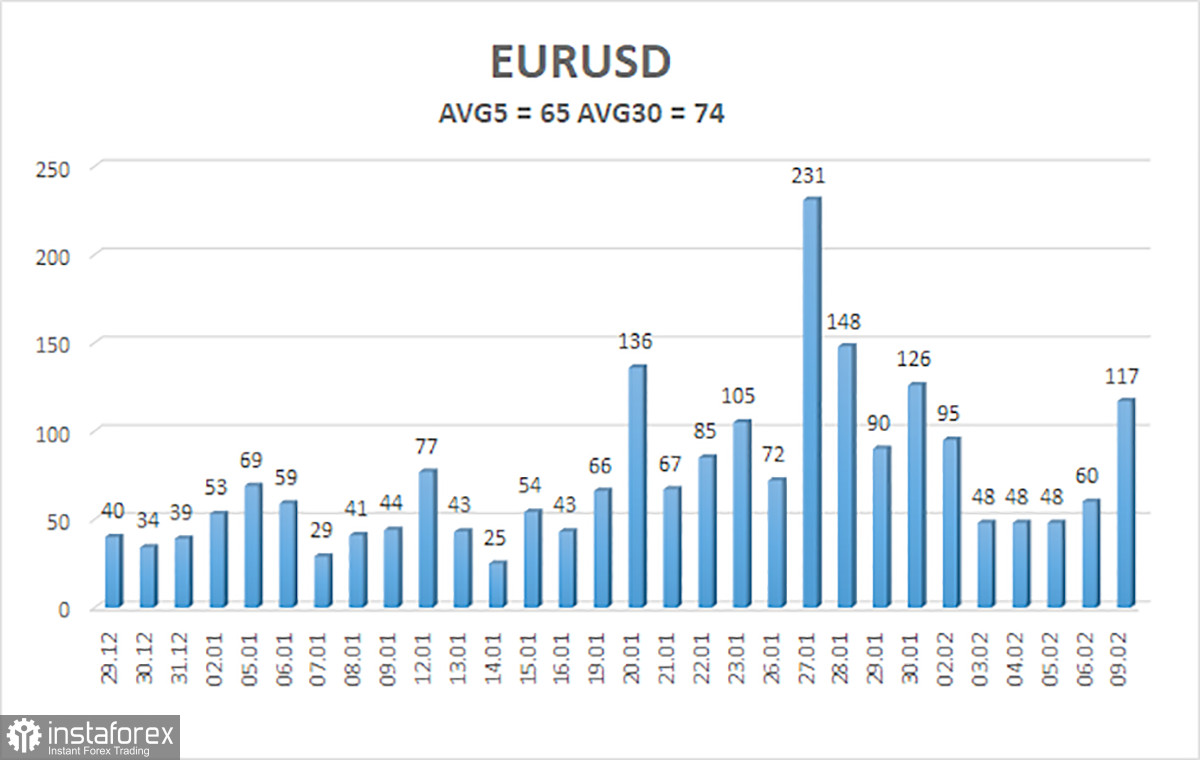
The average volatility of the EUR/USD pair over the last 5 trading days, as of February 11, is 63 pips and is characterized as "average." We expect the pair to trade between 1.1837 and 1.1963 on Wednesday. The upper channel of the linear regression points upward, indicating further growth for the euro. The CCI indicator has entered the overbought zone, warning of a possible pullback. Nearest Support Levels: S1 – 1.1841 S2 – 1.1719 S3 – 1.1597 Nearest Resistance Levels: R1 – 1.1963 R2 – 1.2085 R3 – 1.2207 Trading Recommendations: The EUR/USD pair is continuing a fairly strong correction within the upward trend. The global fundamental backdrop remains critically negative for the dollar. The pair spent seven months in a sideways channel, and it is likely that now is the time to resume the global trend from 2025. The dollar lacks a fundamental basis for long-term growth. Therefore, all the dollar can hope for is a flat or a correction. If the price is below the moving average, small shorts can be considered with a target of 1.1719 based purely on technical grounds. Above the moving average line, long positions remain relevant with targets at 1.1963 and 1.2085. Explanations of the Illustrations: Linear regression channels help determine the current trend. If both are directed the same way, it means the trend is strong at the moment. The moving average line (settings 20.0, smoothed) defines the short-term trend and the direction in which trading should currently be conducted. Murray levels are target levels for movements and corrections. Volatility levels (red lines) indicate the likely price channel in which the pair will move over the next day, based on current volatility readings. The CCI indicator's entry into the oversold area (below -250) or overbought area (above +250) indicates a potential trend reversal in the opposite direction.

Analysis are provided by InstaForex.

Read more: https://ifxpr.com/3ZqfCBb
IFX Bella
 
Posts: 590
Joined: Sat Dec 08, 2012 12:39 am

Re: Instaforex Analysis

Postby IFX Bella » Thu Feb 12, 2026 2:47 am

Forex Analysis & Reviews: Trading Recommendations and Analysis for EUR/USD on February 12. Non-Farm Payrolls Impressed, but the Dollar Didn't Move Far

Analysis of EUR/USD 5M


Image

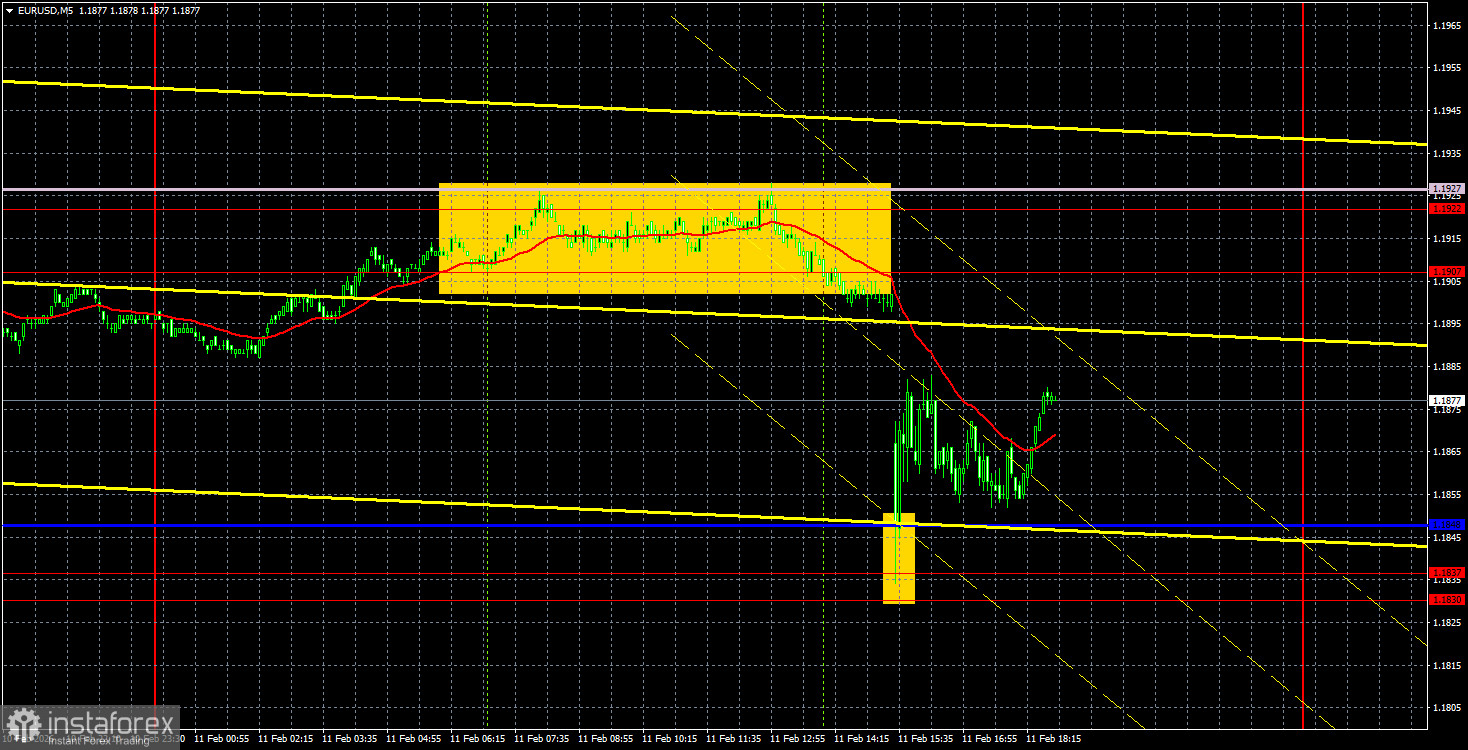
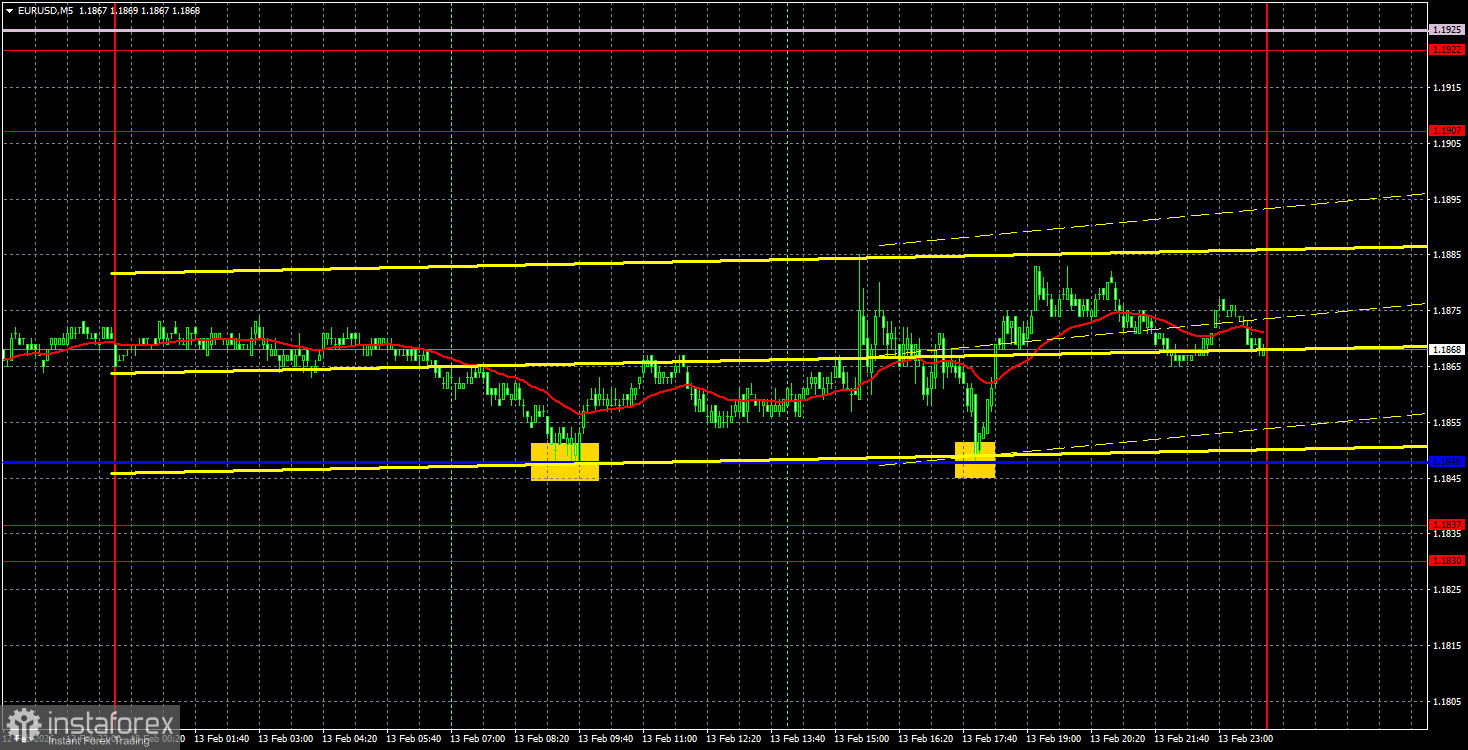
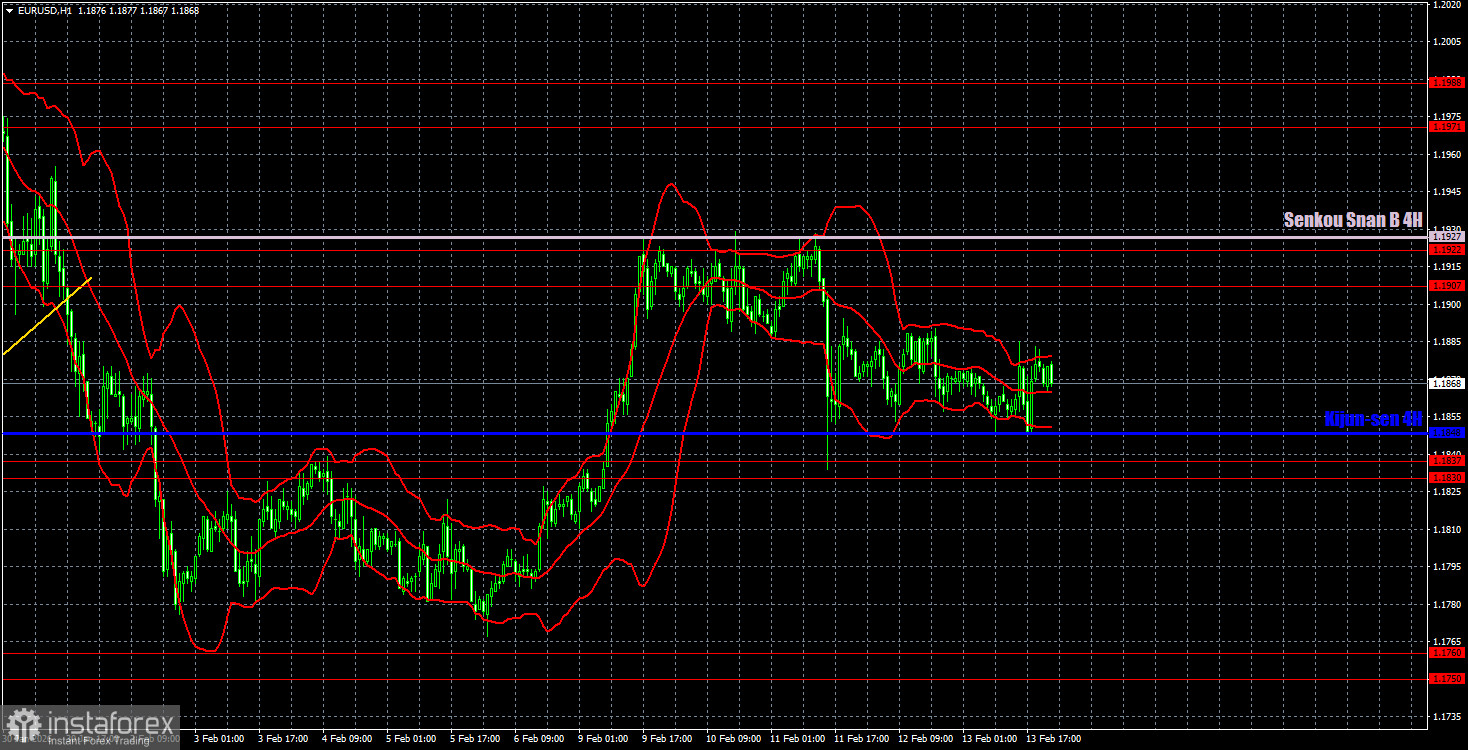
The EUR/USD currency pair traded on Wednesday in full accordance with the macroeconomic backdrop. Yesterday, important reports on Non-Farm Payrolls and the unemployment rate were published in the US, and the market clearly did not expect the resulting figures. It turned out that 130,000 new jobs were created in January outside the agricultural sector, far more than experts had predicted. Additionally, the unemployment rate dropped from 4.4% to 4.3%. Thus, both reports provided significant support for the American currency, but they did not particularly impress traders. To be frank, with such strong data, the dollar could have gained more than 100 pips and continued to rise, as the likelihood of a new rate cut from the Fed sharply diminished after the data release. At the moment, the American currency rose by approximately 85 pips, but over the next few hours, it lost almost "everything it had worked hard to gain." Thus, the strong labor market data effectively had no positive impact on the dollar. From a technical standpoint, the pair traded just below the area of 1.1907-1.1922 for several consecutive days, then bounced off it, fell to the Kijun-sen line and the area of 1.1830-1.1837, and bounced off again. Formally, the trend remains downward, as the price remains below the Senkou Span B line. However, the pair has also failed to break below this critical line. Therefore, we do not currently see any signs of a revival of the downward trend. The market has shown that it values the US labor market data, but this is not the main reason for the dollar's unpopularity over the past year. On the 5-minute timeframe, two trading signals were formed yesterday. Precisely at the time of the US reports release, the price bounced off the 1.1907-1.1922 area and then dropped sharply. Consequently, there was no opportunity to capitalize on this signal. However, traders could have successfully executed a long position from the bounce off the 1.1830-1.1837 area and the critical line. By the evening, this position was in a good profit.


COT Report:


Image

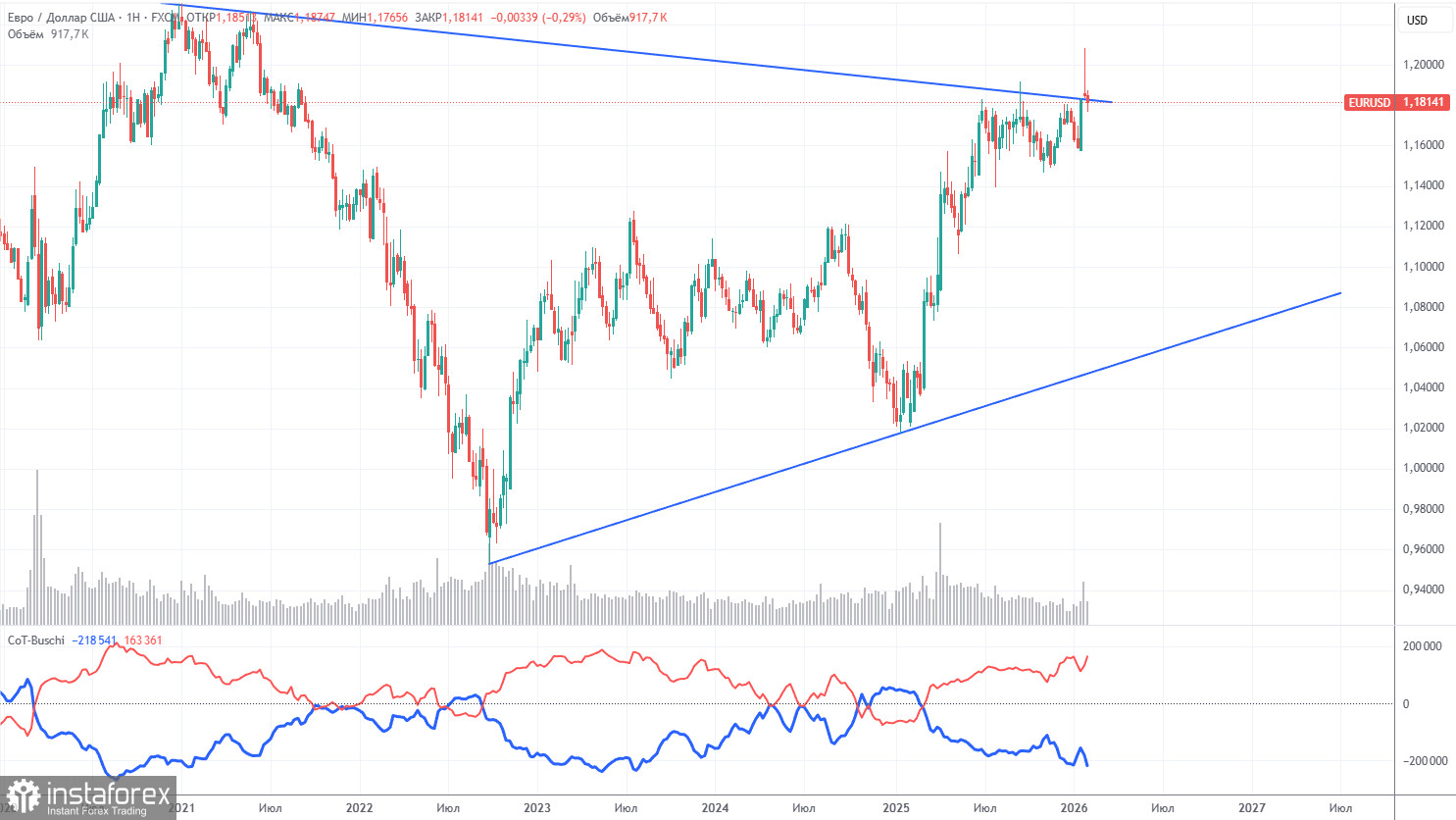
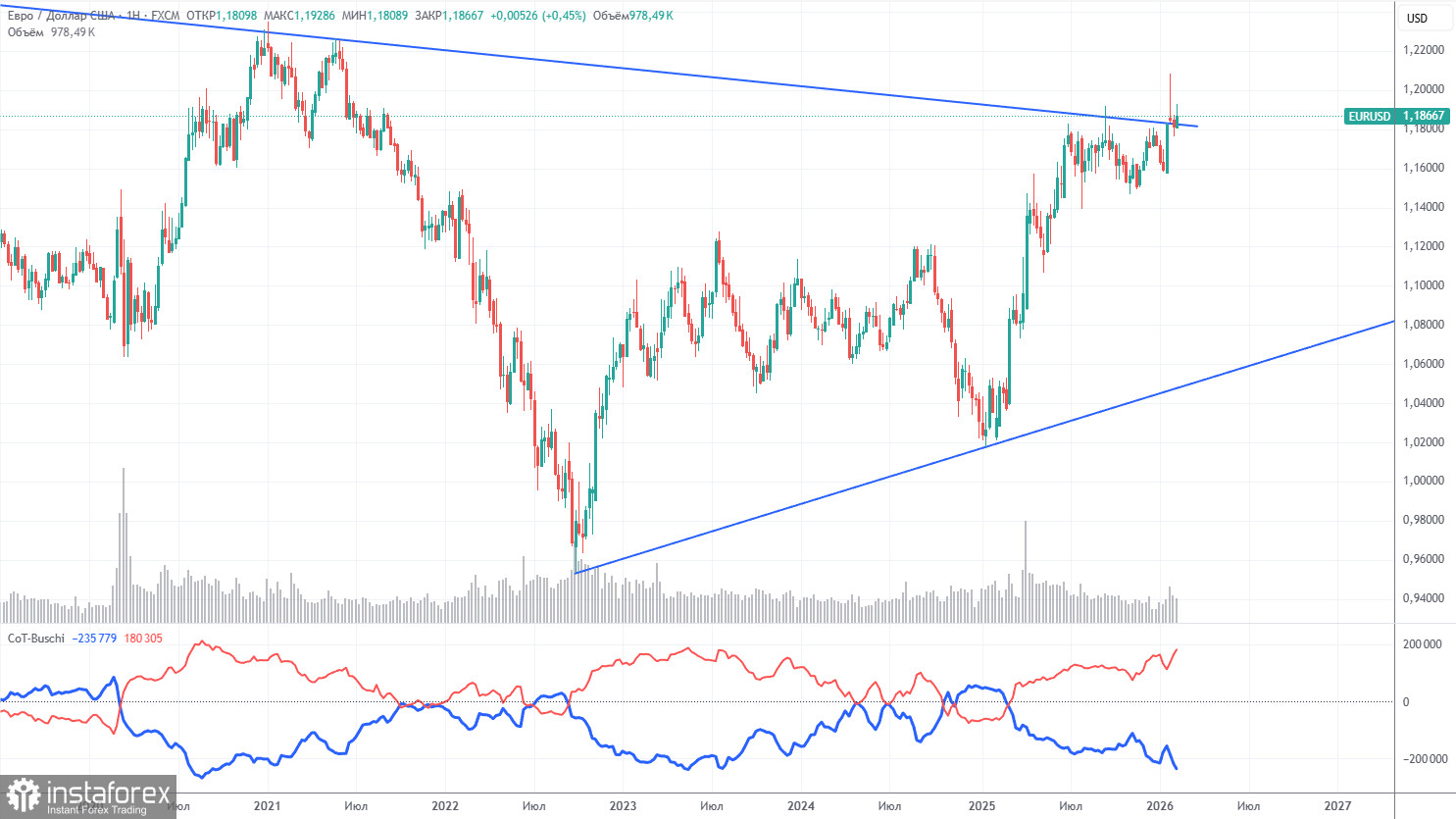
The latest COT report is dated February 3. The illustration on the weekly timeframe clearly shows that the net position of non-commercial traders remains "bullish." Since Trump took office as President of the United States for the second time, only the dollar has fallen. We cannot state with 100% certainty that the decline of the American currency will continue, but current developments worldwide suggest this is a possibility. We still do not see any fundamental factors that would strengthen the European currency, while there are plenty of factors that would weaken the American dollar. The global downward trend remains intact, but how significant is it given the price's movement over the last 18 years? In the last three years, a new upward trend has been forming, and a breakout of the global descending trend line has occurred. Thus, the path further north is open. The positioning of the red and blue lines of the indicator continues to indicate the maintenance of a "bullish" trend. During the last reporting week, the number of longs in the "Non-commercial" group increased by 11,900, while the number of shorts decreased by 19,300. Consequently, the net position increased by another 31,200 contracts over the week.

Analysis of EUR/USD 1H

Image

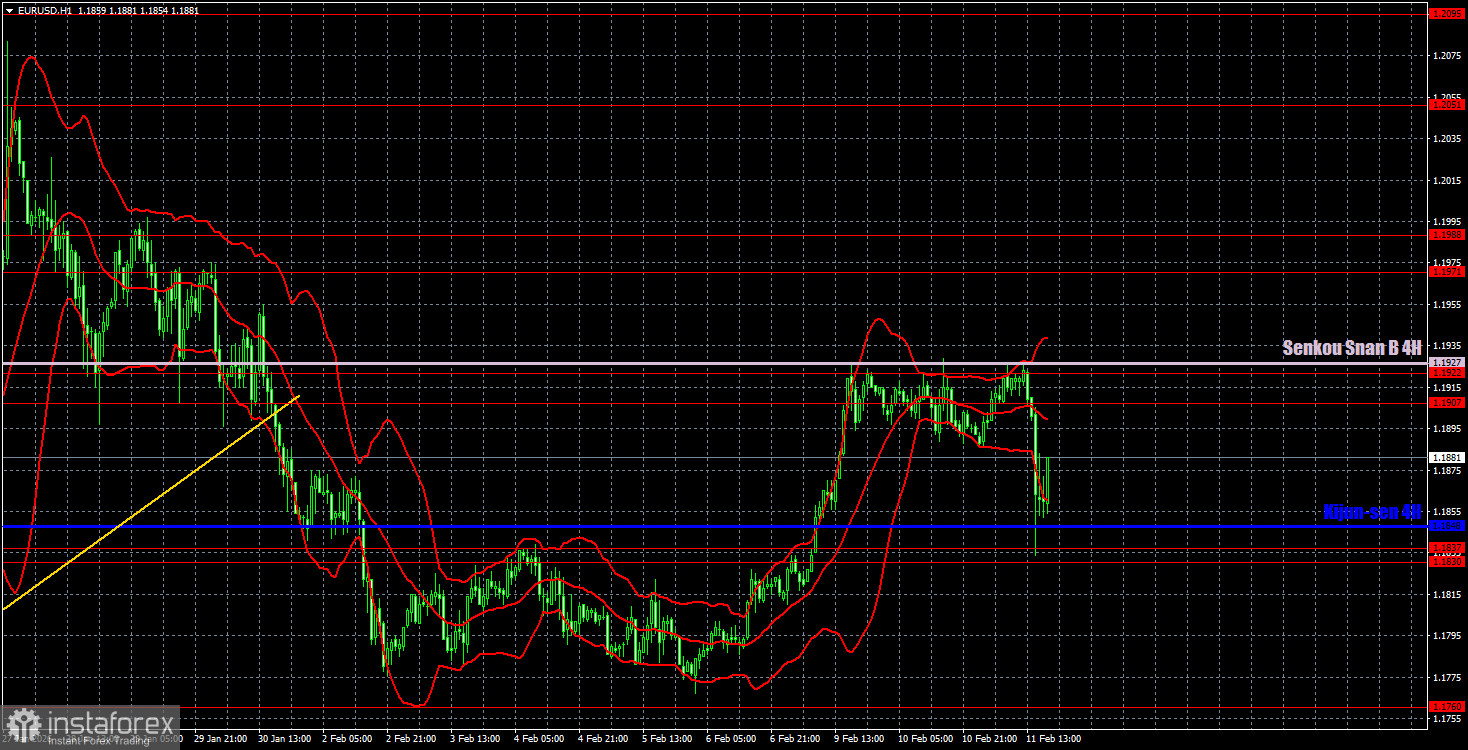
On the hourly timeframe, the EUR/USD pair remains below the Senkou Span B line, hindering its upward movement. The pair exited the sideways channel of 1.1400-1.1830 at the beginning of the year, where it spent seven months, and thus the upward trend was officially resumed. For the technical restoration of the upward trend on the hourly timeframe, price consolidation above the Senkou Span B line is now required. For February 12, we highlight the following trading levels: 1.1362, 1.1426, 1.1542, 1.1604-1.1615, 1.1657-1.1666, 1.1750-1.1760, 1.1830-1.1837, 1.1907-1.1922, 1.1971-1.1988, 1.2051, 1.2095, as well as the Senkou Span B line (1.1927) and the Kijun-sen line (1.1848). The Ichimoku indicator lines may move throughout the day, which should be taken into account when determining trading signals. Don't forget to set a Stop Loss order to break even if the price moves in the right direction by 15 pips. This will protect against potential losses if the signal turns out to be false. On Thursday, no significant events are scheduled in the Eurozone, while in the US, only minor reports on new home sales and unemployment claims will be released. These data are unlikely to impress the market or spur active trading. Trading Recommendations: On Thursday, traders may trade in the 1.1907-1.1922 or 1.1830-1.1837 ranges. New longs will become relevant with consolidation above 1.1907-1.1922 and the Senkou Span B line, targeting 1.1971-1.1988. Short positions can be considered upon a bounce from the area of 1.1907-1.1927 with a target of 1.1848. Explanations of the Illustrations: Support and Resistance Levels – thick red lines where movement may end. They are not sources of trading signals. Kijun-sen and Senkou Span B Lines – lines from the Ichimoku indicator transferred to the hourly timeframe from the 4-hour timeframe. They are strong lines. Extreme Levels – thin red lines from which the price previously bounced. They are sources of trading signals. Yellow Lines – trend lines, trend channels, and any other technical patterns. Indicator 1 on COT Charts – the size of the net position for each category of traders.

Analysis are provided by InstaForex.

Read more: https://ifxpr.com/460v8Y5
IFX Bella
 
Posts: 590
Joined: Sat Dec 08, 2012 12:39 am

Previous

Return to Forex Brokers