
Instaforex Analysis

Forex broker related topics and discussions

Re: Instaforex Analysis

Postby IFX Bella » Tue Dec 16, 2025 2:37 am

Forex Analysis & Reviews: EUR/USD Overview. December 16. What Does the New Year Hold?

Image

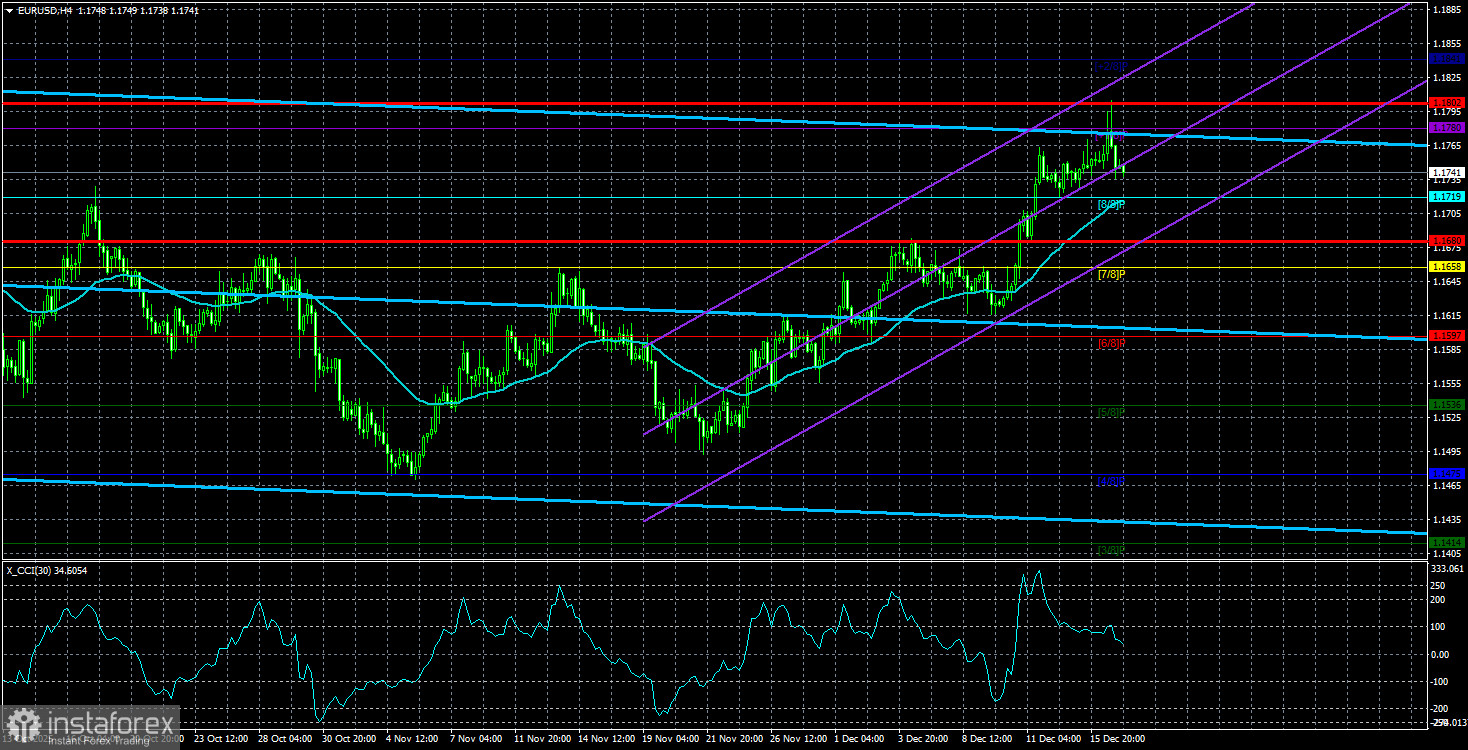
The EUR/USD currency pair traded quite calmly on Monday, as we had warned. The only interesting event scheduled for Monday was the publication of the European Union's industrial production report. This indicator slightly exceeded forecast values, but only in annual terms. Overall, this report can be deemed interesting but not important. Accordingly, the reaction to it was minimal. Nevertheless, the euro is rising, and what lies ahead for both the euro and the dollar this week remains a mystery. It is worth noting that this week is significant not only because of the meetings of the European Central Bank and the Bank of England, but also because of the publication of regular reports released around the same dates each month. This week will feature "overtime" reports—not trivial indicators, but metrics that the market has been anticipating since early October. Therefore, alongside important events such as central bank meetings in the Eurozone and the UK, we can expect crucial data on the US labor market, unemployment, and inflation. Additionally, there are consumer sentiment indices from the University of Michigan, service and manufacturing sector activity indices, and retail sales data. There will be a substantial amount of data, which means the pair could experience significant fluctuations in various directions this week. However, the market is already beginning to quietly "glimpse" into 2026. Regardless of the movements we may observe in the remaining two weeks of 2025, everyone is wondering whether the depreciation of the US currency will continue next year. It is essential to remember that the primary cause of the dollar's sharp decline this year is Donald Trump, not the Federal Reserve's or the ECB's monetary policy. Trump initiated a global trade war, enacted a series of laws that fundamentally reshape the US economy, waged war with the Fed, and is doing everything possible to devalue the dollar to improve the trade balance. These factors have been at play throughout 2025. Now, try to answer the question: what has changed by the end of 2025? The trade war continues, and no one knows what tariffs Trump will introduce tomorrow. November has passed without any reports from the Supreme Court regarding the cancellation of trade tariffs. The conflict with the Fed will persist until Trump establishes control over this organization and lowers the key interest rate to acceptable levels through his "appointees." Trump can continue to enact absurd laws, as he does not even require Congressional approval – both chambers are Republican. According to the White House, the US dollar is still too strong, which is why American exports are growing weakly or not at all. Everything suggests that the "Trump saga" will continue into 2026. Consequently, the dollar should only be expected to decline.
Image

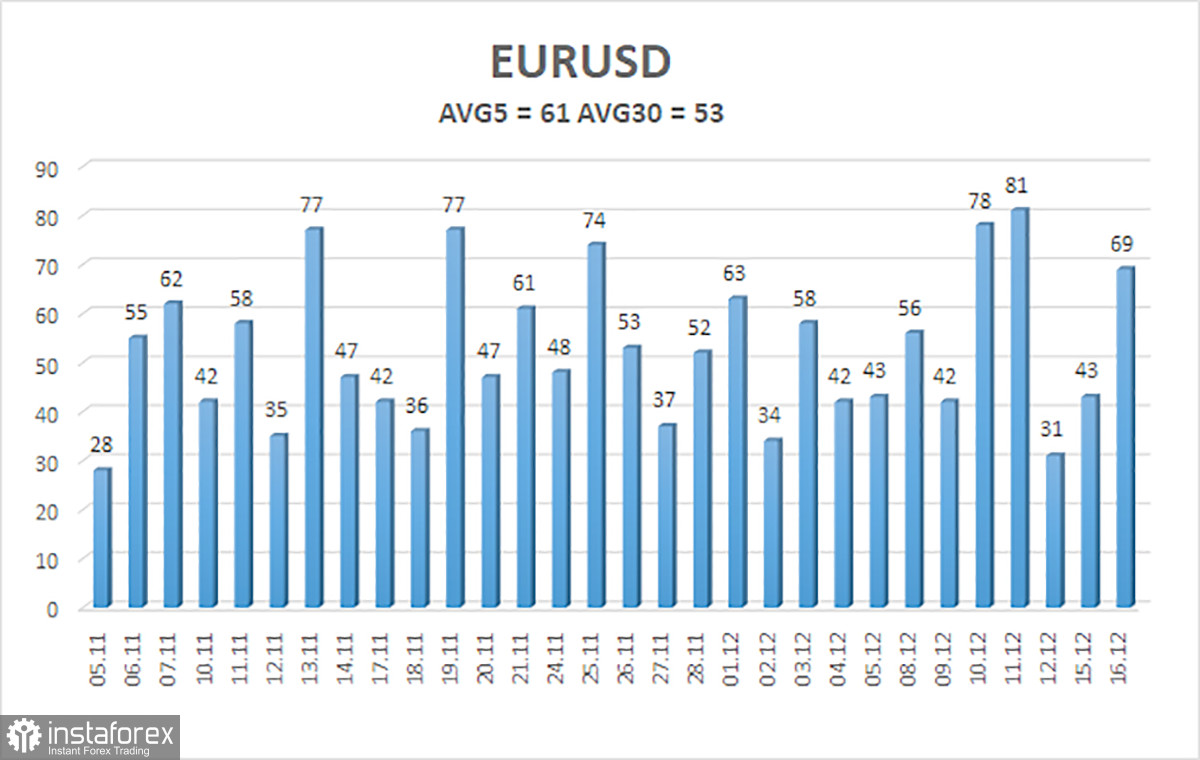
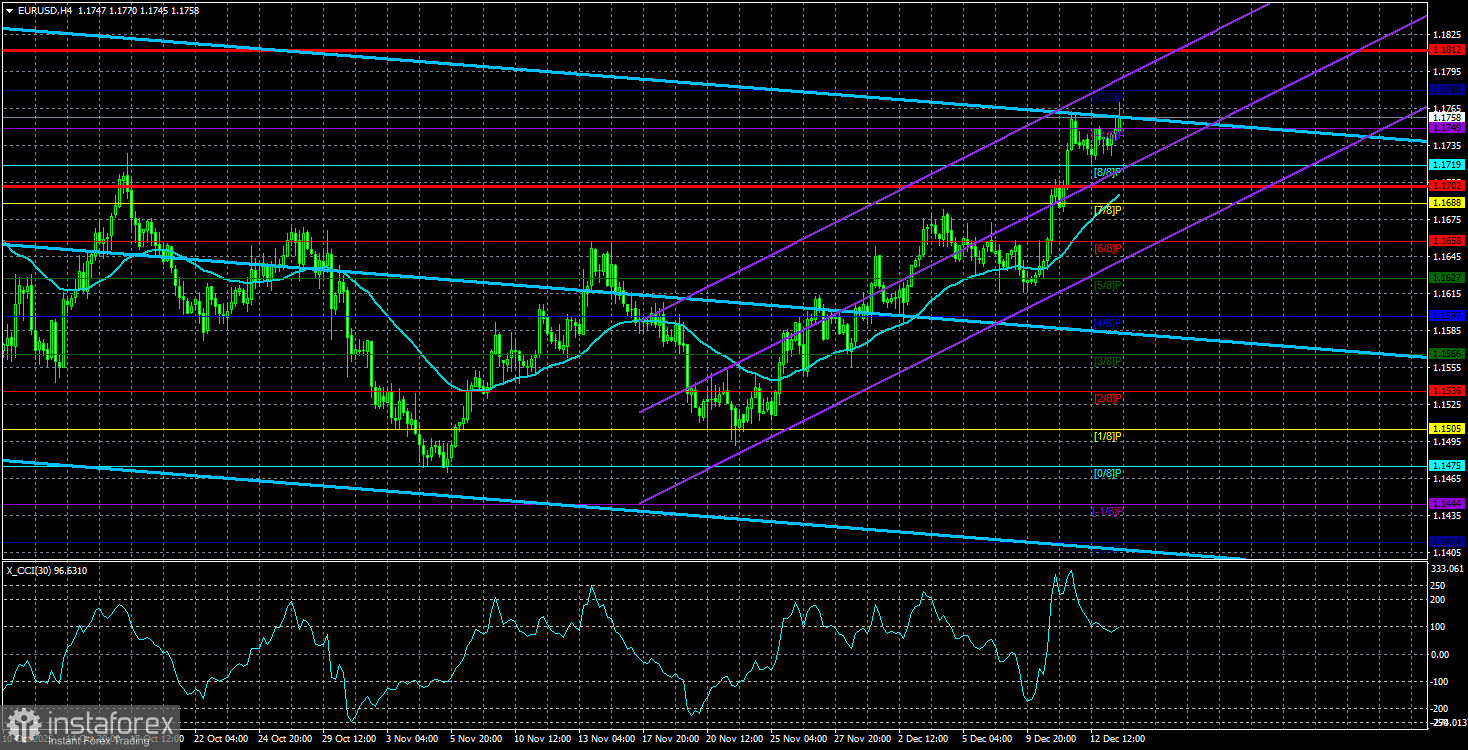
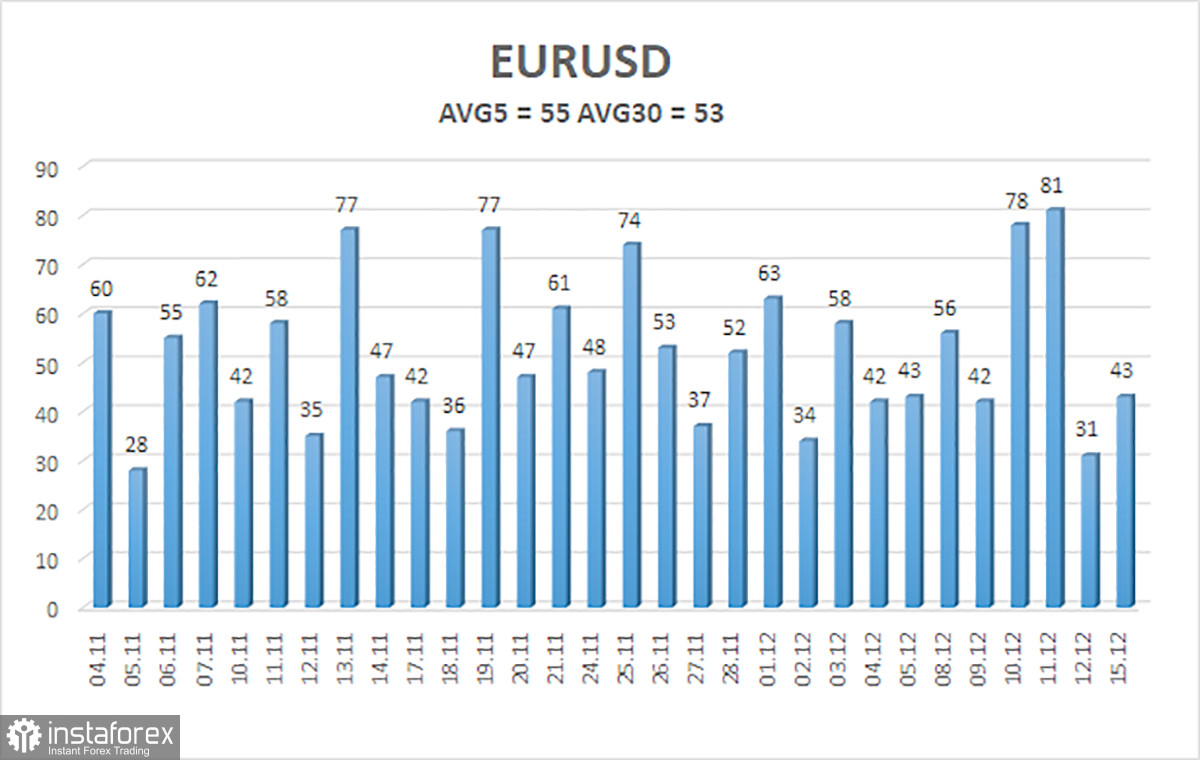
The average volatility of the EUR/USD currency pair over the last five trading days, as of December 16, is 55 pips, which is considered "average." We expect the pair to trade between 1.1702 and 1.1812 on Tuesday. The upper linear regression channel is directed downward, signaling a bearish trend, but in fact, a range-bound situation continues on the daily timeframe. The CCI indicator entered the oversold area twice in October, but last week it visited the overbought area. A downward pullback is possible. Nearest Support Levels: S1 – 1.1749 S2 – 1.1719 S3 – 1.1688 Nearest Resistance Levels: R1 – 1.1780 Trading Recommendations: The EUR/USD pair is positioned above the moving average line, maintaining an upward trend on all higher timeframes, while the daily timeframe has been in a range for several months. The global fundamental backdrop remains of immense importance to the market and remains negative for the dollar. In the past six months, the dollar has occasionally shown weak growth, but only within the bounds of a sideways channel. There is no fundamental basis for long-term strengthening. If the price is below the moving average, small short positions can be considered, targeting 1.1658 and 1.1627 on purely technical grounds. Above the moving average line, long positions remain relevant with targets at 1.1798 and 1.1830 (the upper line of the flat range on the daily timeframe). Illustration Explanations: Linear Regression Channels help to determine the current trend. If both are directed in one way, it indicates that the trend is strong. Moving Average Line (settings 20,0, smoothed) indicates the short-term trend and the direction in which trading should currently be conducted. Murray Levels – target levels for movements and corrections. Volatility Levels (red lines) – the likely price channel in which the pair will operate in the coming day, based on current volatility indicators. CCI Indicator – its entry into the oversold area (below -250) or overbought area (above +250) signifies an impending trend reversal in the opposite direction.

Analysis are provided by InstaForex.

Read more: https://ifxpr.com/3XXpku6
IFX Bella
 
Posts: 549
Joined: Sat Dec 08, 2012 12:39 am

Re: Instaforex Analysis

Postby IFX Bella » Wed Dec 17, 2025 3:01 am

Forex Analysis & Reviews: EUR/USD Overview. December 17. Total Collapse of the US Dollar

Image

The EUR/USD currency pair soared throughout Tuesday. Initially, it moved up, then down, similar to the GBP/USD pair. We warned that volatility could be extremely high on Tuesday, as more than 10 important reports were scheduled for release throughout the day. However, it turned out that most of them did not even capture the traders' interest. The market had been waiting for only two reports for several weeks—Non-Farm Payrolls and the unemployment rate—and it finally got them. So, the number of new jobs created outside the agricultural sector in October was... drumroll... -105,000. Non-Farm Payrolls for November came in at +64,000, above the forecast of +50,000. The unemployment rate for November was... 4.6% against forecasts of 4.4%. Thus, if we sum the Non-Farm Payroll reports, we find that over the two missing months, the number of jobs decreased by 41,000. Let's recall that even a theoretical +50,000 is a negative figure, as stable unemployment requires 150,000 to 200,000 new jobs each month. The Non-Farm Payroll figure counts only new jobs but does not account for layoffs or job losses. Therefore, to cover the average rate of layoffs and job losses, 150,000 to 200,000 new jobs are needed every month. Only in this case will the unemployment rate remain unchanged or decrease. Regarding the unemployment rate itself, its rise to 4.6% needs no further commentary. As we can see, the US labor market remains consistently weak in September and October. This fact significantly increases the likelihood of the Federal Reserve continuing to ease monetary policy in 2026. Let's remind ourselves that last week saw the last Fed meeting of the current year, during which the decision was made to reduce the key interest rate for the third consecutive time. However, Jerome Powell indicated that there would be a pause in easing at the beginning of the next year, and the "dot plot" showed that the FOMC committee expects only one easing of policy over the next eight meetings. It is likely that one rate cut will not be the only action taken, and there will be no pause at the beginning of the year. In any case, such results of the labor market operation point only to one outcome—the dollar is falling as a logical consequence. It is expected to continue falling under nearly any circumstances, except for a change in the nature of the global fundamental background. As we have repeatedly mentioned, the problem lies not in the labor market or the Fed. The issue lies with Donald Trump and his policies. As long as the Republican president adheres to a protectionist policy in 2025, the dollar will keep falling. In recent months, we have observed a solid flat, but the upward trend has remained. Now is just a great opportunity to resume it.

Image

The average volatility of the EUR/USD currency pair over the last five trading days, as of December 17, is 61 pips and is characterized as "average." We expect the pair to trade between 1.1680 and 1.1802 on Wednesday. The upper linear regression channel is pointing downwards, signaling a bearish trend, but the pair is actually flat on the daily timeframe. The CCI indicator entered the oversold area twice in October but visited the overbought area last week. A downward pullback is possible. Nearest Support Levels: S1 – 1.1719 S2 – 1.1658 S3 – 1.1597 Nearest Resistance Levels: R1 – 1.1780 R2 – 1.1841 Trading Recommendations: The EUR/USD pair is positioned above the moving average line, maintaining an upward trend across all higher timeframes, while the daily timeframe has been flat for several months. The global fundamental backdrop remains highly significant for the market and is negative for the dollar. In the last six months, the dollar occasionally showed weak growth, but only within the bounds of a sideways channel. There is no fundamental basis for long-term strengthening. If the price is below the moving average, small short positions can be considered targeting 1.1658 and 1.1597 on purely technical grounds. Above the moving average line, long positions remain relevant, with targets at 1.1798 and 1.1830 (the upper line of the flat on the daily timeframe), which have already been practically reached. Now we need the flat to end. Explanation of Illustrations: Linear Regression Channels help identify the current trend. If both are directed in one direction, it means the trend is strong right now. Moving Average Line (settings 20,0, smoothed) determines the short-term trend and the direction in which trading should currently be conducted. Murray Levels – target levels for movements and corrections. Volatility Levels (red lines) – the probable price channel in which the pair will operate in the coming days, based on current volatility indicators. CCI Indicator – its entry into the oversold area (below -250) or the overbought area (above +250) indicates that a trend reversal in the opposite direction is near.

Analysis are provided by InstaForex.

Read more: https://www.instaforex.eu/forex_analysis/433292
IFX Bella
 
Posts: 549
Joined: Sat Dec 08, 2012 12:39 am

Re: Instaforex Analysis

Postby IFX Bella » Thu Dec 18, 2025 3:29 am

Forex Analysis & Reviews: GBP/USD Overview. December 18. The Pound Hit by Inflation

Image

The GBP/USD currency pair has been more active over the past two days than the EUR/USD pair. However, it has not shown any super-interesting movements. Essentially, we witnessed a new surge upward on somewhat weak U.S. labor-market data, followed by a correction on a weaker-than-expected inflation report from the UK—and that was it. It is worth noting that inflation figures are not currently significant for the European Central Bank, which has managed to stabilize its rate around 2%. However, they are very important for the Bank of England and the Federal Reserve. The U.S. inflation report will be released today, while the UK report was released yesterday. We will focus on these two indicators, especially given today's BoE meeting. The UK inflation report showed a slowdown to 3.2%. While there is ambiguity surrounding the U.S. Non-Farm Payrolls, the situation with UK inflation is clear. Inflation is falling for the second consecutive month at a significantly high pace. Of course, this does not mean it will continue to decline for another five months, but it does mean we will likely see the BoE ease monetary policy further today. Will the British pound react to this event? We believe that if it does, the decline will not be strong, as the market is already prepared for this decision. The composition of the Monetary Policy Committee votes will be of much greater importance. Specifically, the distribution of votes in favor of reducing the rate versus maintaining it. In any case, it is important to note that in September and November, the U.S. dollar performed well despite two Fed rate cuts. Why should the pound necessarily drop today if the decision is already essentially known to traders? We believe that the overall trend and global factors, which remain unchanged, hold greater significance. The Fed has cut the key rate three times, two of which the market has not yet priced in. The pound has been falling for several months without compelling reasons. Thus, we believe that the global upward trend is not cancelled, and its fundamental basis has not changed. Therefore, we still expect further growth of the British currency—not because it is super attractive or because the British economy has no problems, but because the situation in America remains extremely negative. Separately, we highlight the U.S. inflation report. If it is revealed today that inflation has slowed or is weaker than the forecast (3%), the U.S. dollar may resume its decline, as the Fed will have even more reasons to cut rates for the fourth consecutive time at the January 28 meeting. The labor market, even if it has stopped declining, is not growing as required. Meanwhile, inflation is decreasing (hypothetically). It appears Donald Trump was correct in calling for a key rate cut. Overall, tomorrow's developments could be unexpected for many traders. This week has been quite "crazy," so the main goal is to avoid significant losses.

Image

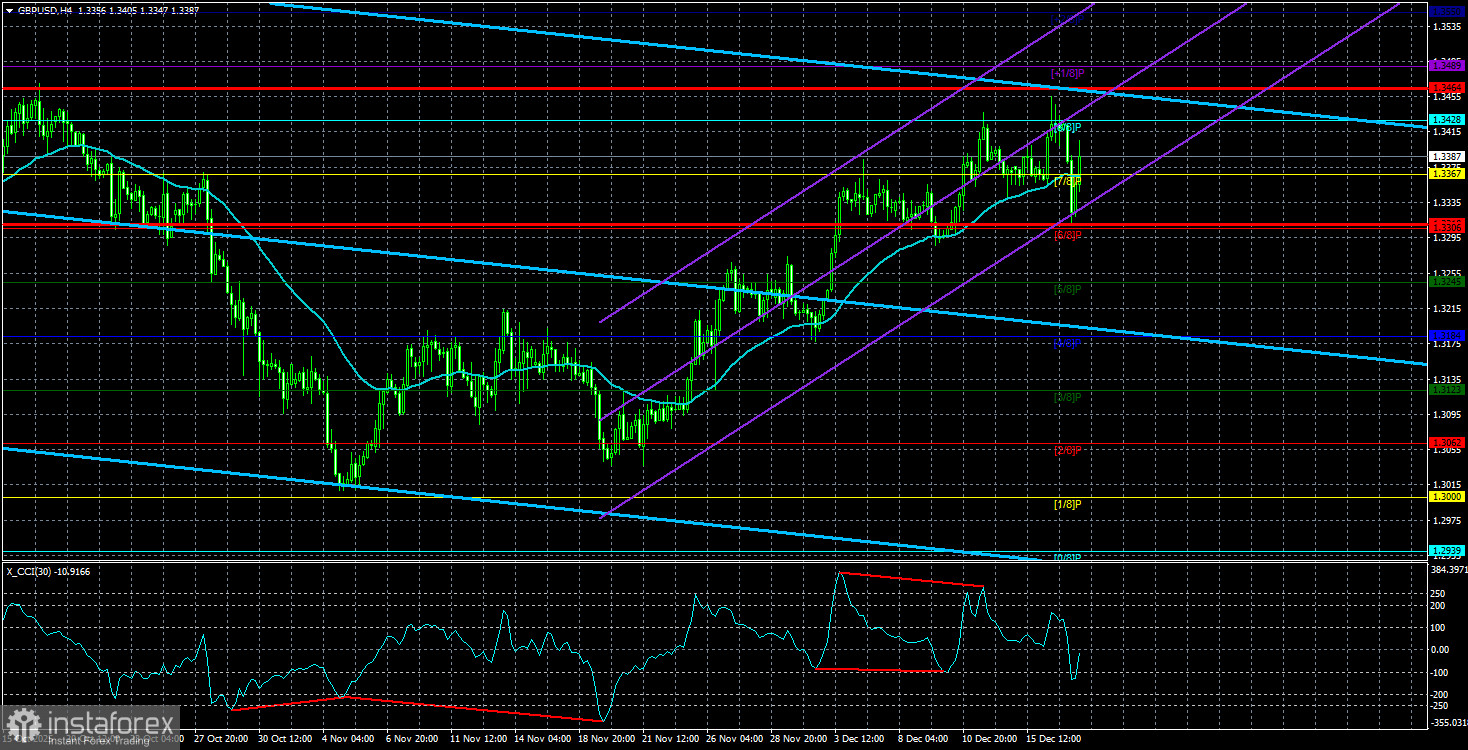
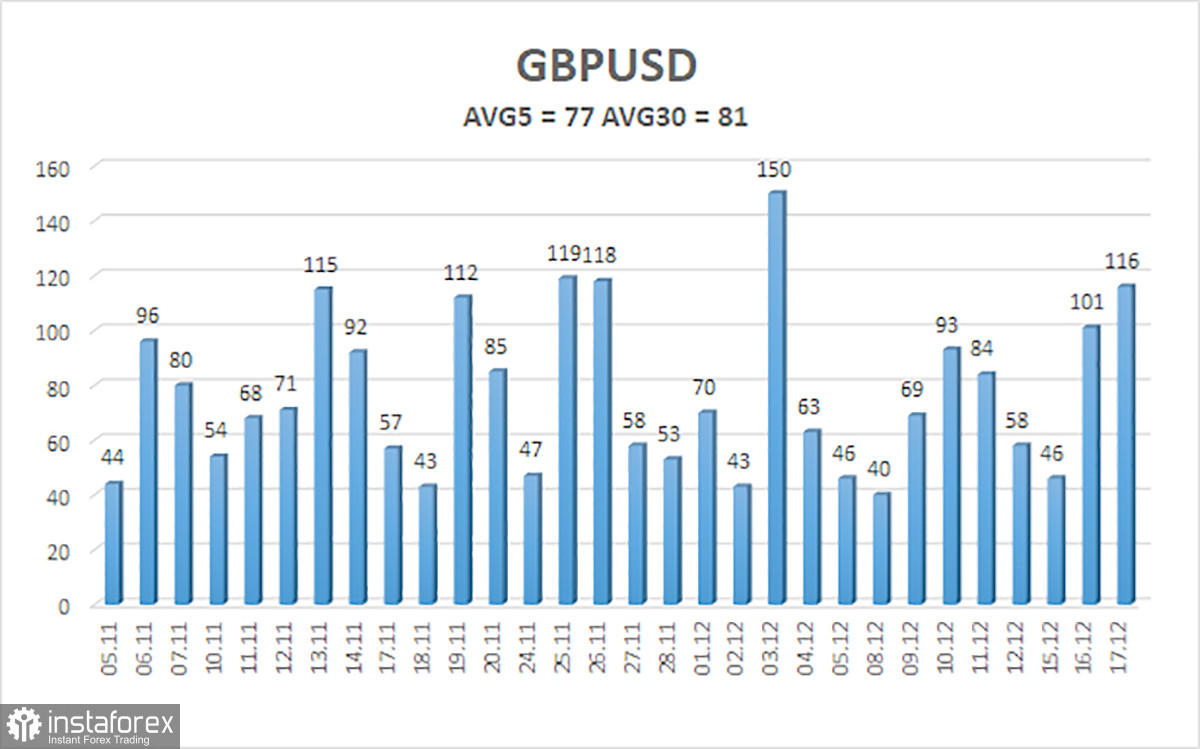
The average volatility of the GBP/USD pair over the last five trading days, as of December 18, is 77 pips. For the pound/dollar pair, this value is considered "average." On Thursday, December 18, we expect the pair to trade within a range bounded by 1.3308 and 1.3464. The upper linear regression channel is pointing downward, but this is merely a technical correction on higher timeframes. The CCI indicator entered oversold territory 6 times in recent months and formed several "bullish" divergences, consistently signaling a potential resumption of the upward trend. Last week, the indicator formed another bullish divergence, but the week ended with two entries into overbought territory and two "bearish" divergences. Conclusion: a correction within the upward trend. Nearby Support Levels: S1 – 1.3367 S2 – 1.3306 S3 – 1.3245 Nearby Resistance Levels: R1 – 1.3428 R2 – 1.3489 R3 – 1.3550 Trading Recommendations: The GBP/USD currency pair is attempting to resume its upward trend for 2025, and its long-term prospects remain unchanged. Donald Trump's policies will continue to exert pressure on the dollar, so we do not expect the US currency to appreciate. Therefore, long positions with targets at 1.3489 and 1.3550 remain relevant for the near term while the price is above the moving average. If the price is below the moving average line, short positions may be considered with targets of 1.3306 and 1.3245 on purely technical grounds. The dollar occasionally shows corrections globally, but for a trend to strengthen, it needs signs that the trade war is ending or other global positive factors. Explanations for Illustrations: Support and resistance price levels are marked by thick red lines, where movement may conclude. They are not sources of trading signals. The Kijun-sen and Senkou Span B lines are Ichimoku indicator lines transferred to the hourly timeframe from the 4-hour timeframe. They are significant lines. Extremum levels are marked by thin red lines, where the price previously bounced. They are sources of trading signals. Yellow lines represent trend lines, trend channels, and any other technical patterns. Indicator 1 on the COT charts shows the size of each category of traders' net position.

Analysis are provided by InstaForex.

Read more: https://ifxpr.com/3MK3iIK
IFX Bella
 
Posts: 549
Joined: Sat Dec 08, 2012 12:39 am

Re: Instaforex Analysis

Postby IFX Bella » Fri Dec 19, 2025 3:08 am

Forex Analysis & Reviews: GBP/USD Overview. December 19. The Bank of England Implemented Another Easing

Image

The GBP/USD currency pair has been trading more actively than the EUR/USD over the past two days. However, it has not shown any particularly interesting movements, which can be seen across almost any time frame. Most traders were likely hoping for more volatile, trend-driven movements this week, but objective reality has dashed those hopes once again. Nevertheless, several important points should not be overlooked and offer an optimistic outlook for the future. For us, optimism now comes from the realization of the forecast we have been discussing throughout 2025. We believe nothing has fundamentally changed for the U.S. dollar globally over the past six months. Therefore, we continue to expect only its decline. This week, the British pound faced selling pressure twice but lost only a minor amount. First, inflation came in significantly below expectations, and then the Bank of England, as expected, lowered its key interest rate. However, let us examine these two events in detail and determine whether a collapse of the British currency was warranted. Inflation has decreased, giving the Bank of England the "green light" to ease monetary policy. Essentially, these two events can be combined into one. However, most experts were already confident in a cut to the BoE's key interest rate even before the inflation report was published. At the last meeting of the British central bank, four of the nine Monetary Policy Committee members voted for an easing of policy, with inflation at 3.6%. Thus, the BoE was already mentally prepared for a reduction. The market was waiting for this decision, and since it was waiting, it had priced it in advance. Therefore, neither the inflation report nor the BoE's meeting should have provoked a significant decline in the British currency. The GBP/USD pair stayed near its local highs, and on the daily time frame, we see that a classic three-wave correction has formed in recent months. We want to remind you that such a correction should not have occurred at all, as the last leg of the pair's decline was completely illogical. The market reacted around 10 times to confusion over the British budget for 2026, and during Rachel Reeves's speeches, the pound was sold even when the UK's Chancellor mentioned healthcare issues. The market also deemed it unnecessary to react to two rounds of Federal Reserve monetary policy easing or the US "shutdown." Consequently, in early November, the British pound was too oversold, and the dollar was overbought. This occurred within the upward trend of 2025. Thus, we continue to believe that the trend persists, the global fundamental background has not changed, and Trump, meanwhile, is planning to start a full-scale war with Venezuela. The peacemaker president was unable to resolve the conflict in Ukraine in an entire year, and even other conflicts that "Trump resolved" flare up from time to time with renewed vigor. The dollar remains in a challenging position.

The average volatility of the GBP/USD pair over the last five trading days is 86 pips. For the pound/dollar pair, this value is considered "average." On Friday, December 19, we thus expect movement within a range of 1.3306 to 1.3477. The upper channel of the linear regression is directed downward, but only due to a technical correction on higher time frames. The CCI indicator entered the oversold zone six times over the last few months and formed several "bullish" divergences, which constantly warned of a resumption of the upward trend. Last week, the indicator formed another bullish divergence, but the week concluded with two entries into the overbought area and two "bearish" divergences. Conclusion: correction within the upward trend. Nearest Support Levels: S1 – 1.3367 S2 – 1.3306 S3 – 1.3245 Nearest Resistance Levels: R1 – 1.3428 R2 – 1.3489 R3 – 1.3550 Trading Recommendations: The GBP/USD currency pair is attempting to resume the upward trend of 2025, and its long-term prospects remain unchanged. Donald Trump's policies will continue to exert pressure on the dollar, so we do not expect the US currency to appreciate. Thus, long positions with targets of 1.3489 and 1.3550 remain relevant in the near term, provided that the price is above the moving average. If the price is below the moving average line, small short positions with targets of 1.3306 and 1.3245 may be considered on technical grounds. From time to time, the US currency shows corrections (in the global context), but for a trend strengthening, it needs signs of the end of the trade war or other global positive factors. Explanations for Illustrations: Support and resistance price levels are marked by thick red lines, where movement may conclude. They are not sources of trading signals. The Kijun-sen and Senkou Span B lines are Ichimoku indicator lines transferred to the hourly timeframe from the 4-hour timeframe. They are strong lines. Extremum levels are marked by thin red lines, where the price previously bounced. They are sources of trading signals. Yellow lines represent trend lines, trend channels, and any other technical patterns. Indicator 1 on the COT charts shows the size of the net position of each category of traders.

Analysis are provided by InstaForex.

Read more: https://ifxpr.com/4931YrU
IFX Bella
 
Posts: 549
Joined: Sat Dec 08, 2012 12:39 am

Re: Instaforex Analysis

Postby IFX Bella » Mon Dec 22, 2025 2:23 am

Forex Analysis & Reviews: How to Trade the EUR/USD Currency Pair on December 22? Simple Tips and Trade Analysis for Beginners

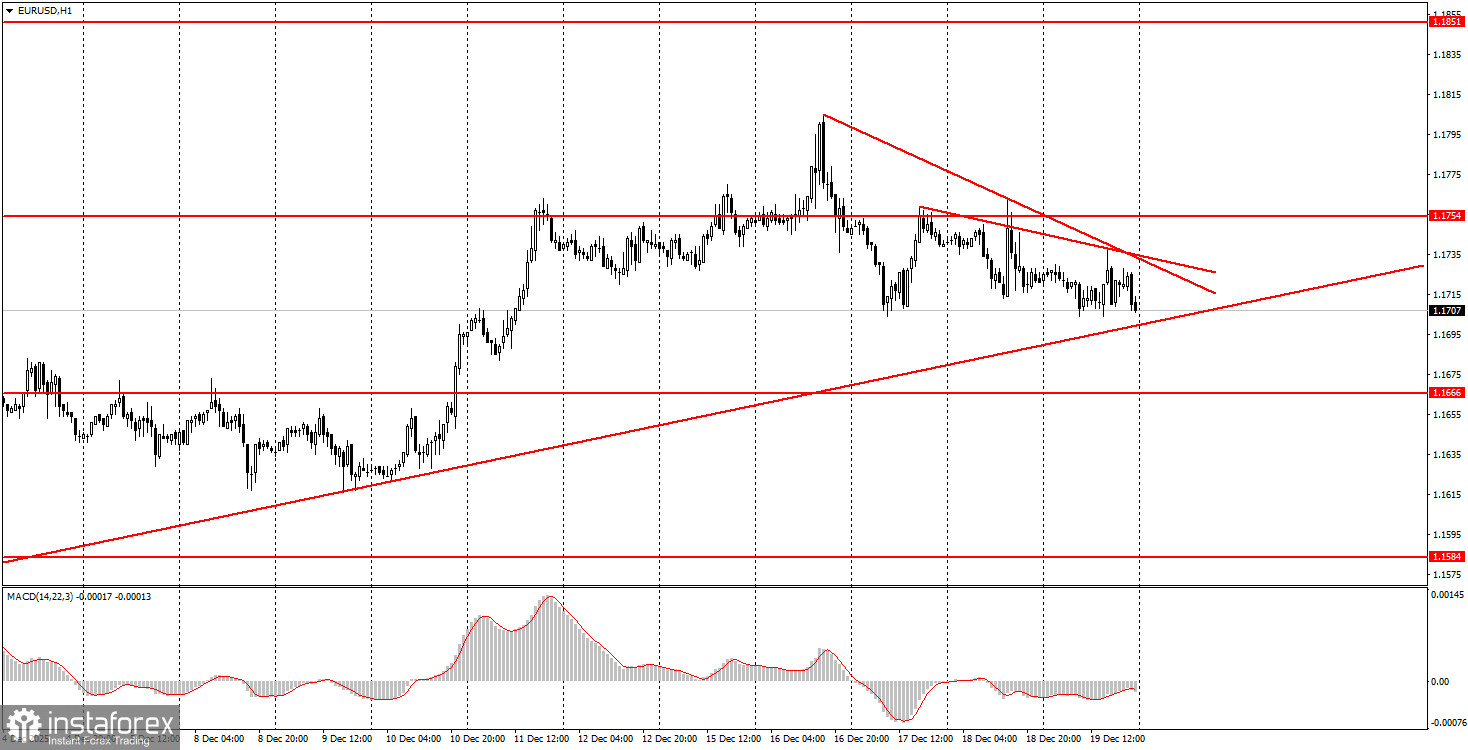
Trade Review for Friday: 1H Chart of the EUR/USD Pair


Image

The EUR/USD currency pair remained stagnant on Friday. The overall volatility for the day was around 30 pips, which essentially indicates a complete lack of movement. It is worth noting that a significant number of crucial macroeconomic data were published that week, along with two central bank meetings (the European Central Bank and the Bank of England). Now, let's look at the charts. Does it feel like the fundamental and macroeconomic background over the past five days was super important? Essentially, the EUR/USD pair showed good movement only on Wednesday evening and Thursday night. During this time, the quotes dropped by 100 pips, and there were no more interesting movements throughout the week. Moreover, the 100-pip drop was largely driven by technical factors—specifically a rebound from the upper boundary of the range. On the daily timeframe, the pair remains within the sideways channel of 1.1400-1.1830, which continues to explain the weak volatility. On Friday, there were almost no significant events, so the market essentially left for the weekend early, barely noticing the University of Michigan consumer sentiment index. In general, we can only conclude that the flat market on the daily timeframe continues, and that says it all.

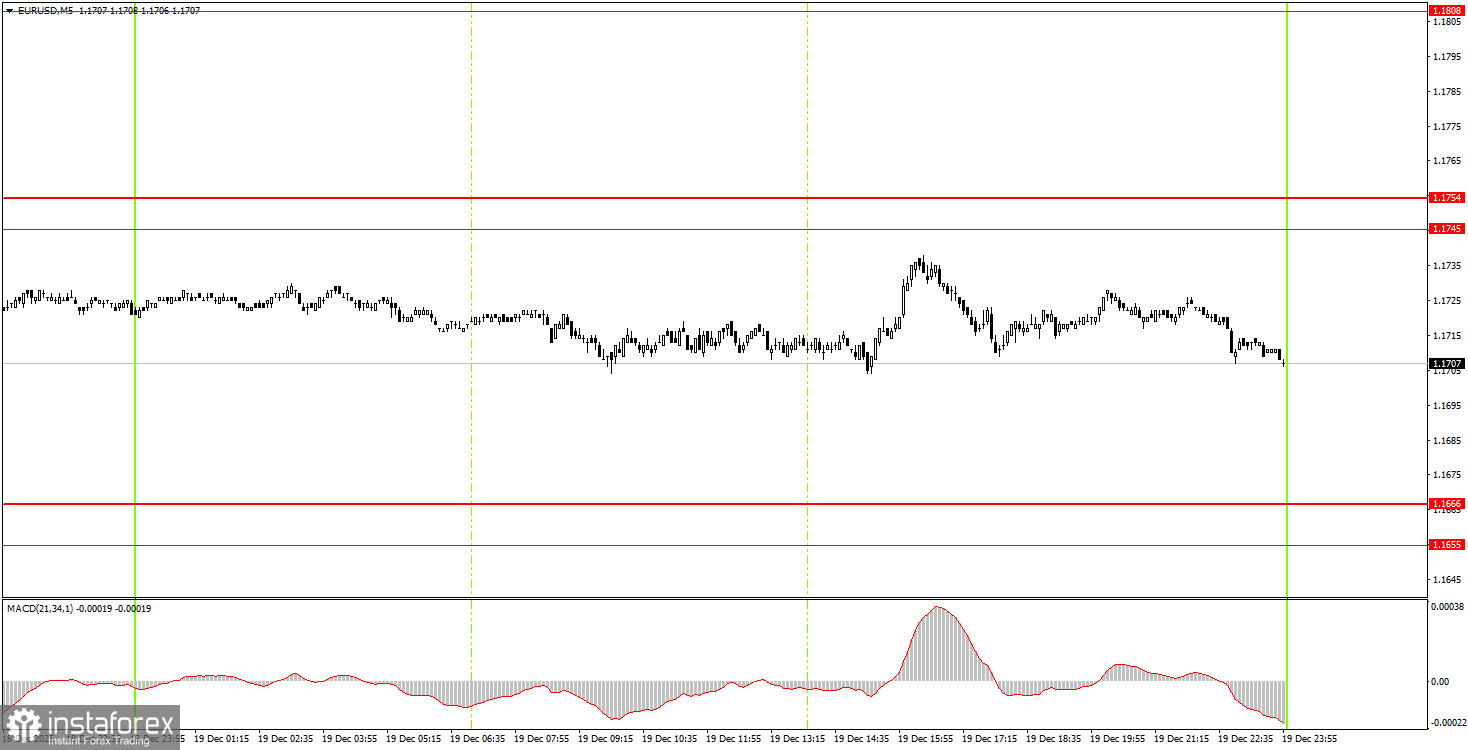
5M Chart of the EUR/USD Pair

Image

On the 5-minute time frame, no trading signals were formed on Friday, which is not surprising given the overall volatility of 34 pips. Throughout the day, the price did not attempt to work out any level or area.

How to Trade on Monday:

On the hourly timeframe, the EUR/USD pair continues to develop an upward trend. Over the past few days, two short-term trend lines have formed, and a breakout of these lines will indicate a resumption of the primary trend. In this case, there will be a new attempt to test the 1.1800-1.1830 area, which is the upper boundary of the flat on the daily timeframe. The overall fundamental and macroeconomic backdrop remains very weak for the U.S. dollar; thus, we expect further growth of the pair. The price reached the upper line of the sideways channel at 1.1400-1.1830, so now it needs either to break through it or the flat will persist. On Monday, beginner traders can trade from the areas of 1.1745-1.1754 and 1.1655-1.1666. There will be a few news releases on that day, so volatility may again be very weak. On the 5-minute timeframe, levels to consider include 1.1354-1.1363, 1.1413, 1.1455-1.1474, 1.1527-1.1531, 1.1550, 1.1584-1.1591, 1.1655-1.1666, 1.1745-1.1754, 1.1808, 1.1851, 1.1908, and 1.1970-1.1988. No significant events are scheduled in the Eurozone or the U.S. for Monday, so significant movements are unlikely. Key Rules of the Trading System: The strength of a signal is determined by the time it takes to form the signal (bounce or breakout). The less time required, the stronger the signal. If two or more trades were opened near any level based on false signals, all subsequent signals from that level should be ignored. In a flat, any pair may form numerous false signals or none at all. At the first signs of a flat, it is better to stop trading. Trades are opened during the period between the beginning of the European session and the middle of the American session, after which all trades should be closed manually. On the hourly timeframe, it is preferred to trade only when there is good volatility and a trend confirmed by the trend line or channel, using signals from the MACD indicator. If two levels are too close to each other (5 to 20 pips), they should be viewed as a support or resistance area. Upon moving 15 pips in the right direction, set the Stop Loss to breakeven. Chart Explanations: Support and Resistance Levels: Levels that serve as targets for opening buys or sells. Take Profit levels can be placed near them. Red Lines: Channels or trend lines that reflect the current trend and indicate the preferred direction for trading. MACD Indicator (14, 22, 3): A histogram and signal line; a supplementary indicator that can also be used as a source of signals. Important Note: Significant speeches and reports (always included in the news calendar) can greatly influence the movement of the currency pair. Therefore, during their release, it is advisable to trade cautiously or exit the market to avoid sharp reversals against the preceding movement. Remember: For beginners trading in the Forex market, it is important to understand that not every trade can be profitable. Developing a clear strategy and practicing money management are keys to long-term trading success.

Analysis are provided by InstaForex.

Read more: https://ifxpr.com/45mjxSF
IFX Bella
 
Posts: 549
Joined: Sat Dec 08, 2012 12:39 am

Re: Instaforex Analysis

Postby IFX Bella » Tue Dec 23, 2025 2:59 am

Forex Analysis & Reviews: Overview of the GBP/USD Pair. December 23. The British Pound Makes a New Push North

Image

The GBP/USD currency pair also traded higher on Monday, which few expected. However, in the article on EUR/USD, we already outlined our view on why both the euro and the pound might resume their global uptrends during the New Year holidays. To recap, any decline in either currency pair is an inherent correction. This correction has already lasted 6 months and has been prolonged. Therefore, even if the euro and pound rise simply without any news support, it would still be logical and expected. On Monday, the only report published in the UK for the week generated little market interest. In principle, we had warned that expecting strong movement from the GDP report following a crazy week packed with neglected events was overconfident. Thus, it is clear that the GDP report was not the reason behind the rise of the pound and the euro. In any case, the third estimate aligned completely with forecasts, so there was nothing to react to. The British economy continues to grow weakly as before. However, on the daily timeframe, the price spent about seven days just above the Senkou Span B line, but yesterday it made another attempt to rebound and resume the global uptrend. Recall that breaking above the Senkou Span B line, especially on the daily timeframe, is a very strong signal of a trend change. Therefore, we were previously expecting growth only from the British pound, and now we are even more so. From our perspective, it does not even matter that next year the Federal Reserve will be cutting the key rate alongside the Bank of England. The dollar has simply exhausted its reserves of luck. The end of September and all of October saw the dollar rise without any real grounds. Recall that in mid-September, the Fed resumed its monetary policy easing cycle, and on October 1, a "shutdown" began in America, with Donald Trump announcing new tariffs. Thus, the dollar rose without cause, while the pound fell without sufficient reason. Therefore, the GBP/USD pair may rise even without support from local macroeconomic and fundamental backgrounds. As before, we expect the pair to hover around the peaks of the current year, namely around the 1.3800 level. And this upward movement will not end, as the global uptrend persists and Donald Trump's policy remains unchanged: "do everything to make the dollar cheaper." This week, there will be only one interesting event today; the market can react to it, after which full-scale Christmas celebrations will begin. This does not mean that the market will be closed. It means that trading volumes will drop to a minimum. But in a "thin market," this may actually play into the hands of the current trend, which has long needed to resume.

Image

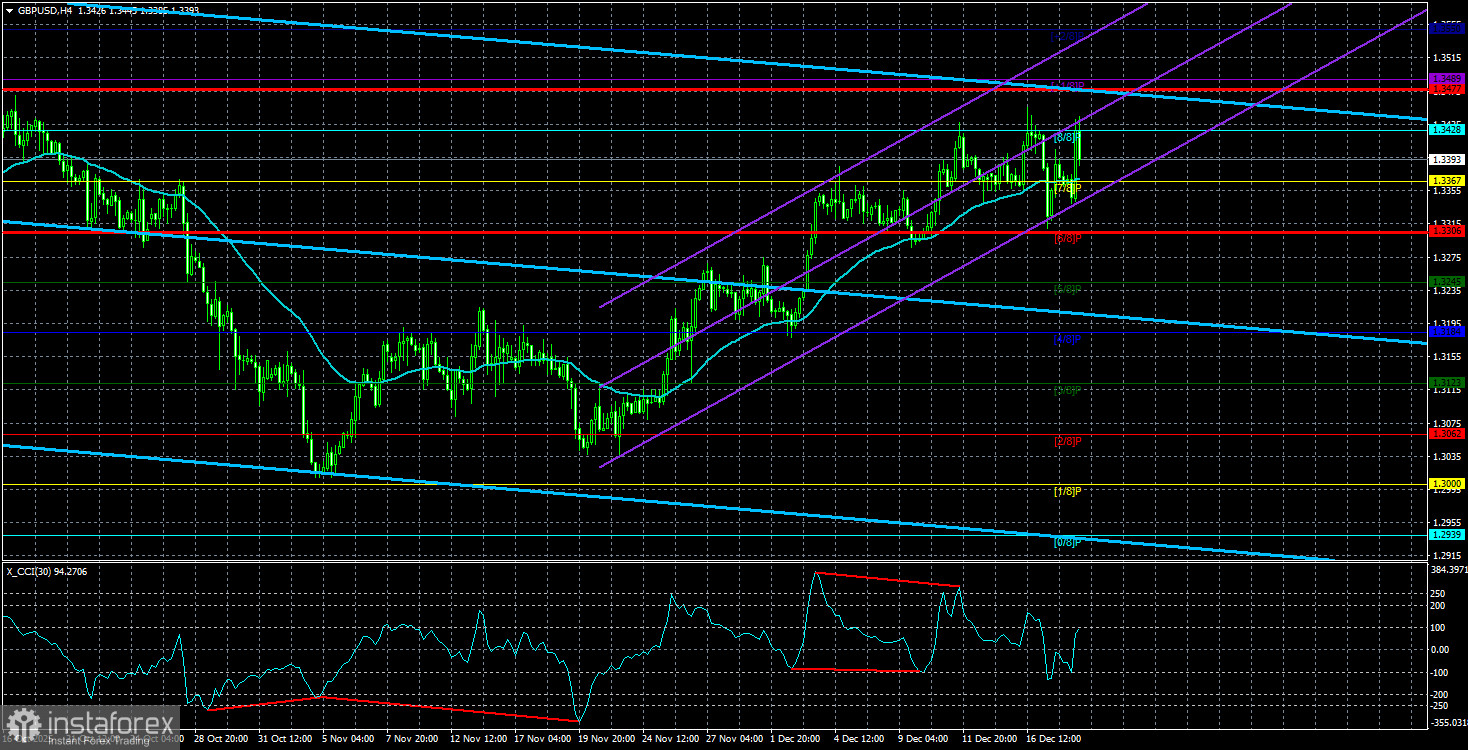
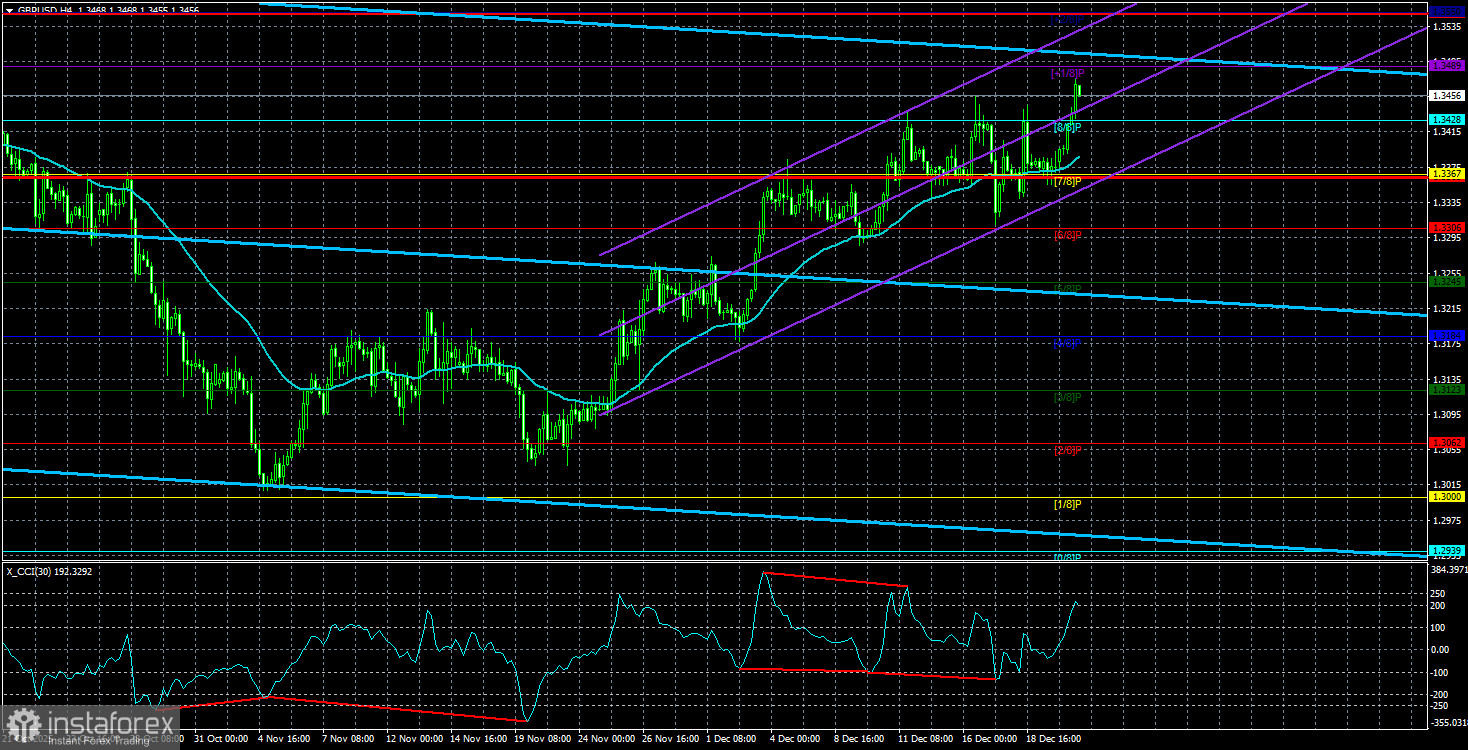
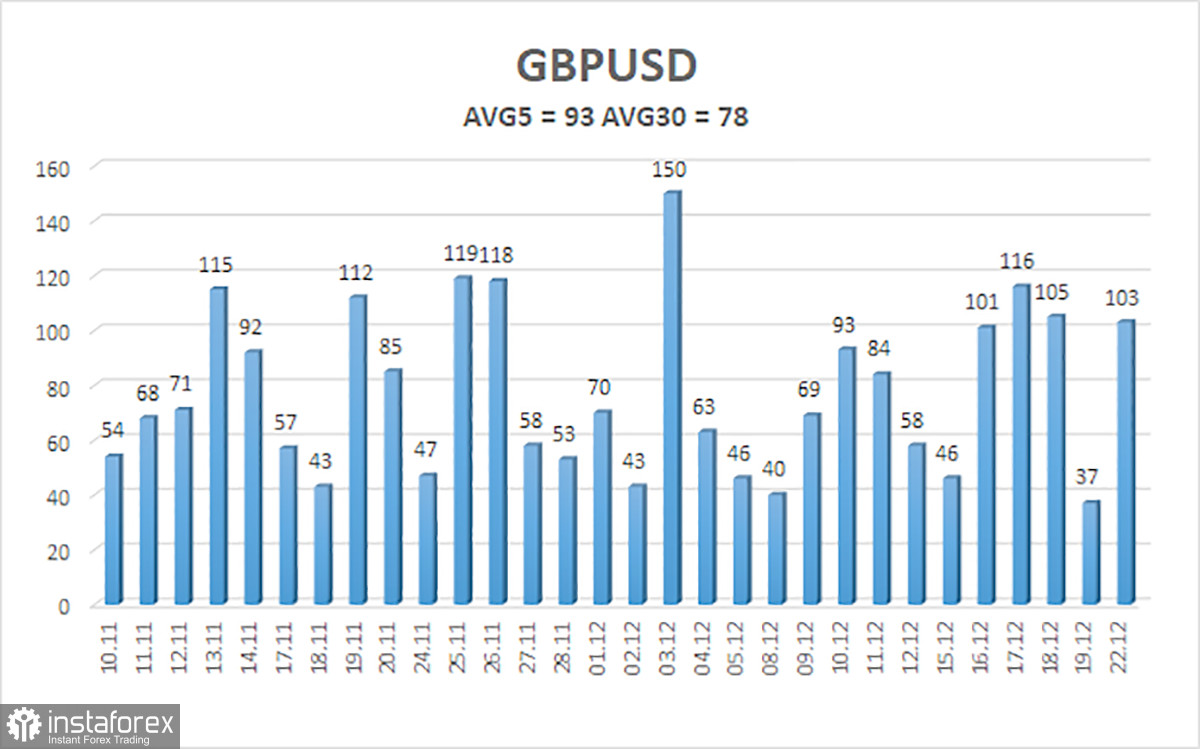
The average volatility of the GBP/USD pair over the past five trading days is 93 pips. For the pound/dollar pair, this value is considered "average." On Tuesday, December 23, we expect movement within the range limited by levels 1.3363 and 1.3549. The upper channel of linear regression is directed downward, but only due to a technical correction on higher timeframes. The CCI indicator has entered the oversold area six times over the past months and has formed numerous "bullish" divergences, continually warning of a resumption of the upward trend. Last week, the indicator formed another bullish divergence, signaling a resumption of growth. Nearest support levels: S1 – 1.3428 S2 – 1.3367 S3 – 1.3306 Nearest resistance levels: R1 – 1.3489 R2 – 1.3550 Trading Recommendations: The GBP/USD currency pair is attempting to resume its upward trend from 2025, and its long-term prospects remain unchanged. Donald Trump's policies will continue to pressure the dollar, so we do not expect the US currency to grow. Thus, long positions with targets at 1.3489 and 1.3550 remain relevant for the near future when the price is above the moving average. If the price is below the moving average line, we can consider small shorts with targets at 1.3306 and 1.3245 on technical grounds. From time to time, the US currency shows corrections (on a global scale), but for the trend to strengthen, it needs signs of an end to the trade war or other positive global factors. Explanations for the Illustrations: The linear regression channels help determine the current trend. If both are directed in the same way, then the trend is strong; The moving average line (settings 20,0, smoothed) determines the short-term trend and the direction in which to trade; Murray levels – target levels for movements and corrections; Volatility levels (red lines) – the probable price channel in which the pair will spend the next day based on current volatility readings; The CCI indicator – its entry into the oversold area (below -250) or the overbought area (above +250) indicates that a trend reversal in the opposite direction is imminent.

Analysis are provided by InstaForex.

Read more: https://ifxpr.com/44GTOEo
IFX Bella
 
Posts: 549
Joined: Sat Dec 08, 2012 12:39 am

Re: Instaforex Analysis

Postby IFX Bella » Tue Dec 23, 2025 11:10 pm

Forex Analysis & Reviews: RBA Meeting Minutes Confirm Bullish Reversal. Overview of AUD/USD

Image

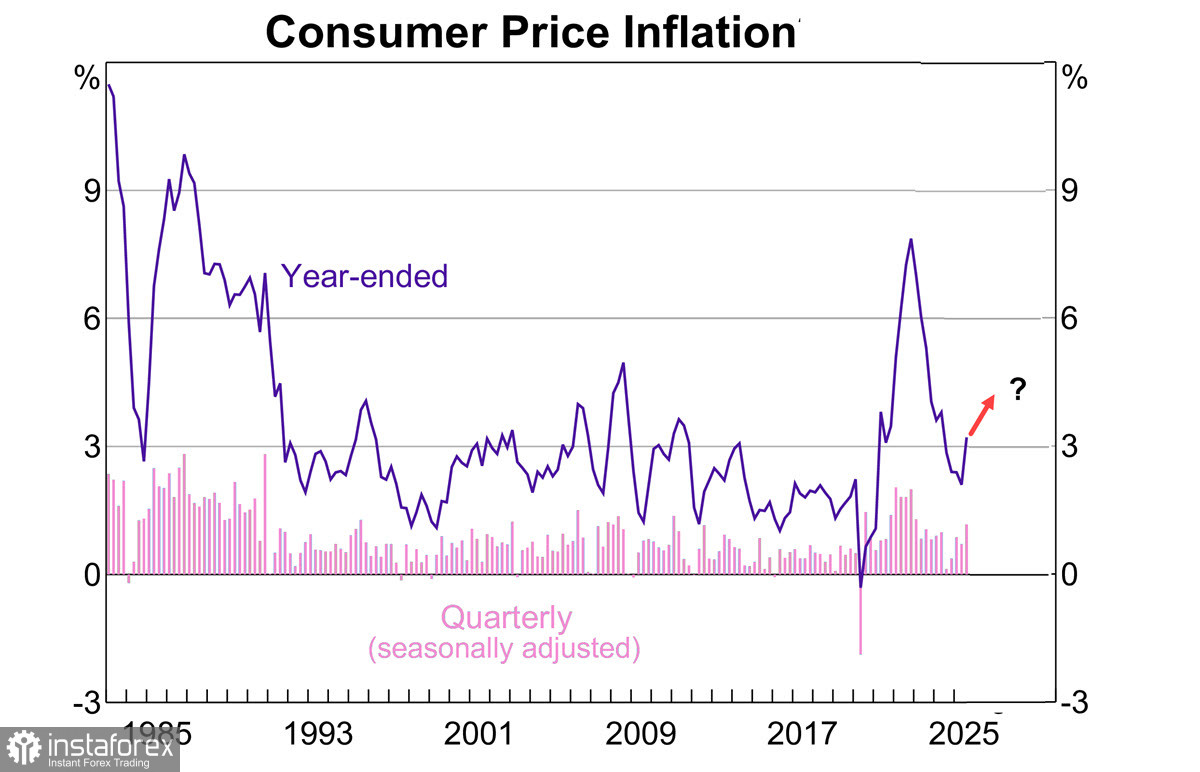
The publication of the Reserve Bank of Australia's December 9 meeting minutes has bolstered bulls' confidence. The Monetary Policy Council, commenting on trends in the global economy, noted that while yields on US government bonds are declining, they are rising in some countries, including Australia. Council members stated that the increase in short-term bond yields in Australia aligned with market participants' expectations of both tighter monetary policy and higher short-term inflation. The minutes turned out to be even more hawkish than the RBA's accompanying statement after the meeting. The emphasis was placed on the exacerbation of inflationary pressures, including factors contributing to this increase, particularly the rise in labor costs above forecasts and difficulties in attracting labor due to increased capacity utilization, which is also driving wage growth.

Image

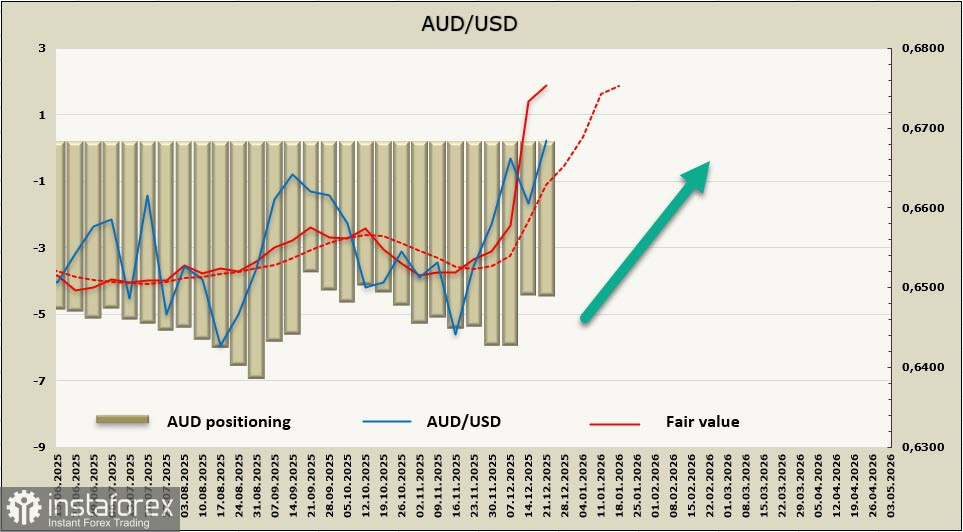
Now, until January 7, when the next Australian inflation indicator for November is published, there will be crucial data that could alter perceptions of the Australian currency. The December PMI indices, which will be released the day before, are unlikely to have a significant impact on quotes, whereas inflation could very well do so. Inflation has risen from a low of 1.9% in June to 3.8% in October, and continued growth will force the RBA to regard the threat of renewed price increases with utmost seriousness. This, in turn, would mean a revision of rate projections in favor of an earlier start to the tightening cycle. The risk of such a revision will be bullish for the Aussie and further promote its growth. As for the US dollar, its market perception has significantly deteriorated. The dollar's decline resembles a major crash, especially given that it occurred the day before the holidays, when such strong movements are typically absent due to reduced trading activity. Since no new data have emerged that could have provoked such a sharp decline, we appear to be witnessing a delayed market reaction to revised Federal Reserve rate forecasts. While markets are turning towards expectations of rate increases for the Yen, Australian, and New Zealand dollars, the Euro market is already confident that the easing cycle has ended. Amid this context, the pressure on the Fed to cut rates more quickly is a clear, evident, and powerful factor contributing to the dollar's weakness in the near future. The projected price is moving sharply upwards, indicative of strong bullish momentum.

Last week, we anticipated that the bullish momentum was strong enough to reach the 0.6710 resistance level and stay above it. Indeed, the correction proved shallow, and as the new week began, AUD/USD growth resumed sharply, with the pair now just a step away from 0.6710. We expect the growth to continue towards 0.6950, but it is unlikely that this target will be reached by the end of the year, considering the thin market and overall decline in activity.

Analysis are provided by InstaForex.

Read more: https://ifxpr.com/4p9eb4e
IFX Bella
 
Posts: 549
Joined: Sat Dec 08, 2012 12:39 am

Previous

Return to Forex Brokers